




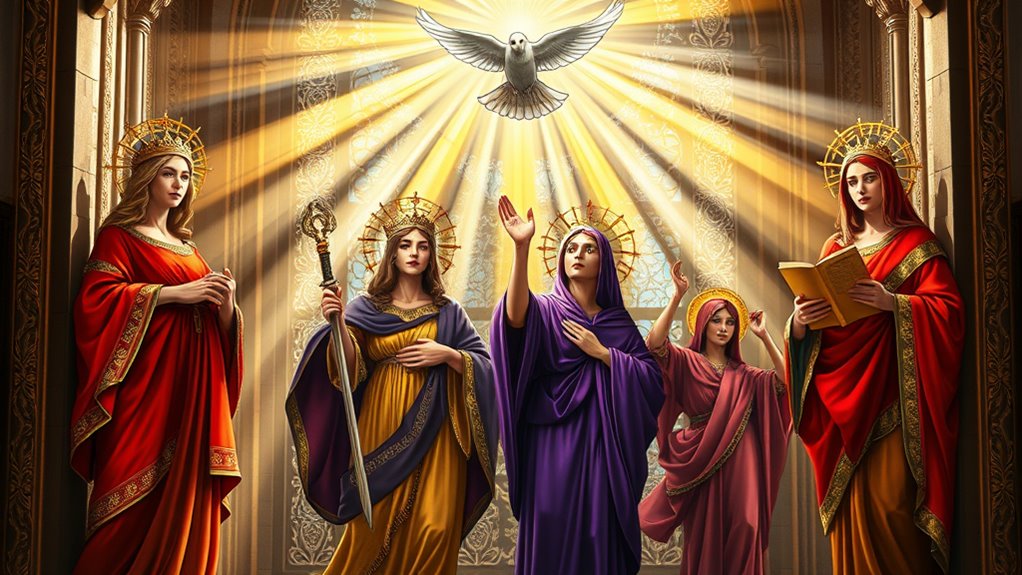
The Bible affirms women as bearers of inherent worth, describing them in Psalm 139:14 as fearfully and wonderfully made by God. Proverbs 31:10 values a woman of noble character as worth far more than rubies, emphasizing inner dignity over external appearance. Scripture also records women in leadership roles: Deborah served as judge and prophetess, leading Israel to military victory and forty years of peace, while Huldah interpreted the Book of the Law during King Josiah’s national revival. Esther used her position as queen of Persia to save the Jewish people from annihilation. These examples reveal how biblical women shaped their communities through both spiritual character and public influence.
Key Takeaways
- Women possess inherent worth from God, valued beyond accomplishments, as seen in Proverbs 31:10 and Psalm 139:14.
- Biblical dignity stems from inner character and gentle spirit, not external appearance, according to First Peter 3:3-4.
- Women held leadership roles as judges, prophets, and worship leaders, including Deborah, Miriam, and Huldah.
- Esther exemplifies how women in secular positions exercised courage and influence to serve divine purposes.
- Joel’s prophecy and Pentecost confirm women’s participation in prophecy and Spirit-led ministry alongside men.
What the Bible Says About Women’s Worth and Dignity

The question of women’s worth in scripture centers on a fundamental assertion: inherent value independent of role or function. Proverbs 31:10 declares a wife of noble character “worth far more than rubies,” establishing a baseline of immeasurable value. This assessment appears throughout biblical texts.
First Peter 3:3-4 identifies inner beauty and a gentle spirit as true strength, not superficial adornment. The Proverbs 31 woman embodies dignity as a state worthy of honor, trusting God with an uncertain future while serving her household and community. Her praise stems from devotion to God rather than external accomplishments. She adds value to home, community, and world through her awareness of her God-given worth.
Isaiah 43:1 reinforces this framework: women are redeemed, summoned by name, and belong to God—precious beyond comparison in divine design. Psalm 139:14 affirms that each woman is fearfully and wonderfully made, a unique creation fashioned by God’s own hands.
Strong Women in the Bible Who Led God’s People

Leadership roles throughout Israel’s history included women who shaped the nation’s trajectory through military, political, and prophetic action.
Deborah served as both judge and prophetess, leading Israel to victory against Canaanite king Jabin and bringing forty years of peace. The Lord used her leadership during a time of trial to set the people free and demonstrate that God’s power matters regardless of the instrument He chooses. She also exercised authority in both military strategy and civil judgment, reflecting the biblical acceptance of divine-appointed leadership.
Deborah’s dual calling as judge and prophetess demonstrates how God equipped women to deliver Israel from oppression and establish lasting peace.
Esther, as queen of Persia, risked her life to expose Haman’s plot and save the Jewish people, an event commemorated annually at Purim. Her courage shows how influence in secular courts could be used to protect God’s people and preserve their identity, sometimes requiring wisdom in cross-cultural settings and communication.
Miriam, named a leader alongside Moses and Aaron in Micah 6:4, led worship after the Red Sea crossing and protected her infant brother. Her role in song and public celebration highlights women’s participation in communal religious life and memory.
Huldah interpreted the Book of the Law during King Josiah’s revival, chosen over prominent prophets like Jeremiah to guide national reform at a critical historical moment. Joel’s prophecy declared that daughters would prophesy, a vision confirmed at Pentecost when the Spirit was poured out on both men and women.