The Bible references precious stones in sacred contexts—like the high priest’s breastplate in Exodus 28 and New Jerusalem’s jeweled foundations in Revelation 21—but strictly forbids attributing spiritual power to physical objects. Deuteronomy 18:10–12 condemns divination and sorcery, while Ezekiel 13:18–21 rejects magic charms. A 2001 University of London study found no evidence crystals transfer energy beyond placebo effects. Scripture presents God, not objects, as the source of healing and protection, framing gemstones as symbols rather than supernatural tools. The following exploration unpacks these biblical warnings and theological distinctions further.
Key Takeaways
- The Bible mentions precious stones symbolically in visions and sacred objects, not for mystical healing properties.
- Scripture condemns using objects like crystals for spiritual power, protection, or divination as detestable occult practices.
- Relying on crystals instead of God violates the first commandment against idolatry and misplaced trust.
- Prophetic warnings specifically denounce wearing magic charms and amulets for supernatural purposes.
- Jesus is presented as the true source of healing, not pseudoscientific alternatives like crystal energy.
What the Bible Says About Crystals, Gemstones, and Precious Stones
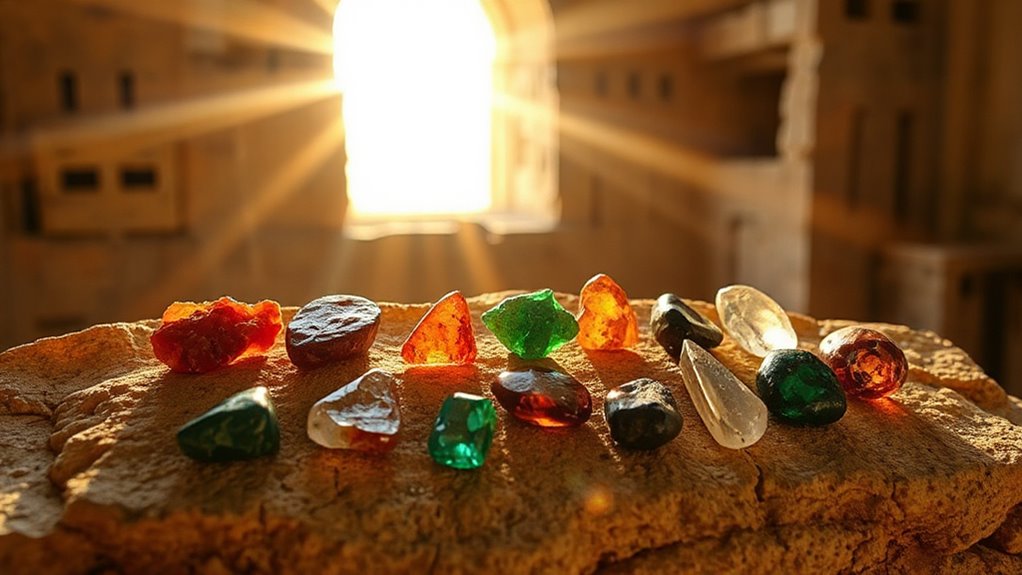
Throughout the biblical text, precious stones appear not merely as objects of material wealth but as deliberate symbols woven into sacred narratives and divine visions.
The high priest’s breastplate featured twelve gemstones arranged in four rows, including carnelian, sapphire, and emerald, each representing one of Israel’s tribes according to Exodus 28:15-20.
Revelation 21:19-20 describes the New Jerusalem’s foundations adorned with similar stones—jasper, sapphire, chalcedony, and others—signifying divine glory made visible.
Ezekiel 28:13 lists nine precious stones covering Eden, linking gemstones to original creation and sacred beauty.
Proverbs and Job compare wisdom’s value to rare gems, suggesting these materials carried spiritual significance beyond their economic worth.
Isaiah 54:11-12 envisions foundations of sapphires and gates of crystal, portraying restoration through imagery of enduring splendor.
Archaeological and historical context also ties some gemstone imagery to Jerusalem’s sacred sites and traditions, including references to places like the Church of the Holy Sepulchre near ancient Golgotha.
Why Scripture Rejects Crystal Healing and Mystical Practices

While precious stones hold symbolic meaning in biblical texts, Scripture firmly opposes the use of crystals for healing, protection, or spiritual power. The first commandment forbids relying on objects instead of God for peace or safety (Deuteronomy 4:15–20).
Deuteronomy 18:10–12 categorizes practices like divination and sorcery as detestable, and Ezekiel 13:18–21 condemns magic charms worn as amulets. Galatians 5:19–21 lists idolatry and witchcraft among behaviors that exclude people from God’s kingdom.
Revelation 21:8 warns that sorcerers face eternal separation from God. A 2001 University of London study found no evidence of energy transfer in crystals beyond placebo effects.
Philippians 1:9–10 encourages believers to exercise discernment, recognizing Jesus as the true source of healing rather than pseudoscientific alternatives.
Many Christians also note that the Catholic Bible contains deuterocanonical books, which reflect the broader scriptural tradition that warns against occult practices.