The Bible contains no explicit command forbidding cremation, but burial stands as the consistent pattern from Genesis through the New Covenant. Abraham purchased a cave for family burial, Jacob and Joseph insisted on being buried among their fathers, and Jesus himself was wrapped in linen and placed in a tomb. Scripture affirms in 1 Corinthians 15 that resurrection requires no intact remains. Those seeking deeper clarity on what these patterns mean will find the answers worth exploring.
Key Takeaways
- The Bible contains no explicit command for or against cremation, leaving it as a matter of personal and cultural choice.
- Burial was the consistent biblical pattern, exemplified most clearly by Jesus, whose body was wrapped and placed in a tomb.
- God’s power to resurrect is not limited by cremation, as He can restore any body regardless of its physical condition.
- Old Testament patriarchs like Abraham, Jacob, and Joseph prioritized burial, connecting it to covenantal promises and resurrection hope.
- Scripture affirms the resurrected body will be spiritual and new, making the earthly remains’ condition irrelevant to salvation.
What Does the Bible Actually Say About Cremation?
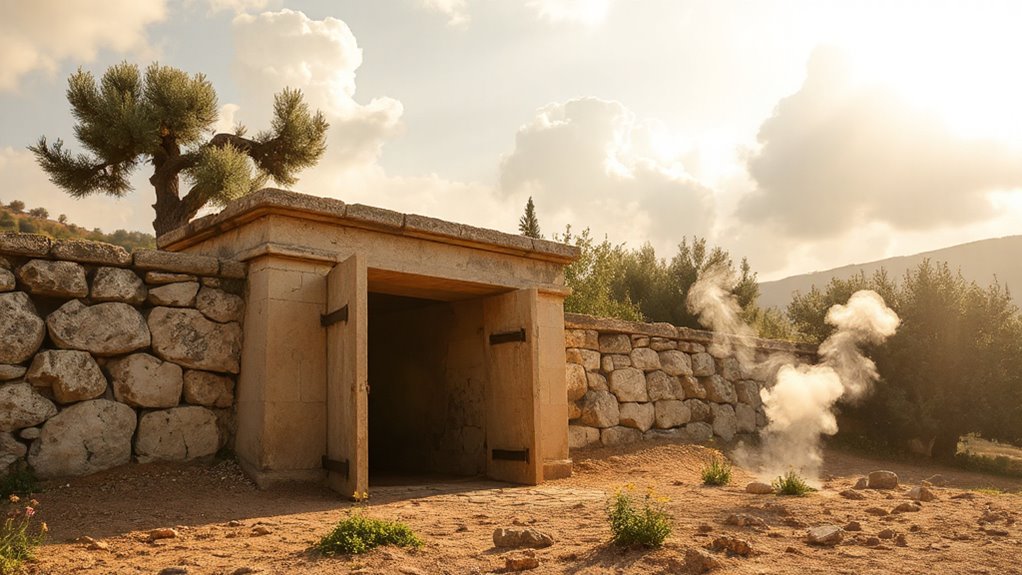
The Bible, perhaps surprisingly, contains no explicit prohibition against cremation. Most biblical scholars agree that no passage directly forbids the practice. The New Testament, in particular, never addresses it.
While burial was the common custom among Israelites — Abraham famously secured a tomb for Sarah in Genesis 23 — the Bible stops short of mandating it. A few instances of burning appear in the Old Covenant, including the case of Saul and his sons in 1 Samuel 31, though these were exceptions rather than standard practice. Archaeological finds also illuminate ancient Jewish burial customs and practices, providing historical context for these accounts.
Burning sometimes carried connotations of dishonor or punishment, yet faithful Israelites also participated in such acts. Ultimately, the Bible neither promotes nor bans cremation, leaving the decision as a matter of personal and cultural choice. Resurrection is not hindered by cremation, as God’s ability to re-create a body is affirmed in 1 Corinthians 15:35, 38.
Ecclesiastes 12:7 further reinforces this perspective, describing the body returning to dust while the spirit returns to God, suggesting that the physical state of remains does not determine one’s spiritual fate.
What Does the Biblical Pattern of Burial Actually Mean?
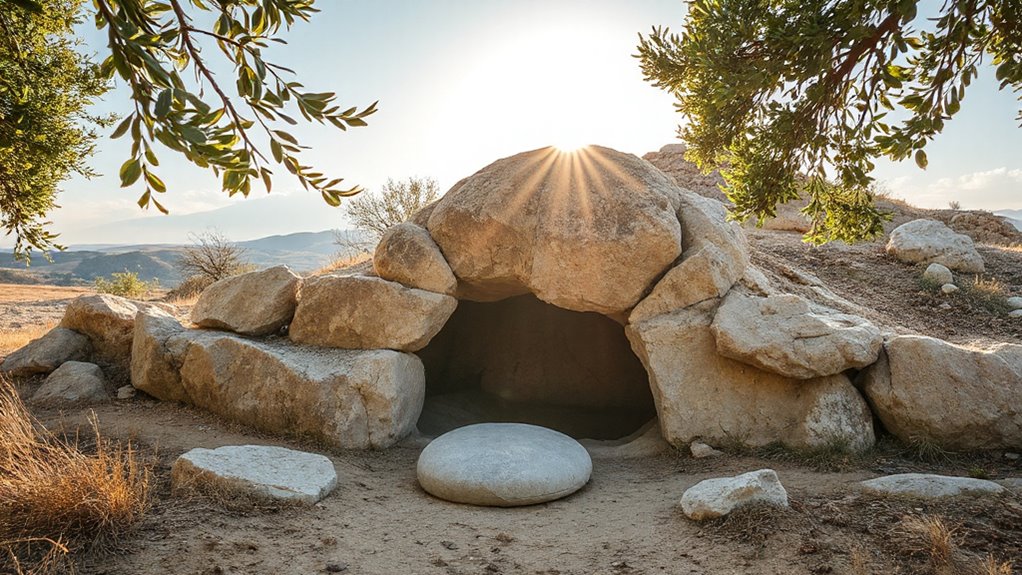
Throughout the Old covenant, burial was not merely a cultural habit but a practice woven into Israel’s understanding of faith, family, and divine promise. When Abraham purchased the cave at Machpelah, he was not simply securing real estate. He was anchoring his family to covenantal land and ancestral belonging. Jacob and Joseph carried that same conviction forward across generations, insisting their bones rest among their fathers in the Promised Land.
This pattern communicates something consistent: burial reflected belief that the body held meaning beyond death. Families washed, wrapped, and interred their dead with care because resurrection hope was not abstract theology but lived expectation. The New testament continued this pattern without interruption, suggesting the practice carried forward its original spiritual weight.
The burial of Jesus followed established Jewish custom, with Joseph of Arimathea and Nicodemus wrapping the body in linen and placing it in a newly cut, unused tomb outside the city walls. His body was interred without embalming on the day of death, serving as the clearest example of the biblical pattern of committing the body to the earth as naturally as possible.
Can Cremation Affect Your Salvation or Resurrection?

Burial patterns in the Old and New covenant reflect a consistent reverence for the body, but that pattern raises a practical question many believers carry quietly: does the method of handling remains after death have any bearing on salvation or resurrection?
According to scripture and scholars alike, the answer is no. Theologian John MacArthur notes that cremation simply accelerates oxidation, a process burial also begins naturally. God, who formed humanity from dust in Genesis 2:7, faces no limitation in restoring what decomposition or fire has claimed. Revelation 20:13 describes a resurrection drawing from sea and earth without specifying intact remains. First Corinthians 15:44 further clarifies that the resurrected body is spiritual, not a restored version of its earthly form. Salvation remains entirely unaffected.
Believers are also reminded that scripture points to receiving a new body entirely, as described in 1 Corinthians 15:42-49, making the physical state of earthly remains irrelevant to what awaits beyond death. For families weighing practical considerations, cremation costs about one-eighth of a traditional burial, making it a meaningful option for those navigating end-of-life decisions without adding financial burden to grief.