

The Bible addresses men’s long hair most directly in 1 Corinthians 11:14, where Paul states that nature itself teaches long hair dishonors a man. However, Numbers 6 presents a clear exception through the Nazarite vow, where God required men like Samson to grow hair uncut as a visible sign of consecration. Old Testament law also regulated hair for priests and those with skin diseases. Each passage carries distinct cultural and theological context worth understanding carefully.
Key Takeaways
- Numbers 6 permitted men to grow long hair temporarily as part of the Nazarite vow, a consecrated religious commitment.
- Samson and Samuel had long hair under divine-sanctioned Nazarite dedications, showing long hair was acceptable in specific sacred contexts.
- 1 Corinthians 11:14 states long hair dishonors a man, with Paul appealing to natural social norms to distinguish the sexes.
- Ezekiel 44:20 instructed priests toward moderation, neither shaving completely nor allowing hair to grow excessively long.
- Scholars disagree whether Paul’s instruction reflects a universal standard or a culturally specific response to first-century Corinthian customs.
What the Bible Directly Says About Men and Long Hair
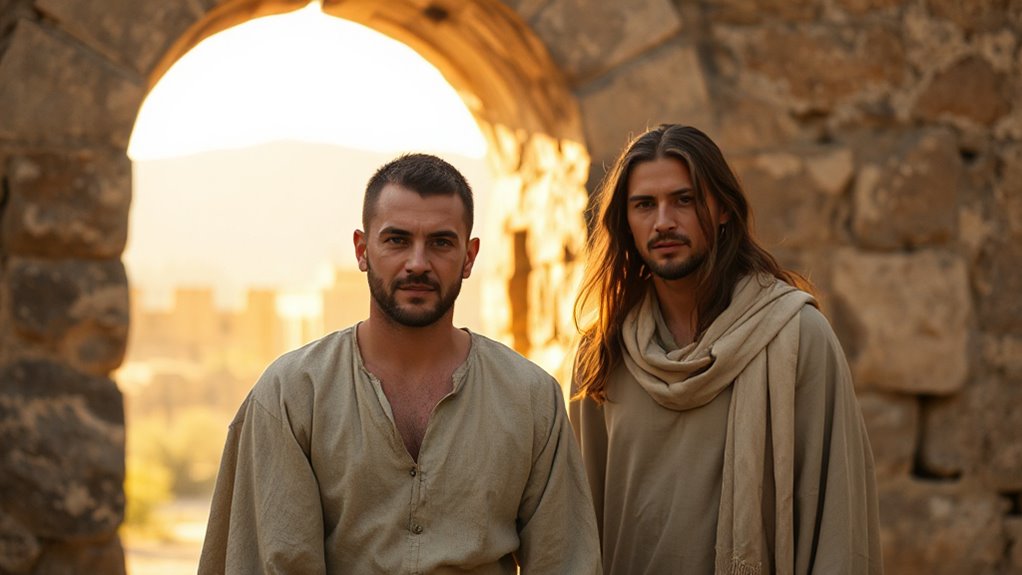
The Bible addresses men’s hair length in a few specific contexts rather than through sweeping rules. The Nazarite vow, described in Numbers 6:5, required men to grow their hair long during a dedicated separation period. Samson followed this practice under a lifelong vow from birth, as recorded in Judges 13:3-5. Samuel and John the Baptist observed similar commitments.
Outside these vow contexts, the Old Testament offers little broad endorsement of long hair on men. Ezekiel 44:20 instructed priests to avoid both extremes, neither shaving completely nor letting hair grow long. Leviticus 19:27 prohibited certain hairstyles tied to pagan practices. Together, these passages suggest the Bible approaches men’s hair through specific situational guidance rather than a single universal standard.
The New Testament provides a more direct statement on the matter, with Paul writing in 1 Corinthians 11:14 that long hair dishonors a man, framing the argument around what nature itself teaches about distinguishing the sexes. Paul extends this contrast in 1 Corinthians 11:15, stating that for women, long hair is given as a covering and glory, presenting a deliberate gender distinction within his broader discussion of worship conduct.
What Does Paul in 1 Corinthians 11 Say About Men’s Hair?

Beyond the situational guidance of vows and priestly codes, Paul’s letter to the Corinthians offers the New Covenant’s most direct commentary on men’s hair. In 1 Corinthians 11:4, Paul states that a man praying or prophesying with something “down from the head” disgraces his head. Early interpreter Chrysostom read this as a prohibition against long hair on men. Notably, the Greek phrase Paul uses, kata kephalēs echōn, lacks an explicit object, meaning Paul does not specify a garment or covering, which has led scholars to debate whether he is referring to a physical veil or to hair length and style. Paul’s appeal to nature in this chapter points not to strict biology but to observed social patterns, reflecting the customary appearance norms of the Roman empire as evidence for his instruction.
The Nazarite Vow: When God Required Men to Grow Long Hair
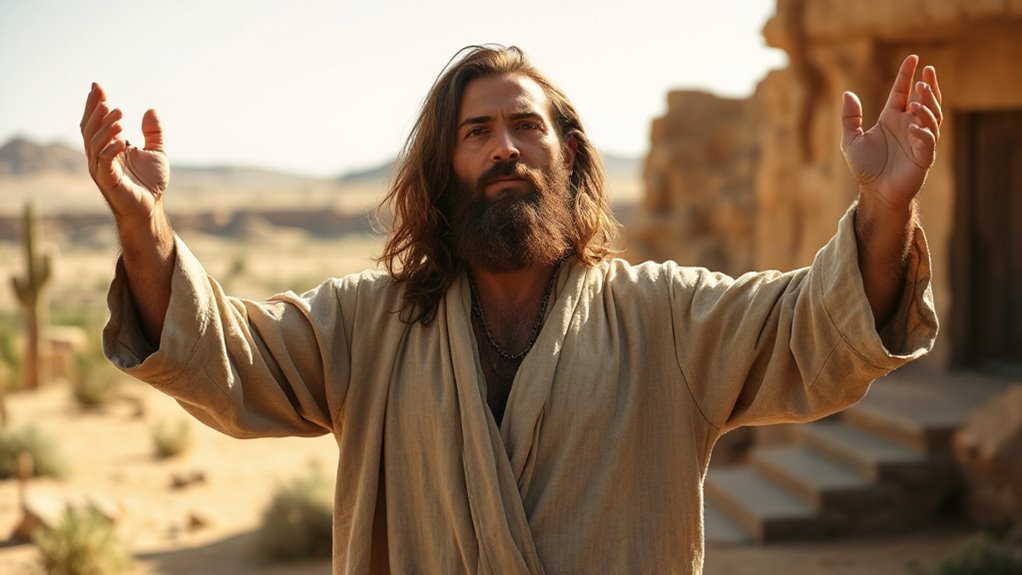
Within the pages of Numbers 6:1-21, God provided detailed instructions for a practice that stood apart from nearly every other biblical standard regarding men’s appearance: the Nazarite vow.
Numbers 6:1-21 outlines the Nazarite vow, a divinely sanctioned practice unlike nearly any other biblical standard for men’s appearance.
This voluntary dedication required three commitments: avoiding all grape products, maintaining distance from dead bodies, and allowing hair to grow completely uncut throughout the vow’s duration.
The uncut hair served as a visible, public marker of consecration, distinguishing the individual from the surrounding community.
Both men and women could undertake the vow, and certain figures, including Samson and Samuel, maintained it for life.
Upon completion, Numbers 6:18 prescribed shaving the head and burning the hair beneath a peace offering. The placement of the hair under the peace offering connected the individual’s personal act of devotion to the broader context of communal worship before God.
The completion of the vow also required offerings of a lamb and a ram, alongside a grain offering and a drink offering, further anchoring the Nazarite’s dedication within Israel’s broader sacrificial system.
The practice demonstrated that long hair, under specific sacred circumstances, carried divine sanction rather than shame.
How Did Old Testament Law Regulate Men’s Appearance and Hair?
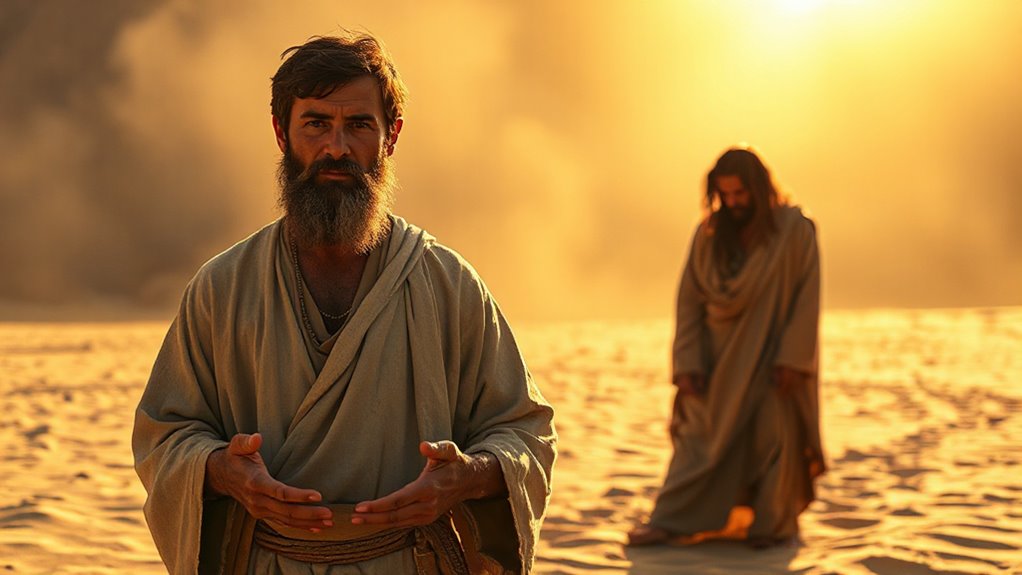
While the Nazarite vow created specific conditions under which uncut hair carried sacred meaning, most Israelite men lived under a different and more everyday set of guidelines. Leviticus 19:27 prohibited cutting hair at the sides of the head or trimming beard edges, distinguishing Israelites from Egyptian practices that cropped side hair into ritual markers for gods like Ra or Horus. The Church later preserved these distinctions in its liturgical and canonical traditions, often reflected in approved translations like the NABRE used in U.S. liturgy.
Leviticus 21:5 extended stricter rules to priests, forbidding shaved patches and mourning-related hairstyles. Jeremiah later condemned temple-area hair trimming as pagan practice, referencing it in chapters 9, 25, and 49. The law set no exact required length for men but consistently rejected specific cuts tied to foreign religious customs or mourning rituals. Ancient Near Eastern cultures surrounding Israel generally maintained short hair for men, with long hair more commonly associated with mourning or specific religious vows rather than everyday life.
Men with serious skin diseases were required to wear their hair long and loose as a visible signal of unclean ritual status, marking their separation from the community under Leviticus 13:45.
How to Apply These Biblical Hair Standards as a Christian Man Today

Several biblical texts, read together, give Christian men a practical framework for thinking about hair length today.
First Corinthians 11:14 teaches that nature itself connects masculine appearance with male identity, suggesting men should avoid hairstyles culturally associated with femininity.
Ezekiel 44:20 adds a moderating principle, directing priests to trim hair without shaving completely or growing it excessively long. Aramaic was the everyday language of Jesus and many first-century Jews, which helps explain how cultural norms about appearance were communicated in that setting everyday Aramaic.
Numbers 6 acknowledges exceptions, such as the Nazarite vow, but those were temporary and purpose-driven. Samson’s vow, established from before his birth, required that no razor ever touch his head as a sign of consecration to God.
For contemporary Christian men, the guiding principle remains maintaining a masculine appearance that reflects created gender distinctions. Cultural settings vary, so application requires honest evaluation of local norms while anchoring decisions in the consistent biblical value of honoring God’s design. Paul’s argument in 1 Corinthians 11 hinges not on a universal hair-length law but on natural inclinations tied to gendered identity, meaning what counts as a feminine symbol can differ across cultures while the underlying principle remains constant.