


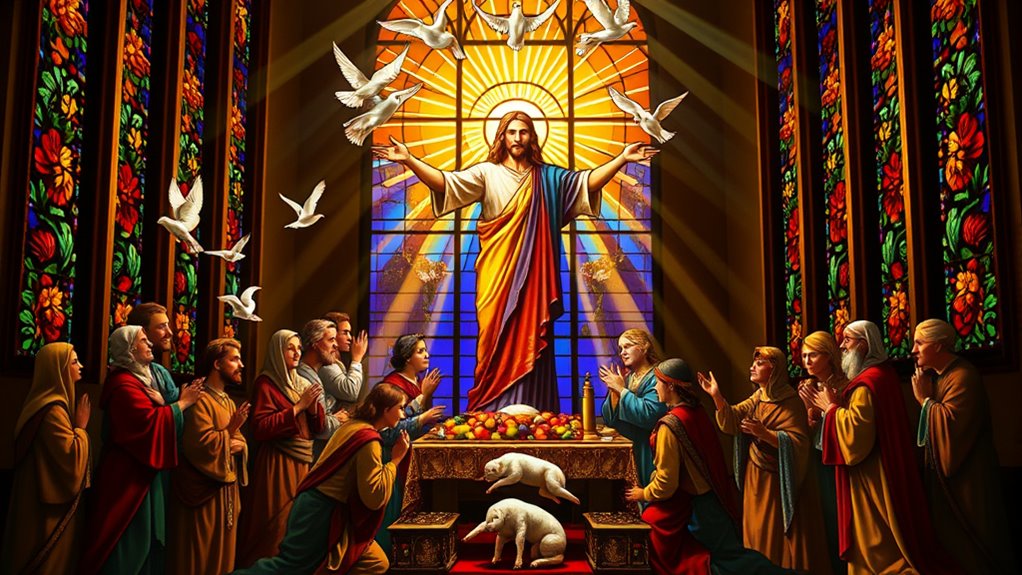


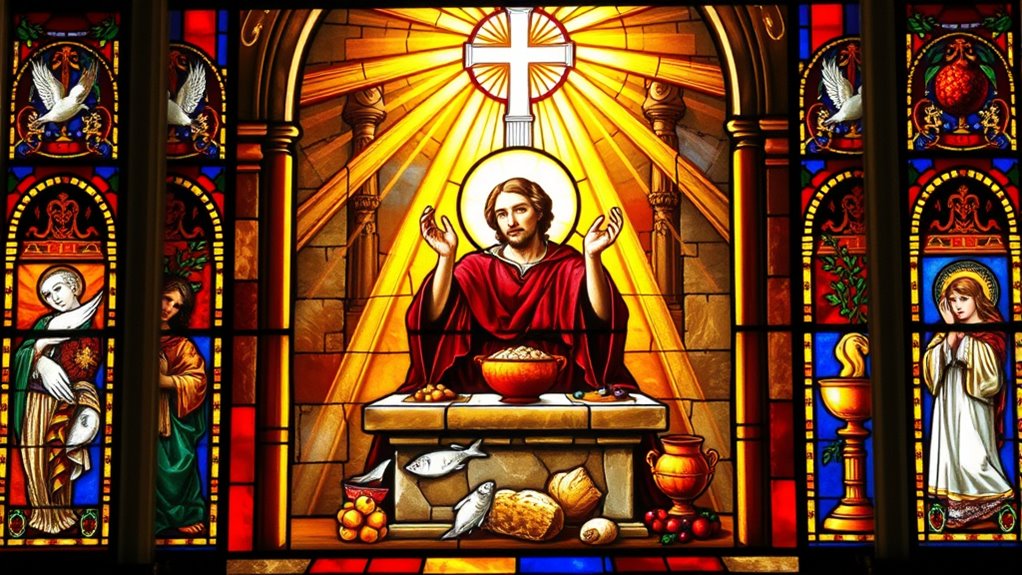
The Bible treats food as a deliberate gift from God, beginning in Genesis 1:29 with plants and fruit, then expanding in Genesis 9:3 to include animals. Levitical laws in Leviticus 11 and Deuteronomy 14 set dietary boundaries specifically for Israel, though Jesus declared all foods clean in Mark 7:19. The New Testament shifts focus toward self-control and purpose, with 1 Corinthians 10:31 instructing that eating and drinking should glorify God. The full picture runs deeper still.
Key Takeaways
- God designated food as deliberate divine provision, first through plants and fruits, later expanding to include animals after the flood.
- Levitical law gave Israel specific dietary rules distinguishing clean from unclean foods, marking them as set apart from surrounding nations.
- Jesus declared all foods clean in Mark 7, fulfilling and ending the ceremonial distinctions established under Levitical dietary law.
- The Jerusalem Council confirmed Gentiles are not bound by full Levitical food laws but must abstain from blood and strangled animals.
- Scripture warns against gluttony and instructs that all eating and drinking should glorify God, reflecting self-control as a spiritual virtue.
What the Bible Actually Says Food Is

From the opening chapters of Genesis to the letters of the New covenant, the Bible presents food as something far more intentional than mere sustenance. In Genesis 1:29, God designates every seed-bearing plant and fruit tree as provision for humanity.
By Genesis 9:3, that provision expands to include every living creature. The pattern is consistent: food originates as a deliberate gift rather than an accident of nature.
After the flood, God widens the table—every living creature now part of his deliberate provision.
First Timothy 4:4 reinforces this by affirming that all created things are good when received with thanksgiving. John 6:35 extends the concept further, identifying Jesus himself as the bread of life.
Together, these passages position food not simply as fuel for the body, but as something rooted in divine intention and relational meaning. Scripture takes up a surprising amount of material on food, speaking to it both directly and indirectly across redemptive history.
Deuteronomy 14 goes further still, providing specific categories of approved and forbidden foods, distinguishing clean animals by characteristics such as split hooves and cud-chewing, and permitting water creatures only when fins and scales are present. Observations from ancient cultures and language nuances also show how dietary laws reflected broader cultural contexts and practical concerns.
Did God’s Dietary Laws Apply to All People?

When the question arises of whether God’s dietary laws were meant for everyone, the biblical record offers a nuanced answer: some restrictions were national, and others were universal.
Leviticus 11 and Deuteronomy 14 addressed Israel specifically, distinguishing the nation through rules about pork, shellfish, and scavenger birds. These laws marked Israel as a holy people set apart from surrounding cultures. The Levitical dietary rules were part of a broader system of law that identified Israel’s covenant identity and practices as a holy nation.
However, Genesis 9:4 established a broader prohibition against consuming blood, applying to all descendants of Noah regardless of nationality.
Later, the Acts 15 Jerusalem Council confirmed that Gentile believers were not bound by the full Levitical code, requiring only that they abstain from blood, strangled animals, and food sacrificed to idols.
Scripture, therefore, maintains a clear distinction between national Israelite laws and universal ones. The Levitical system also extended beyond animal selection to regulate forbidden animal parts, prohibiting consumption of fat, blood, and the sciatic nerve.
In the New Testament, Jesus declared all foods clean, signaling a significant shift away from the dietary restrictions that had previously defined Israel’s identity among the nations.
How Jesus Fulfilled and Replaced the Old Testament Food Laws

Among the most significant shifts in biblical food theology came when Jesus directly addressed what makes a person spiritually unclean. In Mark 7:14–19, Jesus stated that nothing entering a person from outside can defile them, with the text adding the parenthetical note, “thus He declared all foods clean.” This statement effectively ended the ceremonial distinctions established in Leviticus 11 and Deuteronomy 14. This move reflects Jesus’ role in fulfilling the Law as part of the unified divine plan between the Father and the Son, a core element of Trinitarian doctrine.
Scholars note that those Old Testament laws primarily served to separate Israel from surrounding nations, functioning as temporary covenant markers rather than universal moral commands. Romans 10:4 affirms that Christ fulfilled the Law, while Ephesians 2:15 describes Jesus abolishing ordinances that once divided Jews and Gentiles.
With that purpose completed, the dietary restrictions lost their binding authority under the New Covenant. Archaeological evidence from Qumran near the Dead Sea confirms how seriously Jewish communities observed purity and dietary regulations, underscoring the magnitude of the theological shift Jesus introduced.
What the Bible Says About Overeating, Gluttony, and Self-Control

While the Bible speaks warmly about food as a gift from God, it also addresses the misuse of that gift through consistent warnings against overeating and gluttony.
Proverbs 23:20-21 links gluttony with poverty and neglected responsibilities.
Philippians 3:19 describes those ruled by appetite as people whose “god is their stomach,” with destruction as their end.
Proverbs 23:2 frames unchecked appetite as a serious spiritual danger.
Deuteronomy 21:20 connects gluttony with stubbornness and rebellion, while 1 Corinthians 6:10 lists it among sins that prevent inheriting God’s kingdom.
Scripture does not leave believers without direction, however.
Galatians 5 names self-control as a fruit of the Spirit.
First Corinthians 10:31 instructs that eating and drinking should glorify God, framing food as worship rather than indulgence. Proverbs 25:28 warns that a person who lacks self-control is like a city without walls, left vulnerable and defenseless against destruction.
First Corinthians 6:19-20 reminds believers that their bodies are temples of the Holy Spirit, bought at a price and meant to honor God in every choice, including what and how much they eat. A consistent study routine can help believers apply these teachings to daily habits.
How to Honor God Through What You Eat and Drink

The Bible does not treat eating and drinking as spiritually neutral acts. According to 1 Corinthians 10:31, every meal carries a spiritual dimension, calling believers to eat and drink for God’s glory rather than personal gratification alone.
Thanksgiving plays a central role in this framework. Offering gratitude before meals acknowledges God as Provider and reorients the heart away from self-focused consumption. Regular short prayers can help cultivate a habit of thankfulness and centered awareness.
The body, described in Scripture as a temple of the Holy Spirit, requires thoughtful care, meaning food choices that support health reflect responsible stewardship.
Moderation further shapes this practice, as self-control, identified as a fruit of the Spirit, guards against overindulgence.
Believers are also reminded that the motive behind an action determines its character. A secular act performed in a “religious spirit” becomes an act of worship, meaning even eating and drinking can be offered as genuine devotion to God.
Finally, believers are encouraged to weigh how their dietary choices affect others, prioritizing communal harmony over personal preference. This principle reflects the broader biblical call to act in ways that bring “honor and glory” to God in all things.