


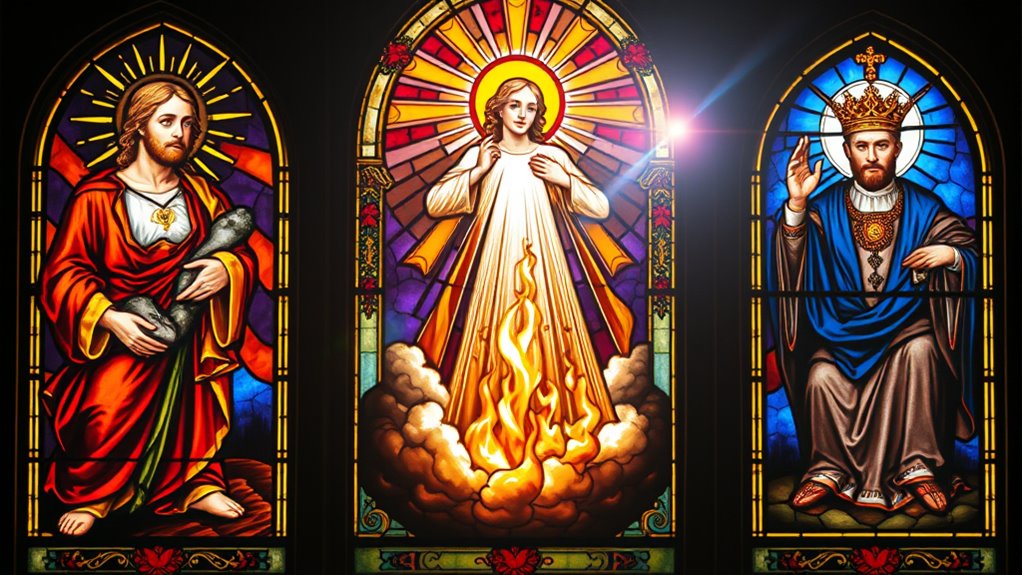

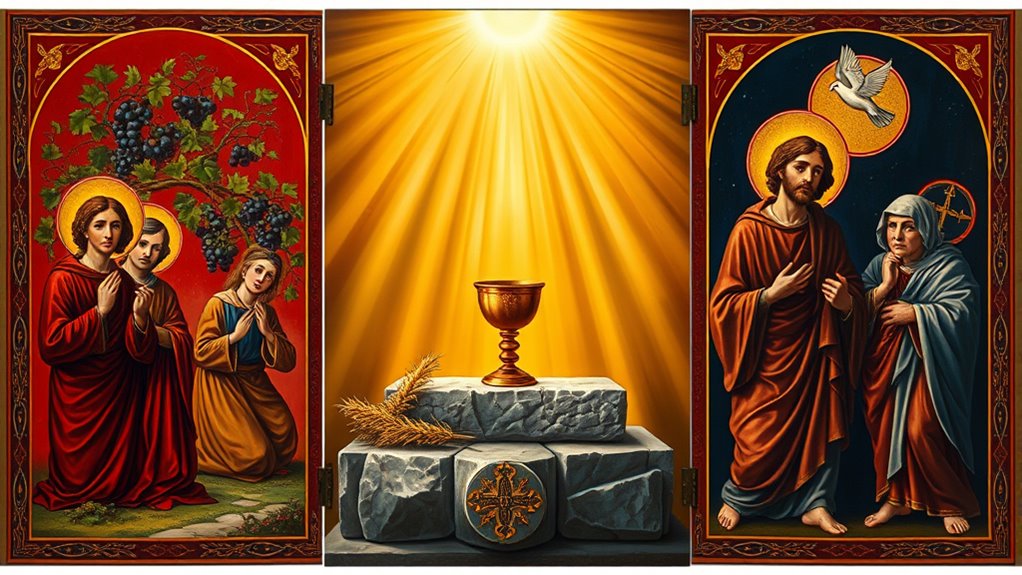

Some Christians gravitate toward “God Lite” because it preserves familiar religious language while removing harder demands like repentance, holiness, and moral accountability. Consumer culture has reshaped faith into a lifestyle choice, where churches are evaluated by atmosphere and music rather than theology. Dietrich Bonhoeffer warned this trajectory produces cheap grace—grace without the cross or discipleship. The appeal is real: reduced moral tension, personal autonomy, and immediate emotional comfort. What this trade-off actually costs becomes clearer further ahead.
What Is ‘God Lite’ and Why Does It Appeal to Christians?
The term “God Lite” refers to a scaled-down version of God that tends to emphasize comfort, inspiration, and emotional support while setting aside harder doctrinal claims about holiness, judgment, and moral demand.
Observers use it to describe a faith that retains Christian vocabulary but removes the more demanding aspects of historic Christian teaching.
Several factors explain its appeal.
It reduces moral tension, fits personal autonomy, and offers immediate emotional relief.
It also simplifies theology, avoiding complex categories like the Trinity or divine simplicity.
For many, a less demanding portrait of God simply feels easier to sustain within contemporary culture.
The Belgic Confession of 1561, one of the earliest confessions of the Reformation, opens by affirming that God is one simple spiritual being, meaning God has no parts and is not composed of combined attributes or ingredients.
The historic Christian doctrine presents God as one divine substance yet existing eternally as three distinct persons: Father, Son, and Holy Spirit.
This trend often downplays themes from Scripture such as justice and mercy, which the Bible emphasizes for both leaders and citizens.
How Does Consumer Culture Shape a Watered-Down Faith?
Consumer culture has quietly reshaped how many people in the West approach religious faith, turning what was once a matter of obligation and tradition into something closer to a lifestyle choice.
Churches are sometimes evaluated like brands, selected for atmosphere, music, or convenience rather than theology.
Faith becomes personalized, assembled from preferences rather than inherited commitments.
Scholars describe this as treating religion like a consumer product, where satisfaction matters more than formation.
When worship is designed primarily to attract and retain audiences, spiritual depth can quietly erode, replaced by comfort, entertainment, and a faith tailored to individual taste rather than biblical demand. Scripture directly addresses this tension, with Romans 12:2 calling believers to resist conformity to worldly patterns and instead pursue transformation through the renewing of the mind.
Dietrich Bonhoeffer warned that this trajectory leads to cheap grace, which he defined as grace without discipleship, without the cross, and without Jesus Christ.
This cultural shift can also weaken the church’s call to practice restoration and discernment toward one another rather than sliding into mere approval.
The Real Cost ‘God Lite’ Lets You Avoid
Choosing a lighter version of faith can feel like a reasonable compromise, but what it actually costs a person is worth examining carefully.
According to theologian Dietrich Bonhoeffer, “cheap grace” removes the cross while keeping religious language intact.
What a reduced faith quietly avoids is significant: repentance, submission, and surrender of personal autonomy.
Romans 3:23 establishes that no one earns salvation through performance, yet biblical faith still demands a full change of allegiance.
The avoided burden is not merely inconvenience.
It is the surrender of independent control, the willingness to suffer for truth, and the lifelong commitment discipleship genuinely requires.
Scripture makes clear that Christ’s payment for sin came at the highest possible price, with Romans 5:8 pointing to God demonstrating love through Christ dying for sinners before any righteousness was earned.
When counting what Christianity truly demands, the answer Scripture points to is that it costs everything, with ongoing faithfulness moving a believer progressively toward fuller surrender rather than a comfortable minimum.
The Bible teaches that sin results in separation from God and spiritual death, underscoring why repentance and atonement are essential to restoring relationship with Him.
How Entertainment-Driven Worship Kills Conviction
What a reduced faith avoids is not only personal cost but also the reshaping of how worship itself is practiced. When entertainment drives Sunday gatherings, the focus gradually shifts from God toward the audience’s preferences. Feelings get stirred, but repentance rarely follows.
Theological depth shrinks to maintain appeal. Vague, emotionally satisfying content replaces careful engagement with Scripture. Over time, attenders learn to measure worship by how it feels rather than what it forms in them.
Conviction, which requires honest confrontation with truth, finds little room in a service designed primarily to hold attention and generate excitement. Entertainment can stir emotions, but unlike the means of grace, it produces no transformation, no renewal, and no genuine edification in those gathered.
Churches adopting these models risk producing attenders who are emotionally inspired but lack the biblical knowledge needed to sustain faith through life’s genuine difficulties. The Bible presents itself as inspired Scripture, intended to teach, correct, and transform believers.
What God Demands That ‘God Lite’ Always Strips Away
Beneath every trimmed-down version of Christianity lies a consistent pattern: the elements most inconvenient to modern comfort are the first to disappear.
Scripture presents a coherent set of demands: holiness, obedience, justice, mercy, humility, and whole-hearted love.
Scripture does not offer a buffet of beliefs — it presents a unified call to holiness, obedience, justice, mercy, and love.
Deuteronomy 10:12–13 ties these together as covenantal expectations, not optional additions.
Micah 6:8 adds concrete social obligations toward the poor and wronged.
“God Lite” faith quietly removes each requirement, replacing transformation with encouragement and authority with preference.
What remains feels manageable, but it no longer matches the biblical portrait.
The demands God makes exist, Scripture suggests, for the genuine well-being of His people. Leaders within the church are equally subject to these demands, called to serve with eager willingness rather than greed or compulsion.
Stewardship carries its own weight in Scripture, with Paul reminding the Corinthians that faithfulness is required of those entrusted with the mysteries of God.
The conversation also intersects with contemporary debates on sexuality, including perspectives on lesbian relationships and the Bible.