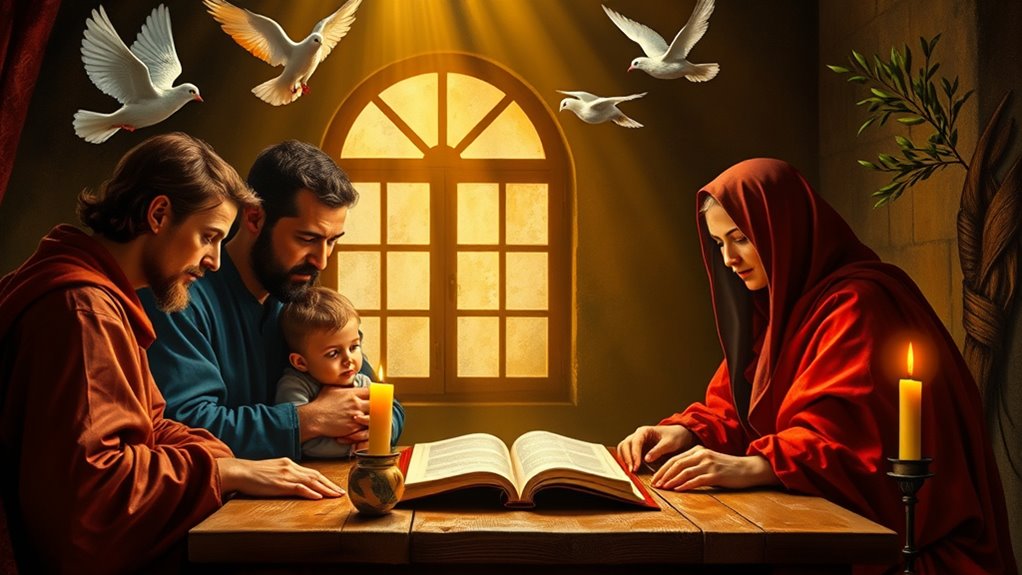
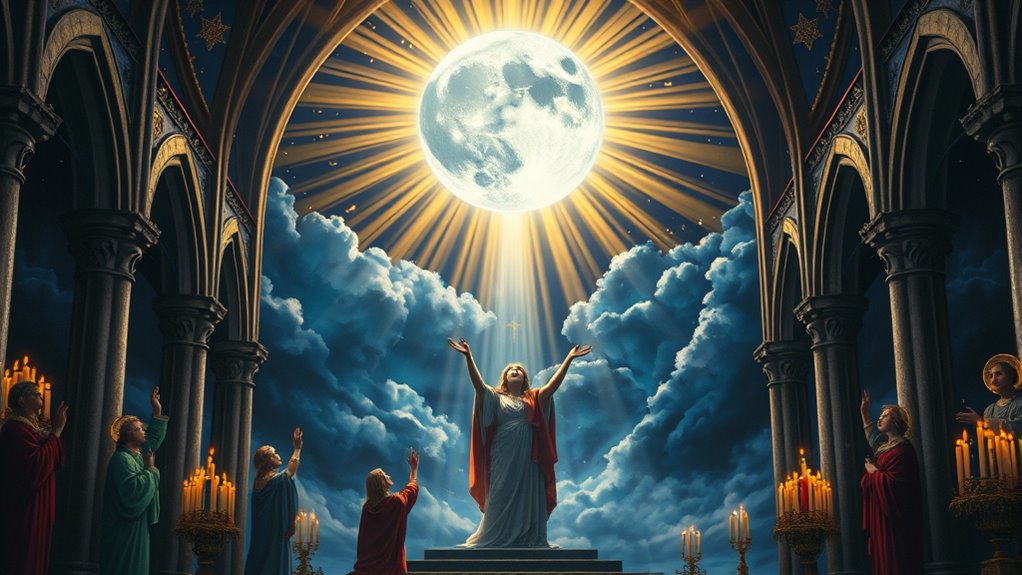
The Bible describes the moon as a purposeful creation with several defined roles. Genesis 1:14–16 assigns it to govern the night, mark seasons, and signal sacred times. Psalm 104:19 reinforces its timekeeping function, while Psalm 81:3 connects it to Israel’s worship calendar. Prophetically, Joel 2:31 and Revelation 6:12 describe the moon turning to blood before divine judgment. Each role reflects a larger theological framework worth exploring further.
Key Takeaways
- God created the moon to provide light at night and to mark signs, seasons, days, and years (Genesis 1:14–16).
- The moon governs the night and separates light from darkness, reflecting God’s ordered design for creation (Genesis 1:17–18).
- Israel’s religious calendar relied on the lunar cycle to time feasts like Passover and the Feast of Tabernacles (Psalm 81:3).
- Psalm 89:37 calls the moon a “faithful witness in the skies,” connecting its reliability to God’s unchanging character.
- Prophetically, the moon will turn to blood before the Day of the Lord, signaling end-times judgment (Joel 2:31).
What Did God Create the Moon For?

According to Genesis 1:14-16, God created the moon to serve several distinct purposes, each one addressing a specific need in the created order. The moon was designed to illuminate the earth during the night, acting as the “lesser light” when the sun is absent. Psalm 136:7 confirms this illuminating function. The moon’s role in marking time also reflects the ancient Near Eastern reliance on Hebrew and Aramaic calendrical practice.
Beyond lighting, the moon was appointed to mark seasons, days, and years, providing an orderly structure to human life. Psalm 104:19 reinforces this timekeeping role.
The moon also serves as a sign, a visible marker communicating divine instruction to all created intelligences, as Genesis 1:14 states. Each purpose is deliberate and interconnected, suggesting the moon was not incidental but carefully designed to meet practical and symbolic needs within creation.
God also designed the moon to govern Israel’s religious calendar and worship, with the lunar cycle determining the timing of feasts such as Passover, the Feast of Tabernacles, and the Feast of Trumpets.
What the Bible Teaches About the Moon’s Purpose

From the opening chapter of Genesis, the Bible establishes the moon as a purposeful creation assigned specific roles within the natural order.
From its very first pages, the Bible presents the moon as a deliberate creation with purpose and intention.
Genesis 1:14 identifies it as a marker for signs, seasons, days, and years. Psalm 104:19 reinforces this, stating directly that God made the moon to mark the seasons.
Beyond timekeeping, the moon governs the night, separating light from darkness as described in Genesis 1:17–18. Psalm 89:37 calls it a “faithful witness in the skies,” connecting its reliability to God’s unchanging character.
Psalm 121:6 extends its function further, presenting the moon as a source of nighttime protection.
Together, these passages present the moon not as an incidental feature of creation, but as an intentional instrument serving humanity and reflecting divine order. Psalm 136:9 affirms that God appointed the moon and stars to govern the night, pairing this act of creation with the declaration that His love endures forever. The Bible’s overall structure, with its many verses and chapters, helps readers locate these passages and understand their context within the broader canon total verses.
Psalm 81:3 points to the moon’s role in marking sacred worship occasions, with the blowing of a trumpet commanded at the New Moon and full moon on solemn feast days.
What Does the Bible Prophesy About the Moon?
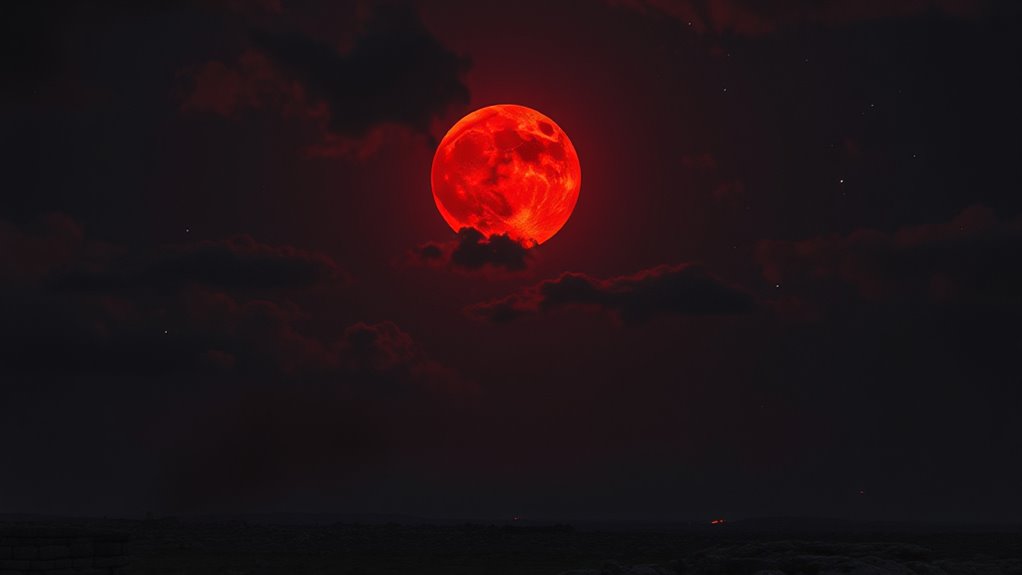
While the Bible presents the moon as a reliable servant of the natural order, it also assigns the moon a prominent role in prophetic texts describing the end of the age.
Joel 2:31 declares the moon will turn to blood before “the great and terrible day of the Lord.”
Peter quoted this passage in Acts 2:20, connecting it to both present and future fulfillment.
Revelation 6:12 describes the moon becoming blood-red following cosmic upheaval during the sixth seal.
Matthew 24:29 states the moon will withhold its light after the tribulation period.
Psalm 89:37 previously established the moon as a faithful heavenly witness, suggesting its prophetic appearances carry deliberate significance.
These passages collectively portray the moon as a visible marker of approaching divine judgment. Observations like lunar eclipses and changing visibility also informed ancient writers about the moon’s phases and their significance.
Joel 2:30 also foretells accompanying wonders of blood, fire, and smoke appearing alongside these celestial signs.
Ezekiel 32:7 and Isaiah 13:10 similarly describe the moon withholding light as a sign of divine judgment against nations, reinforcing this pattern across both major and minor prophetic books.
What Does the Moon Symbolize in the Bible?

Beyond its physical role in creation, the moon carries rich symbolic meaning throughout the Bible, representing themes that range from divine faithfulness to human beauty.
Psalm 89:37 describes the moon as a faithful witness in the sky, using its steady presence to illustrate God’s enduring covenant with humanity. The moon also signals sacred time, as Psalm 104:19 identifies it as a tool for determining seasons, guiding both religious observance and agricultural life.
Psalm 121:6 frames the moon as protection during the night, reflecting God’s watchful care over travelers in darkness. In contrast, Song of Songs 6:10 uses the moon to describe a woman’s beauty, showing how biblical writers drew on the lunar image to illuminate human experience alongside divine truth.
In 1 Corinthians 15:41, Paul distinguishes between different glories in creation, noting that “the moon’s glory” differs from that of the sun, using celestial bodies as symbols of varying degrees of splendor and distinction.
Isaiah 24:23 employs the moon as a dramatic image of divine judgment, depicting the moon being confounded as a sign of God’s overwhelming power and authority over all creation.
Jesus likely spoke Aramaic in everyday life, a Semitic language common in first-century Palestine.