



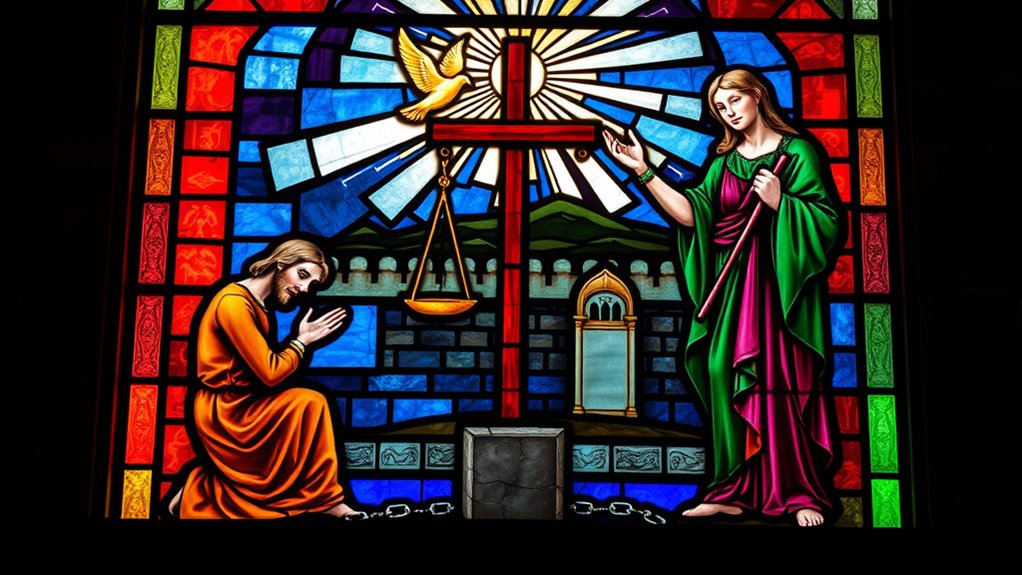
The Bible presents forgiveness as a direct command, not a suggestion. Passages like Ephesians 4:32 and Colossians 3:13 instruct believers to forgive one another, modeling that forgiveness after what God extended through Christ. Matthew 6:14-15 links a believer’s willingness to forgive with receiving divine forgiveness in return. The standard is mercy already given, not personal feelings about the offense. Those exploring the topic further will find the full picture more nuanced than a single verse suggests.
Key Takeaways
- The Bible directly commands believers to forgive others, modeling forgiveness after the grace and mercy God has already extended through Christ.
- Matthew 6:14-15 warns that refusing to forgive others is linked to one’s own forgiveness being withheld by God.
- Luke 17:3-4 and Matthew 18:21-22 teach that forgiveness must be extended repeatedly whenever a person genuinely repents.
- Forgiving someone does not cancel their accountability; consequences, boundaries, and discipline can coexist with genuine forgiveness.
- Ephesians 4:31-32 pairs forgiveness with removing bitterness, rage, and malice, framing forgiveness as obedience rather than optional goodwill.
What the Bible Commands About Forgiving Others

The Bible does not treat forgiveness as an optional virtue but as a direct command embedded in daily Christian life. Matthew 6:14-15 presents the language plainly: forgiving others leads to receiving divine forgiveness, while refusing forgiveness results in it being withheld.
Ephesians 4:32 instructs believers to be kind, compassionate, and forgiving toward one another. This reflects the broader Christian conviction that the Son of God participates in the life of the church by modeling forgiveness.
Colossians 3:13 strengthens this by commanding forgiveness modeled after God’s own forgiveness in Christ.
The standard is not personal feelings or the weight of the offense but the mercy God has already extended.
These commands address sins, trespasses, and general wrongs, covering a broad range of interpersonal conflict.
Forgiveness, according to these passages, is an act of obedience rooted in grace rather than an expression of optional goodwill. Ephesians 4:31 pairs this call to forgiveness with a direct command to put away bitterness, rage, and anger as behaviors incompatible with a forgiving life. Mark 11:25 further connects forgiveness to prayer, instructing believers to forgive before approaching God so that the heavenly Father may also forgive their trespasses.
Why God’s Forgiveness Is the Model for Ours

That manner is described as full, free, and unearned. The theological logic is straightforward: people who have received grace through Christ are called to extend that same grace toward others. The Bible contains 31,102 verses across 66 books, providing the broader scriptural context for these teachings.
Ephesians 4:32 does not stand alone but follows directly from verse 31, which calls believers to first rid themselves of bitterness, rage, anger, brawling, slander, and malice before extending kindness and forgiveness to others. The verse also pairs forgiveness with the command to be kind and tenderhearted, presenting these qualities together as defining characteristics of how believers are to treat one another within the community.
Does the Bible Say to Keep Forgiving Someone?

Once the standard for forgiveness is set at God’s own example, a natural question follows: does that standard apply once, or does it continue each time an offense occurs? Scripture addresses this directly.
Luke 17:3-4 instructs that if someone sins and repents, forgiveness is required — even if the pattern repeats seven times in a single day.
Forgiveness is not optional when someone repents — even if that repentance must be extended seven times in a single day.
Matthew 18:21-22 extends the same teaching further, with Jesus replacing Peter’s suggested limit by saying “seventy times seven.” That number signals abundance rather than a fixed count.
Ephesians 4:32, Colossians 3:13, and Luke 6:37 reinforce forgiveness as an ongoing practice.
The overall biblical pattern treats forgiveness not as a one-time response but as a continuing posture, tied to repentance and modeled after God’s own repeated mercy. Verse 3 establishes that rebuke and forgiveness are held together, keeping both truth and love in balance.
Wesley’s notes on Luke 17:4 clarify that forgiveness is owed only to real penitents, distinguishing genuine repentance from mere repetition of the phrase. Multiple translations, including the NASB, ASV, and Berean Standard Bible, consistently render the verse with repentance as the condition that triggers the obligation to forgive. A helpful habit for studying such passages is reading aloud and using a study Bible to explore historical background and commentary.
Forgiveness in the Bible Doesn’t Mean Ignoring Accountability

Forgiving someone and holding that person accountable are not the same thing in Scripture, and the Bible does not treat them as interchangeable.
Forgiveness releases the offended person from carrying vengeance, but it does not cancel moral responsibility for the wrongdoer.
The two can coexist.
David’s story illustrates this clearly: God forgave David after his sin with Bathsheba, yet serious consequences followed nonetheless.
Scripture also ties forgiveness closely to repentance and honest acknowledgment of wrongdoing, not to minimizing what happened.
Accountability can involve church discipline, legal responsibility, or maintained boundaries, and the Bible supports these as expressions of justice and care.
Forgiveness does not require restored trust or removed safeguards.
Truth-telling about harm, and requiring repair where possible, remains consistent with complete, biblical forgiveness.
Luke 17:3 instructs believers to rebuke before forgiving, making clear that accountability is not separate from forgiveness but embedded within the very call to extend it.
Romans 8:2 declares that the law of life in Christ Jesus brings freedom, not from moral reality, but from the condemning power of sin and death.
The setting of Jesus’ death outside the city walls at Golgotha underscores the biblical theme of removal of sin from the holy community.