


The Bible mentions Damascus across multiple eras, from Abraham’s servant Eliezer of Damascus in Genesis 15:2 to prophetic warnings from Isaiah, Amos, and Jeremiah forecasting the city’s destruction. Situated at a key crossroads between Mesopotamia and Palestine, Damascus held significant military and commercial value. The New Covenant records Paul’s dramatic conversion near the city in Acts 9. Each biblical reference reveals a deeper pattern of judgment, geography, and transformation worth exploring further.
Key Takeaways
- Damascus appears in Genesis as an established city, linked to Abraham’s servant Eliezer and his pursuit of invading kings near Hobah.
- The Barada River made Damascus agriculturally fertile, positioning it as a key crossroads between Mesopotamia, Palestine, and Transjordan.
- Hebrew prophets Isaiah, Amos, Jeremiah, and Zechariah each declared divine judgment against Damascus, predicting ruin, exile, and destruction.
- Acts 9 records Saul traveling to Damascus to arrest Christians before a dramatic encounter with the risen Christ changed everything.
- Ananias restored Saul’s sight on Straight Street in Damascus, marking the city as central to early Christian history.
Damascus in the Bible: Geography, Power, and Patriarchal Origins
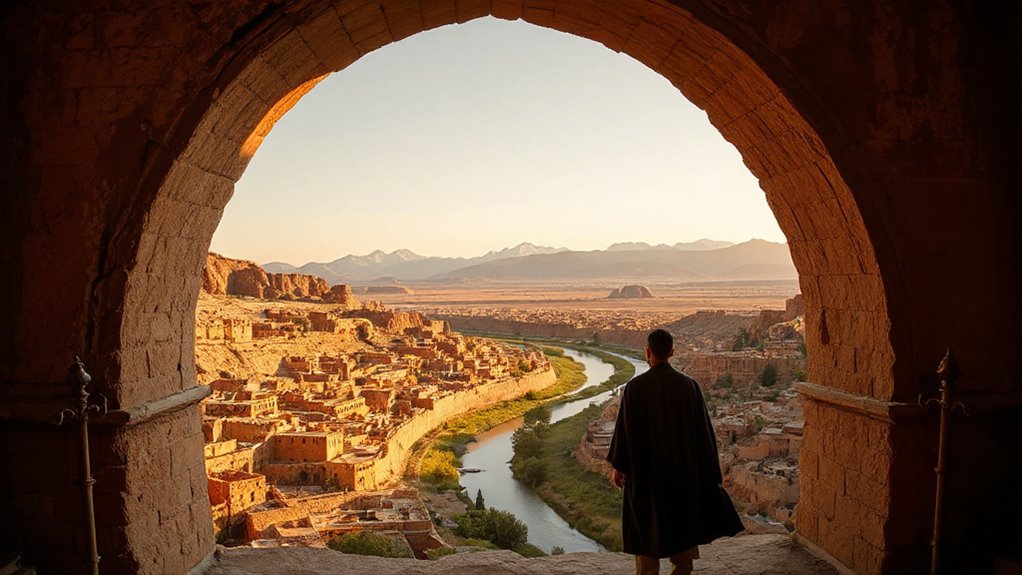
Nestled at the foot of the Anti-Lebanon mountain range and sitting northeast of Mount Hermon, Damascus occupies a plain roughly 2,200 feet above sea level, enclosed on three sides by mountains and open on the east toward the Arabian-Syrian Desert.
This geography made it both defensible and commercially connected, linking the Levant to desert trade routes and northern Canaan. Its long history is reflected in sources written in Aramaic and Hebrew, languages that document the region across millennia.
The Bible treats Damascus as a recognized political and regional center associated with Aram.
Its earliest biblical appearances come in the patriarchal narratives.
Genesis 14:15 references Hobah, north of Damascus, during Abraham’s pursuit of invading kings.
Genesis 15:2 names Eliezer of Damascus as Abraham’s chief servant.
These passages confirm that Damascus was already an established settlement during the Abrahamic era, not merely a later geopolitical development.
The Barada River descended through a mountain gorge and spread across the plain, and its irrigation created fertility that gave Damascus commercial, military, and political importance far beyond what its size alone would suggest.
Damascus also served as a principal crossroads between Mesopotamia and Syria to the north and Palestine and Transjordan to the south, a position that made control of the city a strategic priority for every regional power that arose in the ancient Near East.
What Did the Prophets Say About Damascus?
When the Hebrew prophets addressed Damascus, they did so with consistent purpose: the city stood under divine judgment, and its power would not last.
Isaiah announced that Damascus would become “a heap of ruins” and predicted its wealth would be carried off by Assyria.
Isaiah saw Damascus reduced to rubble, its riches stripped away and handed over to Assyria.
Amos charged the city with cruelty against Gilead, forecasting fire, broken gates, and exile.
Jeremiah portrayed Damascus as gripped by panic, its warriors silenced and its walls consumed by flame.
Zechariah placed Damascus within a broader oracle affirming God’s rule over the nations.
Across these four voices, the recurring themes remain remarkably consistent: destruction, fire, exile, and the collapse of pride.
The prophets treated Damascus not simply as a political rival but as a theological lesson about accountability.
Jeremiah specifically named Ben-hadad’s strongholds as targets of the fire that would devour the walls of Damascus.
Amos further declared that Syria would go into exile to Kir as a direct consequence of Damascus’s transgressions.
The prophetic denunciations also echo wider biblical patterns of judgment occurring outside the city walls where destruction was publicly visible.
Why Damascus Matters in Paul’s Conversion and Early Christianity
Few cities in the New Covenant carry as much narrative weight as Damascus.
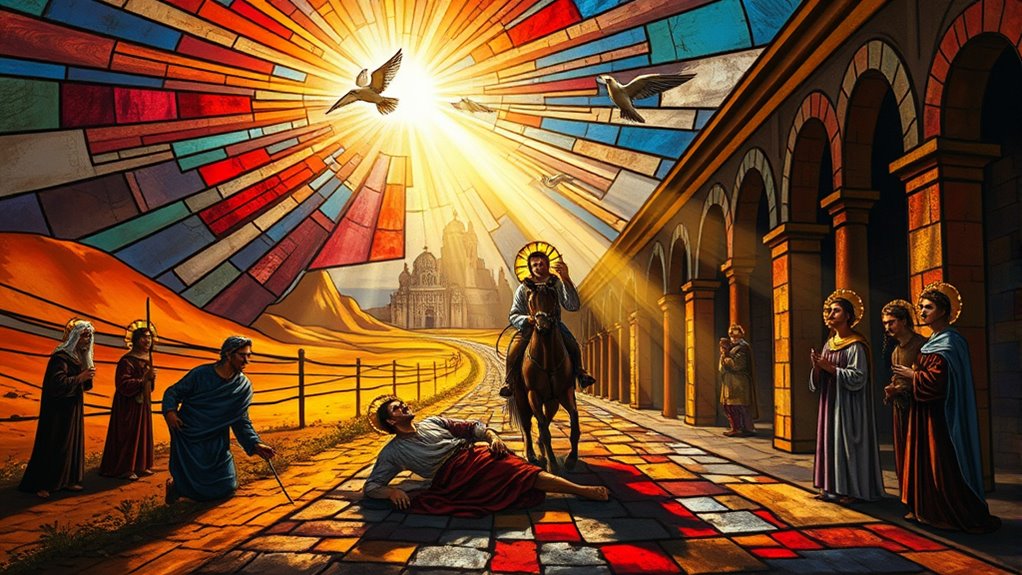
Acts 9 records Saul traveling toward the city to arrest followers of Jesus when a sudden encounter with the risen Christ left him blind and redirected.
He was led into Damascus, where a local disciple named Ananias received a vision instructing him to find Saul on Straight Street.
Ananias laid hands on him, restored his sight, and addressed him as “Brother Saul,” marking immediate inclusion into the Christian community.
Paul’s own account in Galatians 1 confirms he returned to Damascus after time in Arabia, associating the city with the formation of his gospel understanding.
Damascus thus stands as an early, documented anchor point between persecution and apostolic mission. The events around Damascus are often dated to the early AD 30s by scholars using historical and biblical clues.
After his sight was restored, Saul spent several days with disciples and immediately began preaching in synagogues that Jesus is the Son of God.
The disciples’ fear upon his arrival in Jerusalem reveals how dramatically his reputation had preceded him, as they did not believe Saul was a disciple at all.