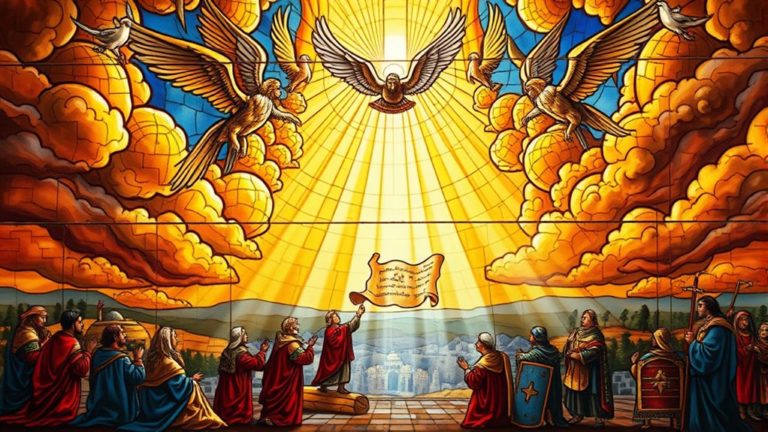


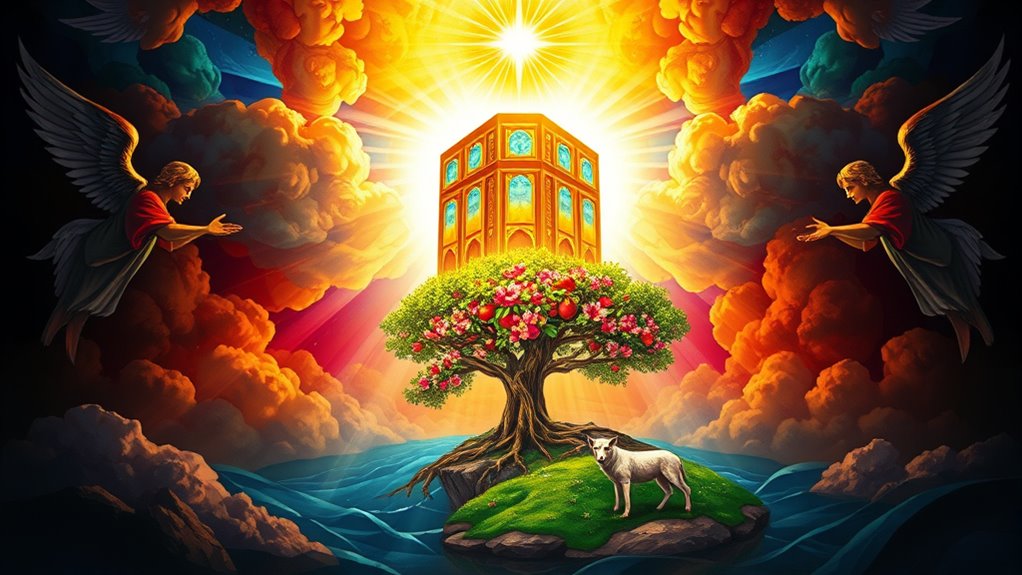
The Bible frames the end times as the final chapter of God’s redemptive plan, not a puzzle for human speculation. Across both testaments, key themes emerge: Christ’s return, resurrection of the dead, divine judgment, and renewed creation. Jesus outlined observable signs in Matthew 24, including wars, famines, and false messiahs. Daniel 12 describes two contrasting outcomes — everlasting life or everlasting contempt. Scripture consistently emphasizes readiness and faithfulness over prediction. The details ahead offer a clearer picture of what each passage actually describes.
Key Takeaways
- The Bible frames the end times around God’s final intervention in history, culminating in Christ’s return, resurrection, divine judgment, and renewal of creation.
- Jesus listed observable signs of the end times, including false messiahs, wars, famines, earthquakes, and pestilences, calling these the “beginning of birth pains.”
- Daniel 12:2 describes two contrasting outcomes at resurrection: everlasting life for the righteous and everlasting contempt for the wicked.
- Christ’s return will be unmistakable, accompanied by a shout, trumpet, and gathering of believers, as described in 1 Thessalonians 4:16–17.
- Revelation 21–22 describes a renewed heaven and earth where death, mourning, and pain end, and righteousness permanently dwells.
What the Bible Actually Says About the End Times

When most people hear the phrase “end times,” they picture doomsday scenarios or precise predictions about when history will close.
The Bible, however, takes a different approach. Scripture frames the end times around God’s final intervention in history, not human timetables. This focus on God’s action reflects core Christian convictions about divine unity and persons, including the roles of Father, Son, and Spirit as taught in the doctrine of the Trinity.
Scripture doesn’t follow human timetables. It frames the end times around God’s decisive intervention in history.
Central themes include Christ’s return, the resurrection of the dead, divine judgment, and the renewal of creation.
These ideas appear across both covenants, from Daniel’s visions of deliverance to Jesus’ warnings in Matthew 24 and the apostles’ letters.
Rather than encouraging speculation, New Testament teaching consistently emphasizes readiness, endurance, and faithfulness.
The end, as Scripture presents it, is not simply a moment of destruction.
It is the completion of a larger story of redemption, pointing toward restoration rather than despair. Daniel 12:2 describes two contrasting outcomes for those who rise, some to everlasting life and others to everlasting contempt.
Daniel 12:3 adds that those who are wise and lead many to righteousness will shine like the stars forever and ever.
Signs of the End Times Jesus Said Would Come

Before describing the final outcome of history, Jesus outlined a series of observable signs his followers could expect to see along the way.
Recorded across Matthew 24, Mark 13, and Luke 21, these signs include false messiahs, widespread wars, famines, earthquakes, and pestilences. Jesus primarily taught in Aramaic, the common spoken language of 1st-century Palestine, which shaped how his sayings were transmitted and remembered.
Jesus called these events the “beginning of birth pains,” meaning they signal movement toward the end without marking its arrival.
Persecution of believers, betrayal within communities, and hatred from all nations were listed as middle-stage developments.
The gospel reaching all nations was presented as a necessary milestone before the end comes.
Final signs include cosmic disturbances and, in Matthew 24, the “abomination of desolation.”
Jesus framed these markers not to provoke fear, but to encourage discernment and endurance among those watching. Among the most prominent indicators tied to end-times prophecy is the nation of Israel, whose recognition as a sovereign state in 1948 is viewed by many interpreters as a fulfillment of God’s promise to Abraham of an everlasting possession.
Jesus also warned that many false prophets would arise during this period, performing great signs and wonders capable of leading even the elect astray.
The Second Coming in Scripture

Scripture uses the Greek word *parousia*, meaning arrival or presence, to describe Christ’s return.
Jesus himself promised in John 14:3 to “come again,” and Acts 1:11 records angels confirming that the same Jesus who ascended would return “in like manner.”
Paul describes the event as public and unmistakable — the Lord descending from heaven with a shout, a trumpet, and the gathering of believers (1 Thessalonians 4:16-17).
Hebrews 9:28 frames his return as a second appearance, this time bringing salvation.
Matthew 24:30 describes the Son of Man coming on clouds of heaven with power and great glory, and all the tribes of the earth mourning at the sight.
The New Testament presents this not as a minor footnote but as the climax of redemption itself. Those seeking to explore these passages further should note that Bible Gateway is currently unavailable for users in the UK and EU while a new solution is being developed.
Archaeological study of Jerusalem’s sites, including the place identified as Golgotha near the Church of the Holy Sepulchre, helps contextualize the Gospel narratives by showing the physical settings where key events unfolded, such as Jesus’ crucifixion at the place of the skull.
Resurrection, Final Judgment, and the Fate of the Dead
Scripture does not treat death as the end of the story. The New covenant consistently presents resurrection as a future, bodily event for all people.
John 5:28–29 distinguishes between a “resurrection of life” and a “resurrection of judgment,” while Acts 24:15 confirms this scope applies to both the just and the unjust.
Revelation 20:11–15 then describes the Great White Throne, where the dead, great and small, stand before God and are judged according to their works.
That detail matters: judgment is tied to actions done in the body, as 2 Corinthians 5:10 also affirms.
For the righteous, the outcome is eternal life.
For the condemned, it is exclusion from life.
Scripture describes the dead as having no conscious awareness, a state compared repeatedly to sleep, awaiting resurrection rather than existing in ongoing bliss or torment.
The framework is consistent, universal, and grounded in moral accountability, and this understanding of judgment and works aligns with Catholic teaching on the role of faith and works. Bible Gateway, a widely used resource for studying these passages, is not currently available in certain regions while a new solution is being developed.
The New Heaven, New Earth, and God’s Final Restoration

Beyond judgment and resurrection, the biblical story moves toward a final act of divine renewal. Isaiah 65:17 announces “new heavens and a new earth,” where former things are no longer remembered. The New Testament also situates this promise within a long biblical timeline that culminates in the first century AD and beyond, highlighting the Scripture’s multi-century composition process and its forward-looking hope for a renewed creation.
Revelation 21:1 echoes this, describing a new heaven and earth after the first had passed away. The sea, a symbol of the old disordered world, disappears entirely.
Revelation 21:2–3 introduces the new Jerusalem descending from God, establishing His dwelling permanently among humanity.
Revelation 21:4 adds that death, mourning, and pain will exist no more.
Revelation 22:3 declares the curse reversed, and the tree of life reappears. The new Jerusalem is described as an enormous cube-shaped city, with twelve foundation stones bearing the names of the twelve apostles of the Lamb.
Second Peter 3:13 frames this renewed creation as the place where righteousness permanently dwells, completing God’s restoration of heaven, earth, and human life. Isaiah 65:25 paints a picture of this peaceful restoration, where the wolf and lamb feed together and nothing harms or destroys on God’s holy mountain.