


When was the Bible written? The Bible was written over roughly 1,500 years, from the earliest Old Testament material around 1500-1400 BC to the last New Testament writings around 100 AD. Dates for individual books vary, and scholars and traditional readers often differ on them.
Key Takeaways
- The Old Testament took shape over about a thousand years, and the New Testament was written within about 50-55 years.
- Prophetic books cluster between the eighth and fifth centuries BC, around the exile and return.
- The Greek Septuagint translated the Hebrew Scriptures in the third century BC.
- The canon was recognized gradually, and manuscript evidence supports careful transmission.
When Was the Old Testament Written?
The Bible’s composition spans over a millennium, one of history’s most extensive literary projects, which emerged from ancient civilizations across the Near East. Modern scholarship highlights composite authorship and editorial shaping in the Bible’s formation. The earliest portions of the Old Testament began taking shape around 1500-1400 BC, with foundational elements of the Pentateuch emerging in this period. The Exodus narrative, traditionally dated to 1446 BC, marks an early root of biblical storytelling, while the Book of Joshua reflects events from approximately 1405-1385 BC according to biblical chronology.
During the period of Judges and the early monarchy, biblical literature continued to develop. The Psalms originated across a vast span from 1410 BC to 450 BC, with the earliest compositions attributed to the Davidic period around 1030 BC. Samuel and Kings were primarily composed between 930-540 BC, though much earlier content likely existed in oral tradition before being written down.
Prophetic Writings Before the Exile
The era of divided kingdoms produced significant prophetic literature. Amos wrote between 760-750 BC, followed by Hosea from 750-715 BC and Micah from 735-700 BC. Isaiah’s prophecies emerged around 700-681 BC, while later prophets including Nahum, Zephaniah, and Habakkuk wrote in the years leading up to Jerusalem’s fall in 586 BC. That catastrophe shaped Lamentations and Ezekiel’s prophecies, dated 593-571 BC.
Post-Exilic Writings
The post-exilic period brought additional writings as Jewish communities rebuilt. Daniel began around 530 BC, while Ezra, Nehemiah, and Esther were composed between 440-400 BC. Haggai and Zechariah wrote during temple reconstruction around 520 BC, and Malachi represents one of the final Old Testament voices, around 440-430 BC.
The Greek Septuagint translation emerged between 250-200 BC, making the Hebrew Scriptures accessible to broader audiences.
When Was the New Testament Written?
Several centuries later, New Testament writings began. James wrote his epistle between 45-50 A.D., potentially making it the earliest New Testament book, and Paul’s letters followed around 50-51 AD. The Gospels came next, with Mark written around 70 AD and John completing the collection around 90-100 AD. Overall, the New Testament books were written between about 45 and 100 AD.
Common Questions About How the Bible Was Written and Preserved
Who Decided Which Books Would Be Included in the Bible?
The canon was determined through a gradual process involving Jewish authorities, early Christian leaders, and church councils. Jewish scholars established the Hebrew Scripture canon by the second century BC.
Early Christians like Athanasius identified the twenty-seven New Testament books by 367 CE. The Council of Rome in 382 CE and later councils at Hippo and Carthage formally affirmed the complete biblical canon that remains widely accepted today.
How Accurate Are the Earliest Surviving Bible Manuscripts?
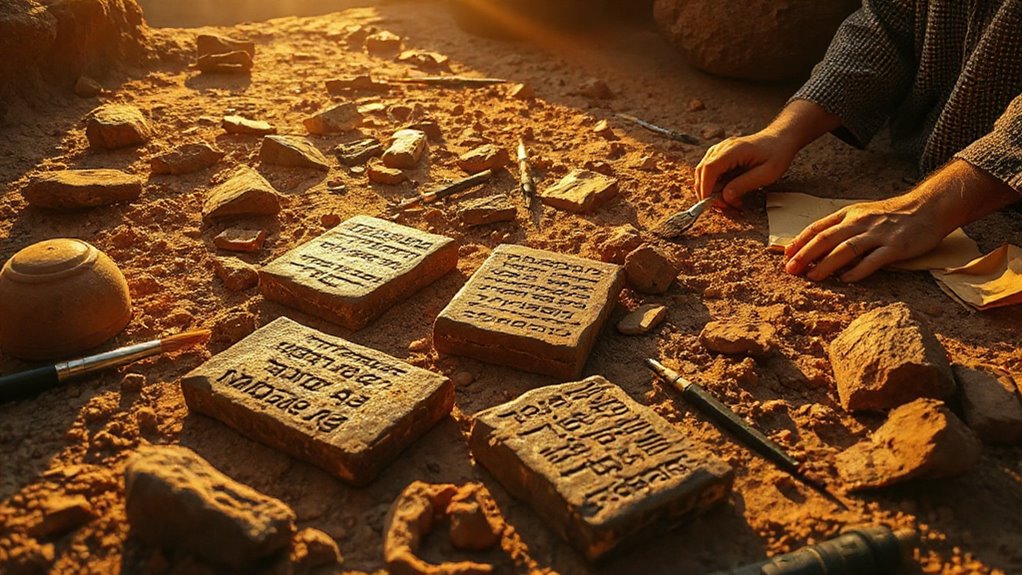
The earliest surviving manuscripts demonstrate remarkable accuracy, even though they are copies made centuries after the originals. The Dead Sea Scrolls show striking fidelity to later texts, and early New Testament papyri like P75 align closely with fourth-century manuscripts. Textual variants exist because of manual copying, but scholars can reconstruct reliable texts by comparing these ancient witnesses.
What Languages Was the Bible Originally Written In?
The Bible was originally written in three languages. The Old Testament was primarily composed in Biblical Hebrew, with some sections in Aramaic, particularly parts of Ezra, Daniel, and one verse in Jeremiah.
The entire New Testament was written in Koine Greek, the common language of the Eastern Mediterranean from 300 BC to 300 AD, which helped the Christian message spread throughout the Graeco-Roman world.
Why Are There Different Versions of the Bible Today?
Different versions exist because of varying translation philosophies and manuscript sources. Some translations prioritize word-for-word accuracy, like the ESV, while others emphasize readability, like the NIV. Modern versions use broader manuscript evidence than older translations such as the King James Version, and denominational preferences and updated language have produced multiple versions for diverse readers.
How Do We Know the Bible Wasn’t Changed Over Time?
Scholars point to extensive manuscript evidence. Over 5,800 Greek New Testament manuscripts exist, many within a century of the originals. The Dead Sea Scrolls show the Hebrew Scriptures remained virtually unchanged across centuries, and the Masoretes used meticulous copying procedures, counting letters to prevent errors. Archaeological discoveries are often cited as supporting biblical accounts, and textual criticism helps identify and correct minor variations.
Reading the Bible With Its Timeline in Mind
Knowing when each book was written helps you read it in its own historical setting. Choose a book, note its approximate date and circumstances, and read it with that background in view.