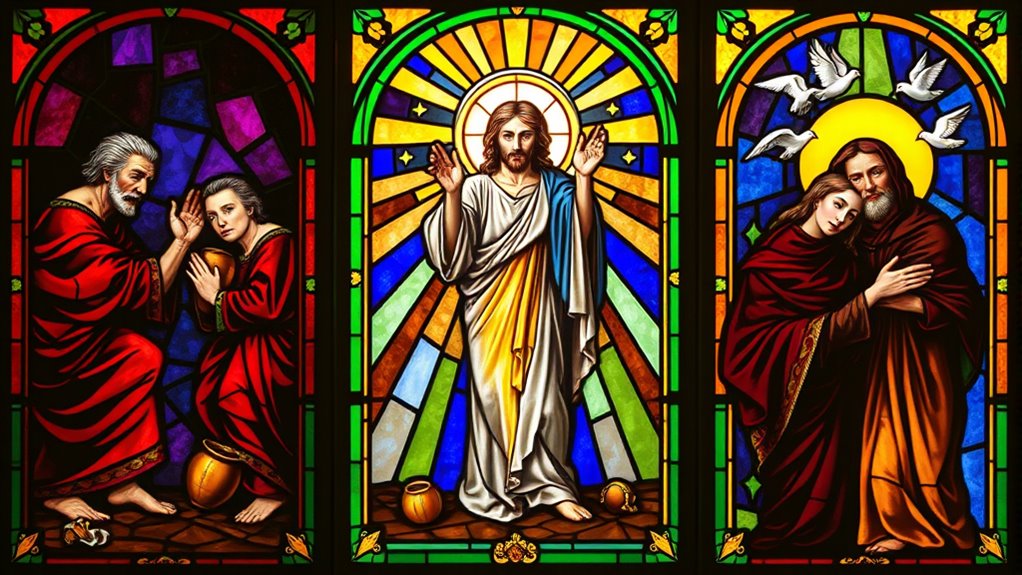
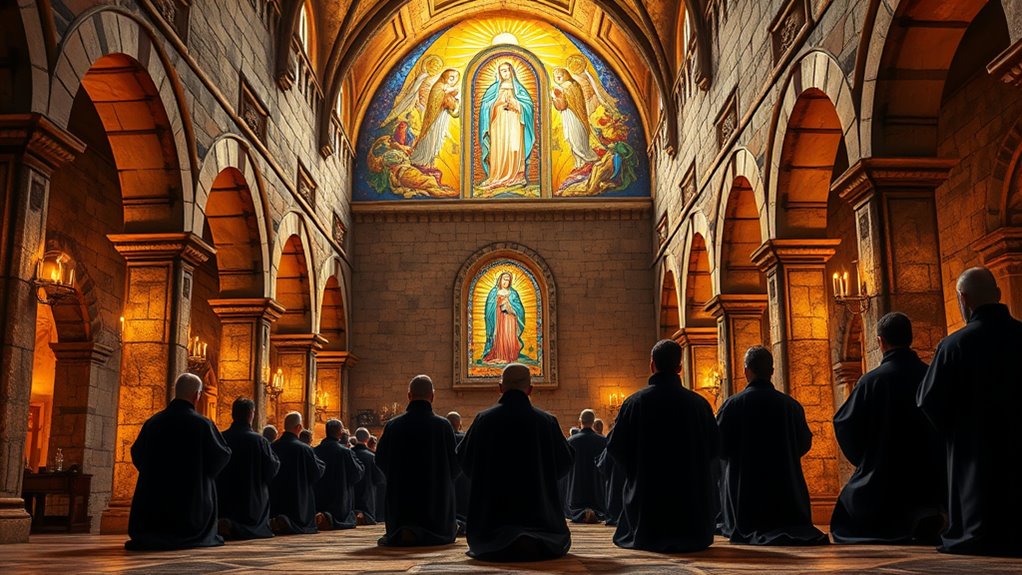
The Abbey of the Dormition has housed Benedictine monks on Mount Zion since 1910, standing through Jerusalem’s turbulent twentieth century. German monks were interned twice—from 1939 to 1945 during World War II and again in 1948 during the Arab-Israeli War—yet the community persisted. After 1948, the abbey occupied Israeli-controlled territory directly opposite Jordan’s Old City. The monks gained autonomy in 1951 and elected their first abbot in 1979. Throughout wars and geopolitical upheaval, the Benedictines maintained their prayer schedule and preserved this site marking Mary’s traditional resting place, their continuity embodying resilience amid conflict.
On a hill outside Jerusalem’s Old City walls, the Abbey of the Dormition stands as a witness to faith sustained through decades of conflict. This Catholic abbey, maintained by the Benedictine Order since the early twentieth century, marks the traditional site of Mary’s dormition, the end of her earthly existence. Completed in 1910, the building blends Romanesque and Byzantine architecture, featuring a striking bell tower and colorful mosaics that draw visitors to Mount Zion near Zion Gate.
The abbey’s foundations reveal layers of religious history. A Byzantine basilica called Hagia Sion stood here in the early fifth century under Bishop John II, receiving the relics of Saint Stephen on December 26, 415. This church appeared on the sixth-century Madaba Map before Persian forces destroyed it in 614 during the sack of Jerusalem by Sasanian king Khosrau II.
Crusaders built a twelfth-century church on the ruins, establishing a monastic order that was later destroyed in the thirteenth century. The monks relocated to Sicily and eventually merged with the Jesuits in 1617.
The twentieth century brought repeated challenges to the Benedictine community. German monks faced internment from 1939 to 1945 during World War II, then again in 1948 during the Arab-Israeli War. After 1948, the abbey occupied Israeli-controlled territory on Mount Zion, positioned directly opposite the Jordanian-held Old City. In 1951, the community separated from the Beuron Congregation and came under direct supervision of Rome’s Abbot-Primate of Benedictines. The monks elected their own abbot for the first time in 1979.
Inside, the abbey’s artistic features reflect its spiritual purpose. The ground floor honors Pentecost with icons and religious symbols, while an ebony sculpture in the crypt depicts Mary’s dormition. Archaeological foundations from earlier churches remain visible from the 1910 construction.
Through regional wars and geopolitical tensions, the Benedictine community has maintained continuous presence at this sensitive location. Their focus on prayer and preservation persists despite upheavals, offering a quiet example of commitment amid historical strife. The monks’ life of communal prayer and service echoes biblical reasons for gathering, such as corporate prayer and mutual encouragement.