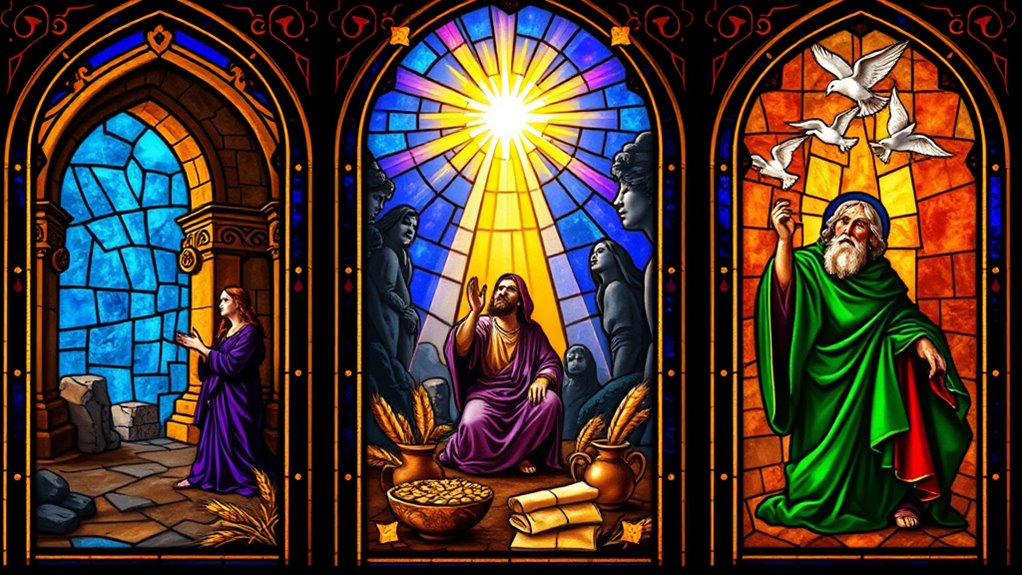






Biblical theology reads Scripture as a unified story that unfolds progressively from Genesis to Revelation, tracing how God reveals his redemptive plan through historical acts rather than organizing truth into abstract doctrinal categories. This approach follows the narrative arc across all sixty-six books, observing how themes develop like seeds growing into trees and how Old Covenant promises find fulfillment in Christ. Unlike systematic theology, which arranges teachings by topic, biblical theology preserves the timing and context of revelation, showing when and how God disclosed each piece of his plan. The following pages explore how this method strengthens understanding of Scripture’s coherent message.
Biblical theology represents a distinct approach to understanding Scripture that focuses on how God has revealed himself progressively throughout history, from Genesis to Revelation. Unlike systematic theology, which organizes doctrines into abstract categories like sovereignty or justification, biblical theology traces themes as they unfold across the narrative arc of Scripture’s sixty-six books. This method emphasizes reading the Bible on its own terms, following concepts like sacrifice and covenant through the storyline rather than extracting them into timeless propositions.
Biblical theology traces God’s progressive revelation through Scripture’s narrative arc rather than extracting doctrines into abstract categories.
The discipline operates inductively, historically, and descriptively. Scholars engage in careful exegesis of individual books and larger biblical corpora, examining how each author contributes to the unfolding drama of redemption. This approach respects the diverse literary and historical contexts within Scripture, acknowledging that a psalm functions differently than a gospel, and that Moses speaks from a different vantage point than Paul. The organizing principle remains the historical progression of divine revelation, moving from seed to tree as God’s redemptive plan develops.
Biblical theology asks not just what Scripture teaches, but when and how those teachings emerged. This temporal awareness proves essential for application, since understanding the context of God’s acts helps readers grasp their significance. The method employs what practitioners call a hermeneutical triad: attention to history, literature, and theology working together. Exegetes trace inner-biblical connections through intertextual links, narrative patterns, types, and symbols that recur across the canon.
The purpose extends beyond academic analysis. Biblical theology helps believers understand how the Old Covenant promises find fulfillment in Christ, revealing the coherence of Scripture as a unified story rather than disconnected fragments. It explores God’s character through his mighty acts in creation and redemption, showing how divine activity reveals not only theological truth but also the human story of sin and salvation.
This discipline complements rather than replaces systematic theology. While systematic approaches synthesize biblical data into doctrinal statements, biblical theology preserves the developmental arc of revelation. Both serve the church, though biblical theology particularly strengthens comprehension of Scripture’s narrative unity, coordinating the canon’s diverse voices into what some describe as a unified choir proclaiming God’s redemptive work throughout history. The Bible presents itself as inspired Scripture intended for teaching, correction, guidance, and spiritual transformation.