

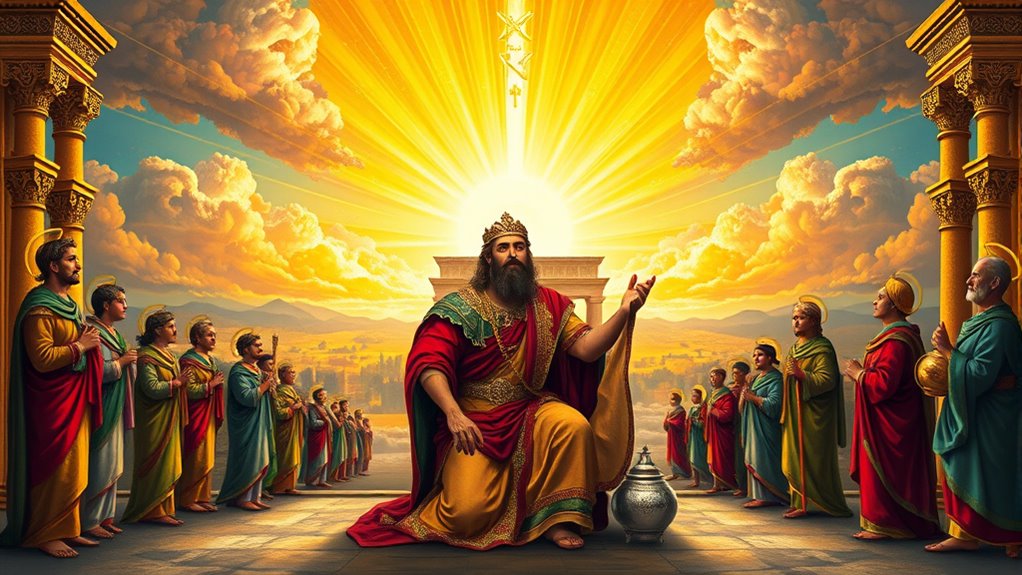
Historical precedent shows Persian rulers have supported biblical texts before. Cyrus the Great allowed Jewish exiles to return to Jerusalem and funded temple reconstruction, fulfilling prophecies in Isaiah and Ezra. A 19th-century Persian Shah commanded the New Testament be read aloud and supported its distribution throughout Persia. While modern Iran‘s government differs sharply from ancient Persia, these examples demonstrate that Iranian leaders have previously endorsed scripture. The historical record reveals patterns that challenge assumptions about immutable opposition between Persian leadership and biblical faith.
The question of whether Iran’s current leaders could praise the Bible may seem improbable, yet history suggests such a scenario is not without precedent. Ancient Persia, the predecessor to modern Iran, produced kings who openly acknowledged biblical teachings and supported the restoration of Jerusalem. Cyrus the Great, stirred by God according to Ezra 1:1–4, issued an edict allowing Jewish exiles to return to Jerusalem and rebuild their temple. He proclaimed that the Lord had given him all the kingdoms of earth for this purpose, as recorded in 2 Chronicles 36:23, and financed the project with gold and silver from his treasury.
Ancient Persian kings openly praised biblical teachings and funded the restoration of Jerusalem, demonstrating unprecedented support for God’s purposes.
Isaiah 45:1 identifies Cyrus as God’s anointed, chosen to subdue nations before him. The Jewish historian Josephus wrote that Cyrus read Isaiah’s prophecies about himself and marveled at them. The Dead Sea Scrolls confirm that Isaiah predates Cyrus by centuries, with copies dating to 200 BCE. Other Persian rulers continued this pattern of supporting biblical purposes. Artaxerxes provided Nehemiah with letters to rebuild Jerusalem’s walls, while King Ahasuerus circulated a decree that saved the Jewish people from destruction, as detailed in the book of Esther.
This tradition extended into more recent centuries. In the 19th century, a Persian Shah commanded his attendants to read the New Testament from beginning to end. He pledged support for its distribution throughout Persia and promised royal favor to those teaching it. This approval enabled missionaries like Peter Gordon and William Glen to distribute hundreds of copies with relative freedom.
Biblical passages emphasize God’s sovereignty over Persian leadership. Ezra 1:1 states that God stirred the spirit of Cyrus, while Isaiah 44:24–45:25 shows God directing him to fulfill divine purposes. Jeremiah 49:39 promises restoration of Elam’s fortunes in latter days, referring to territory in modern southwestern Iran. Today, reports indicate explosive growth of Christianity within Iran despite official restrictions. While prophecy positions Persia in end-times events, including the coalition described in Ezekiel 38, history demonstrates that Persian leaders have previously aligned themselves with biblical narratives, suggesting possibilities for future developments. A key historical example is Cyrus’s role as a Fulfillment of prophecy that influenced both Jewish restoration and later interpretations.