

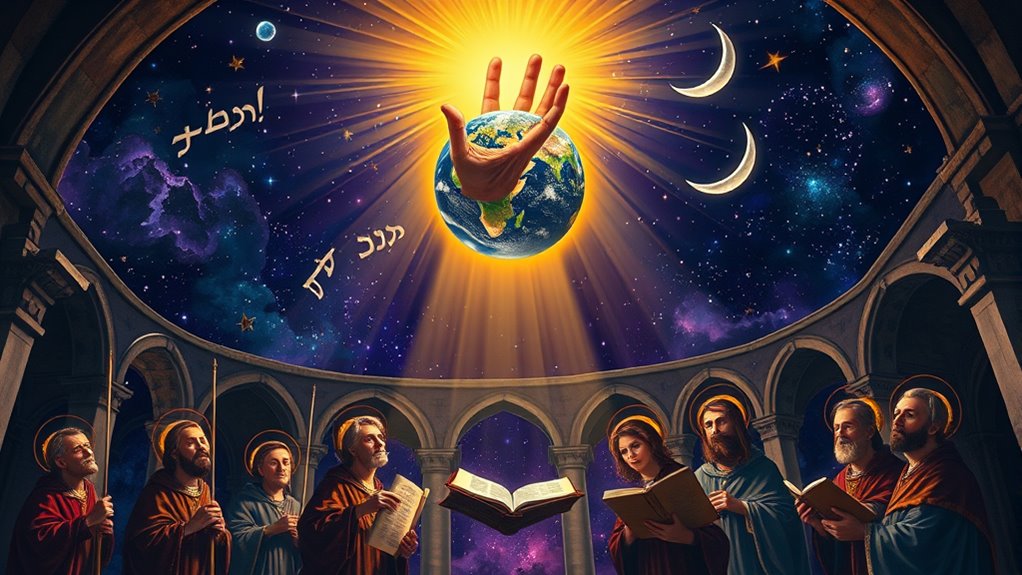
The Bible does not explicitly state that the Earth is flat, though interpretations vary based on linguistic analysis and cultural context. Hebrew words like *khûg* in Isaiah 40:22 can mean “circle,” “sphere,” or “globe,” while Latin translations historically used “sphere.” Passages such as Job 26:7, describing Earth hanging “on nothing,” align with modern understanding of planetary suspension in space. Biblical descriptions often use ancient Near Eastern imagery that requires careful interpretation, considering both original language and contemporary scientific knowledge to fully understand their meaning.
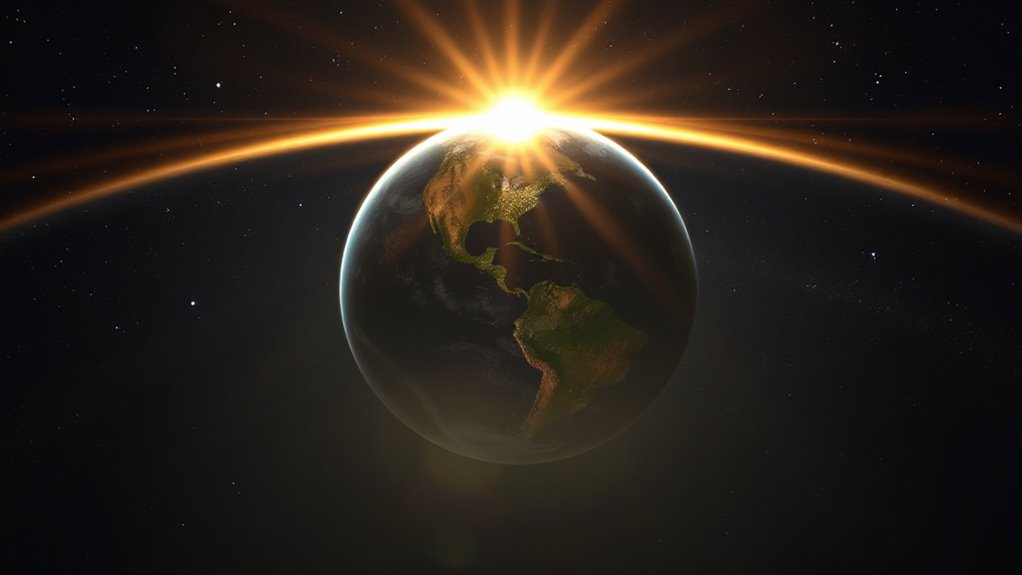
The relationship between biblical texts and Earth’s physical shape has sparked thoughtful discussion among scholars, theologians, and curious readers for centuries. Scholars often rely on textual criticism alongside linguistic and historical methods to date and interpret these writings. When examining Hebrew scripture, researchers find nuanced language that requires careful interpretation rather than surface-level reading.
The Hebrew word *khûg*, appearing in Isaiah 40:22, serves as a central point of analysis. While often translated as “circle,” this term can imply three-dimensional roundness or spherical shape. Some ancient Latin Bibles from the 16th to 18th centuries translated *khûg* as “sphere” or “globe,” suggesting historical understanding of the earth’s roundness. In Job 26:10, *khûg* functions as a verb meaning “to make spherical,” further supporting interpretations of earth’s curved nature.
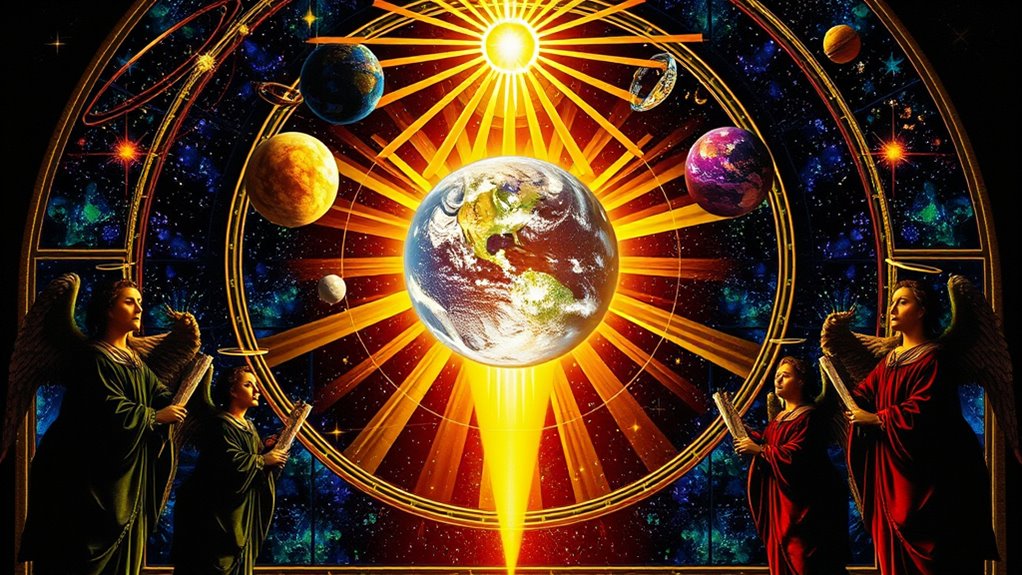
Several biblical passages align with modern understanding of Earth’s shape. Job 26:7 describes God hanging “the earth on nothing,” which contrasts sharply with ancient flat-earth beliefs and suggests suspension in space. This imagery resonates with contemporary knowledge of planetary mechanics. Additionally, Genesis 1 describes land and waters gathering “in one place,” which geometrically fits spherical models better than flat disc concepts.
Biblical descriptions of Earth suspended in space and waters gathering spherically align remarkably with modern planetary science.
The psalm stating earth’s foundations “should not be moved” uses the Hebrew word *môt*, meaning “to be shaken or overthrown” rather than prohibiting rotational motion. This distinction matters when considering whether biblical texts support or contradict scientific understanding.
However, some passages invite different interpretations. References to “four corners of the earth” and descriptions of sky vaults have led some readers toward flat-earth conclusions. Traditional ancient Near Eastern cosmology included flat earth concepts with dome-shaped heavens, and certain biblical imagery may reflect this cultural context without explicit correction. Detailed word study of Hebrew terms in these passages reveals no clear indication of Earth’s specific geometric shape in the original language.
Scholars note that water suspended in space naturally forms spherical shapes, supporting roundness interpretations. The curved shadow during lunar eclipses, changing star visibility with latitude, and distant mountains appearing top-first all demonstrate spherical earth properties that align with careful biblical interpretation. The Arabic equivalent kura, meaning ball, is used in translations of Isaiah 40:22, providing additional linguistic support for spherical interpretations.
Rather than definitively declaring earth flat, biblical texts appear to use language compatible with both ancient cultural understanding and modern scientific knowledge, leaving room for thoughtful interpretation.
Frequently Asked Questions
Why Do Some Christians Still Believe the Earth Is Flat Today?
Some Christians believe the earth is flat due to literal interpretations of biblical passages mentioning the “firmament” and “corners of the earth.”
Studies show 52% of flat earth believers are strongly religious, compared to 20% of the general population.
These individuals often view scientific consensus as contradictory to Scripture and embrace conspiracy theories suggesting governments hide earth’s true shape to undermine faith in God.
How Did Ancient Civilizations Know the Earth Was Round Before Modern Science?
Ancient civilizations discovered Earth’s roundness through careful observation and reasoning. Greek philosopher Pythagoras proposed a spherical Earth around 500 BCE by studying the Moon’s shape.
Aristotle later provided compelling evidence: Earth’s circular shadow during lunar eclipses, ships disappearing hull-first over horizons, and different star constellations visible from various latitudes.
Eratosthenes remarkably calculated Earth’s circumference around 240 BCE, achieving results close to modern measurements.
What Do Other Religious Texts Say About the Earth’s Shape?
Other religious texts offer varied perspectives on Earth’s shape. The Quran contains verses some interpret as describing a spherical, egg-shaped Earth.
Hindu scriptures like the Puranas sometimes depict Earth as a flat disk called Jambudvipa, while other texts describe cosmic spheres.
Buddhist cosmology often portrays Earth as a flat surface supported by animals.
Ancient Mesopotamian and Egyptian texts typically described flat Earth models beneath dome-shaped skies.
Did Medieval Christians Really Believe the Earth Was Flat?
Medieval Christians largely accepted Earth’s spherical shape, contrary to popular misconceptions. This “flat Earth error” emerged from 19th-century works by John William Draper and Andrew Dickson White, who depicted medieval Christians as scientifically backward.
Key figures like Augustine discussed cosmology based on classical sources, though they questioned antipodean inhabitants for theological reasons. Some exceptions existed, like Cosmas Indicopleustes, but spherical Earth understanding predominated among medieval Christian scholars.
How Do Flat Earth Believers Explain Satellite Images and Space Travel?
Flat Earth believers typically dismiss satellite images as fabricated by space agencies like NASA, citing color inconsistencies and shifting continent positions as evidence of manipulation.
They explain GPS functionality through ground-based towers rather than orbiting satellites, and view space travel as elaborate hoaxes.
Some propose a dome above Earth that prevents actual space exploration.
When satellites like the International Space Station are observed overhead, believers often reinterpret these sightings as misidentified aircraft or deliberate deceptions.