


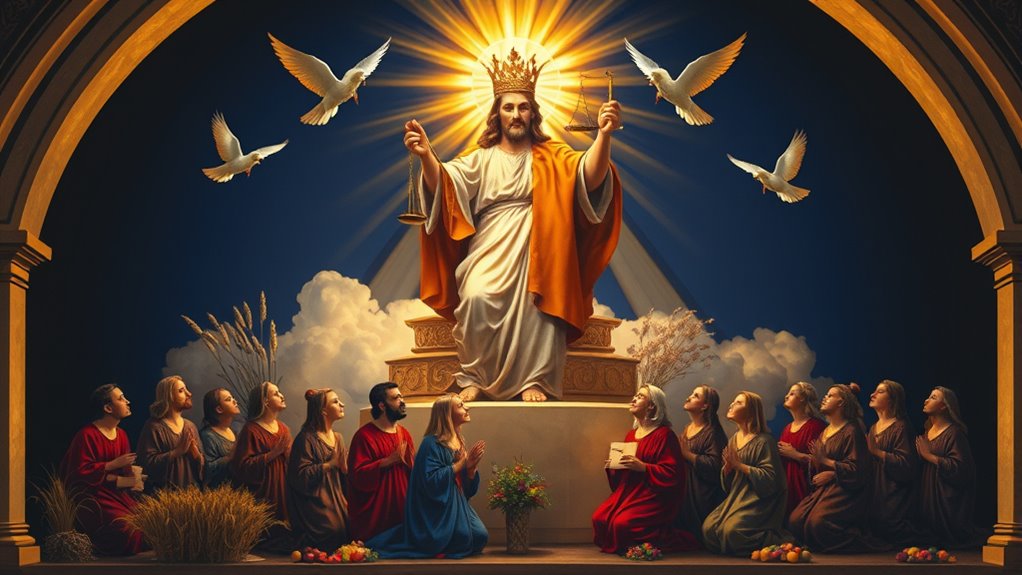



Fr. Pasolini’s declaration frames fraternity as a binding duty amid conflicts in Afghanistan, Somalia, Myanmar, Gaza, Sudan, and the Democratic Republic of Congo that have displaced millions and collapsed food systems across multiple regions. His message emphasizes that humanitarian response transcends borders and ideologies, grounded in biblical teachings on compassion and service that transform abstract ideals into practical aid and justice. With 28.6 million requiring assistance in Ethiopia alone and nearly 7 million internally displaced in DR Congo, his framework connects moral obligation to survival needs in an interconnected world where further exploration reveals how sustained crises demand sustained solidarity.
Across a fractured globe, millions endure conflicts that have uprooted families, collapsed food systems, and forced entire populations into uncertain futures. Afghanistan, Somalia, and Myanmar represent just a fraction of nations where violence has become a persistent reality, demanding humanitarian responses that stretch across borders and ideologies.
Violence uproots millions worldwide, collapsing systems and demanding humanitarian action that transcends borders and ideologies.
The numbers tell a sobering story. Ethiopia’s UN estimates show 28.6 million people requiring humanitarian assistance as of early 2024, while the Democratic Republic of Congo counts 21.2 million in need, with nearly 7 million forced to flee their homes. Chad’s humanitarian needs surged by 1 million people between 2024 and 2025 as conflict intensified. In Sudan, military fighting has caused a complete collapse of economic, health, and food systems, leaving widespread hunger and disease in its wake.
Displacement defines the current crisis. Myanmar’s 2017 violence drove nearly 1 million Rohingya into Bangladesh, creating Cox’s Bazaar, the world’s largest refugee settlement. The Sahel region, encompassing Burkina Faso, Mali, and Niger, has displaced over 4 million people amid armed rebel groups and local militias. These three nations all experienced coups between 2020 and 2023, compounding instability with governance collapse.
Regional conflicts follow distinct patterns. Eastern Congo’s North and South Kivu provinces face sporadic violence waves centered on land, resources, and power. Ethiopia’s Tigray and Amhara regions have endured conflict since November 2020, though a peace deal was signed in Tigray in November 2022. The Lake Chad Basin’s intercommunal conflict has persisted for 15 years, affecting Chad, Cameroon, Nigeria, and Niger, with 10.2 million people requiring assistance.
Humanitarian operations continue despite obstacles. Ukraine receives food aid reaching 2 million people monthly since operations resumed in 2022. Somalia’s civil war, ongoing since at least 1991, remains one of the world’s longest-running conflicts. Gaza faces active fighting driving food insecurity.
In this landscape of displacement and need, Fr. Pasolini’s message emerges with particular weight. He declares fraternity not as distant aspiration but as binding duty, a practical necessity in times when borders blur and suffering connects humanity across continents. The Bible’s teachings on compassion and service emphasize practical aid and justice as foundational responses to such suffering.