King Saul, Israel’s first king anointed by the prophet Samuel, lost his kingdom through repeated acts of disobedience followed by incomplete repentance. After unlawfully offering sacrifices at Gilgal and sparing Amalekite king Agag against God’s command, Saul admitted wrongdoing but blamed others and focused on his reputation rather than genuine remorse. Samuel declared God’s final rejection as the Spirit departed from Saul. The distinction between true contrition and fear of consequences remains central to understanding his tragic fall and the lessons his story offers about authentic repentance.
The gap between religious devotion and genuine obedience reveals itself starkly in the biblical account of Israel’s first king. Saul, anointed by the prophet Samuel as ruler over Israel, began his reign with divine favor. Described as an impressive young man from the tribe of Benjamin, he received the Holy Spirit at his anointing, and God transformed his heart from timidity to boldness. Yet this promising beginning unraveled through repeated acts of disobedience that cost him his dynasty.
Religious devotion means nothing without genuine obedience—a truth tragically demonstrated in the downfall of Israel’s first king.
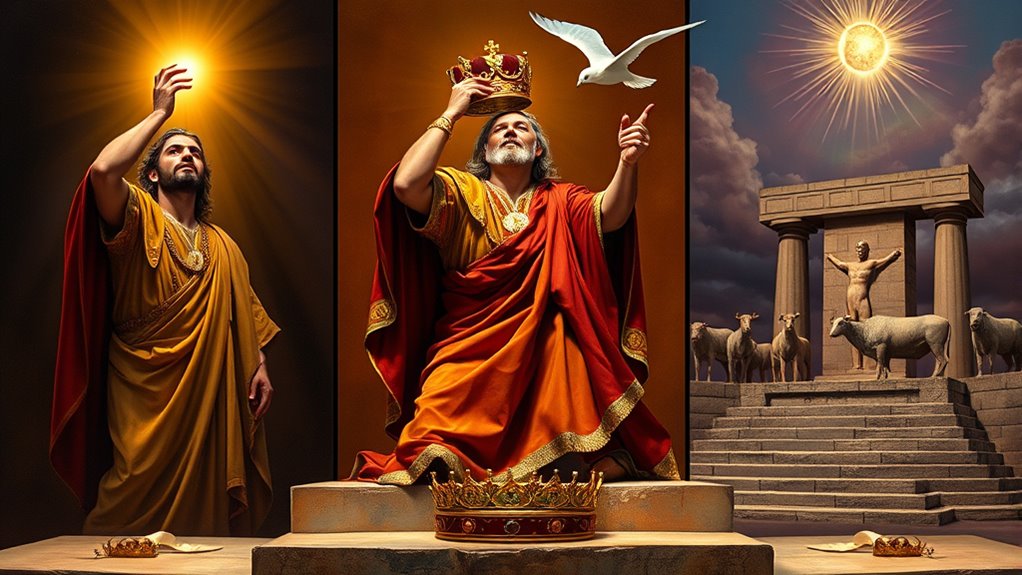
Saul’s first major failure occurred at Gilgal, where Samuel had commanded him to wait before offering sacrifices. Acting in fearful presumption, Saul assumed priestly prerogatives and offered the sacrifices himself before Samuel arrived. Samuel declared this foolish act displeasing to the Lord and announced that Saul’s kingdom would not endure, eliminating any chance for a permanent dynasty.
The decisive breach came with God’s command regarding the Amalekites. Through Samuel, God instructed Saul to execute total destruction of this nation as punishment for their past actions against Israel, sparing nothing. Saul defeated the Amalekites but spared King Agag and the best animals. He then set up a monument to himself in Carmel before claiming the animals were saved for sacrifice to God.
When confronted, Saul admitted sin and transgressed the Lord’s command, yet he blamed fear of the people and obedience to their voice rather than accepting full responsibility. He begged pardon and offered excuses multiple times, maintaining initial claims of obedience. Samuel remained unmoved, using his torn robe as a sign that the kingdom was torn from Saul. The prophet declared God’s rejection absolute.
The consequences proved severe. God regretted making Saul king, the Spirit of the Lord departed from him, and an evil spirit troubled him instead. The kingdom was given to a better neighbor, and the Lord answered Saul no more. His confessions, while acknowledging wrongdoing, revealed incomplete contrition that prioritized reputation and religious performance over genuine repentance. The Bible’s treatment of murder and divine judgment provides broader context for understanding the seriousness of disobedience in Saul’s case, especially regarding total destruction as a divinely commanded wartime measure.