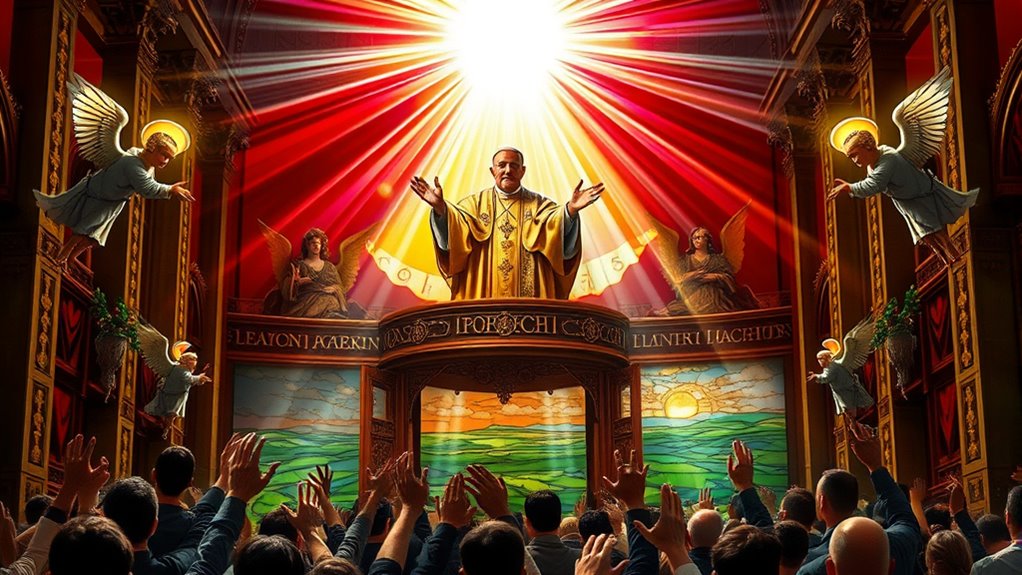
On Christmas Day 2025, Pope Leo XIV delivered his “Urbi et Orbi” blessing from Saint Peter’s Basilica, declaring that “true peace has come down to us from heaven” but emphasizing believers must pair prayer with forgiveness and concrete action. Speaking to a global audience in ten languages, he framed divine peace as requiring active human participation to address war, injustice, and disasters. The 46-minute address, viewed by 61,000 people within one day on Vatican News, connected traditional Christmas observance with urgent calls for peacemaking, with the full text available on Vatican.va offering further insight into his vision for faith-driven responsibility.
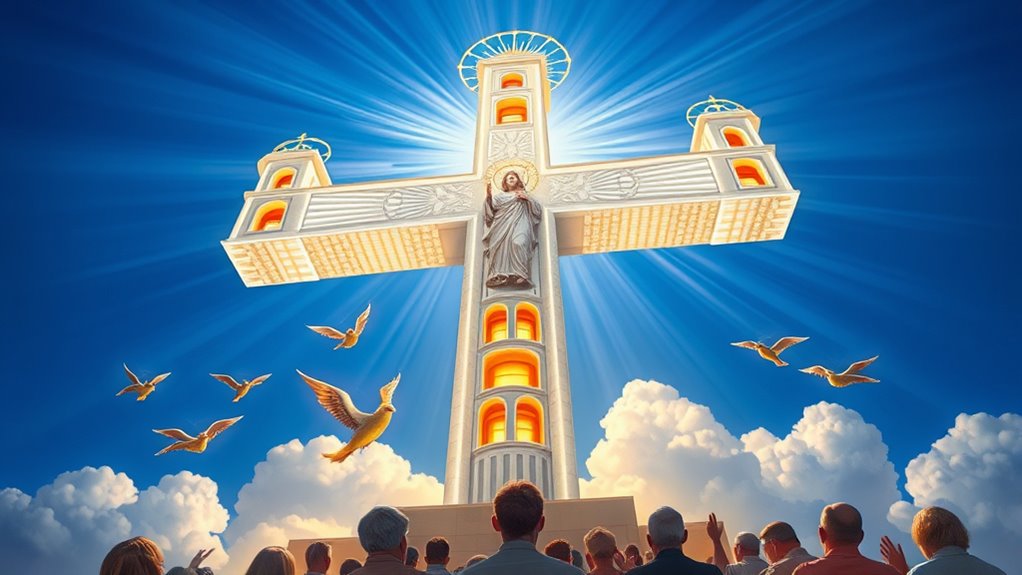
On Christmas Day 2025, Pope Leo XIV delivered his annual “Urbi et Orbi” blessing from the Central Loggia of Saint Peter’s Basilica, addressing a message of peace and responsibility to the world in ten languages. The approximately 46-minute ceremony, broadcast on Vatican News YouTube channel, attracted 61,000 views within one day of posting, reflecting widespread interest in the pontiff’s seasonal message.
Pope Leo XIV’s 46-minute Christmas blessing reached 61,000 viewers, delivering a message of peace and responsibility across ten languages.
The Pope opened his address with the Entrance Antiphon, declaring “Let us all rejoice in the Lord, for our Savior has been born in the world” and proclaiming “Today, true peace has come down to us from heaven.” This traditional Christmas greeting set the foundation for a more challenging theme that would follow. The Pope emphasized that prayer must be paired with forgiveness and concrete action.
Unlike conventional holiday messages emphasizing comfort and celebration alone, Pope Leo XIV’s “Christmas Cry” stressed that authentic peace requires active human participation alongside prayer.
The message centered on the concept that while divine peace descends from heaven, its realization on earth demands concrete responsibility from believers. This framing distinguished heavenly gift from worldly obligation, suggesting that faith communities must translate spiritual ideals into practical action.
The title reference to a “Christmas Cry” reinforced the urgency of this call, positioning the holiday not merely as commemoration but as summons to engagement. The Pope invoked divine compassion for victims of war, injustice, and natural disasters, advocating for empathy and support toward marginalized communities worldwide.
Following his main address, the Pope surprised the assembled crowd by delivering Christmas greetings in ten languages, including Italian, French, English, German, Spanish, Portuguese, Polish, Arabic, Latin, and Chinese. Each greeting conveyed the wish that “the peace of Christ reign in your hearts and in your families,” applying the broader message to personal and domestic spheres.
The multilingual greetings elicited applause after each language delivery, demonstrating the audience’s appreciation for the inclusive gesture.
The full text of the “Urbi et Orbi” blessing was made available on Vatican.va, dated December 25, 2025. A secondary video focusing specifically on the multilingual greetings garnered 28,000 views, indicating particular interest in this element of the ceremony.
The event illustrated Pope Leo XIV’s effort to connect traditional Christmas observance with contemporary calls for active peacemaking.