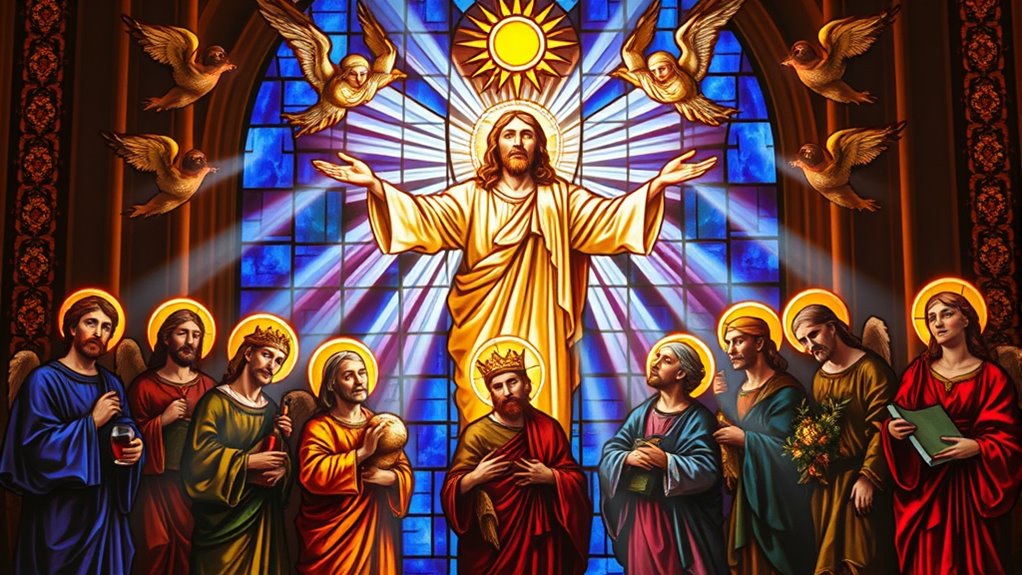
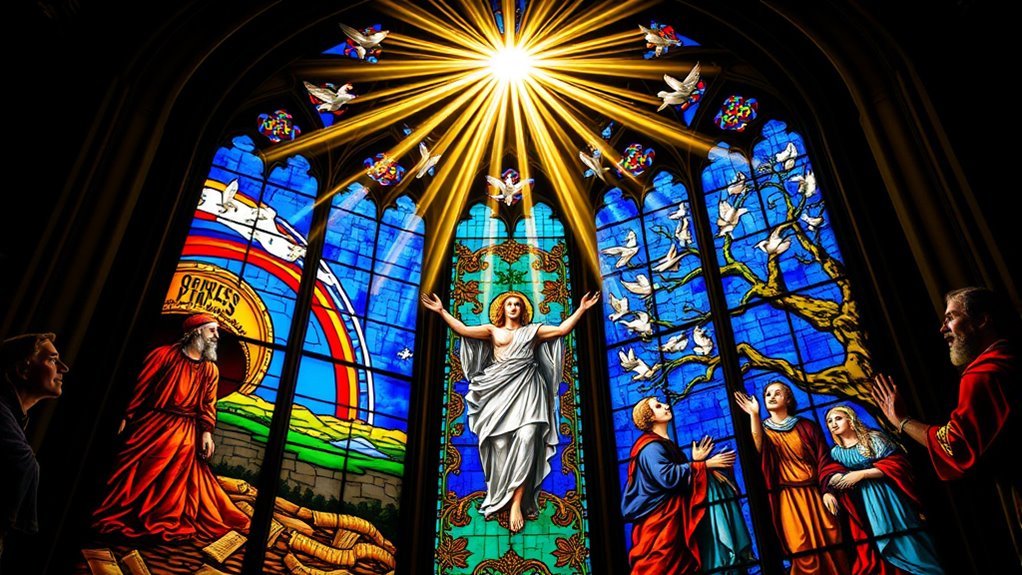
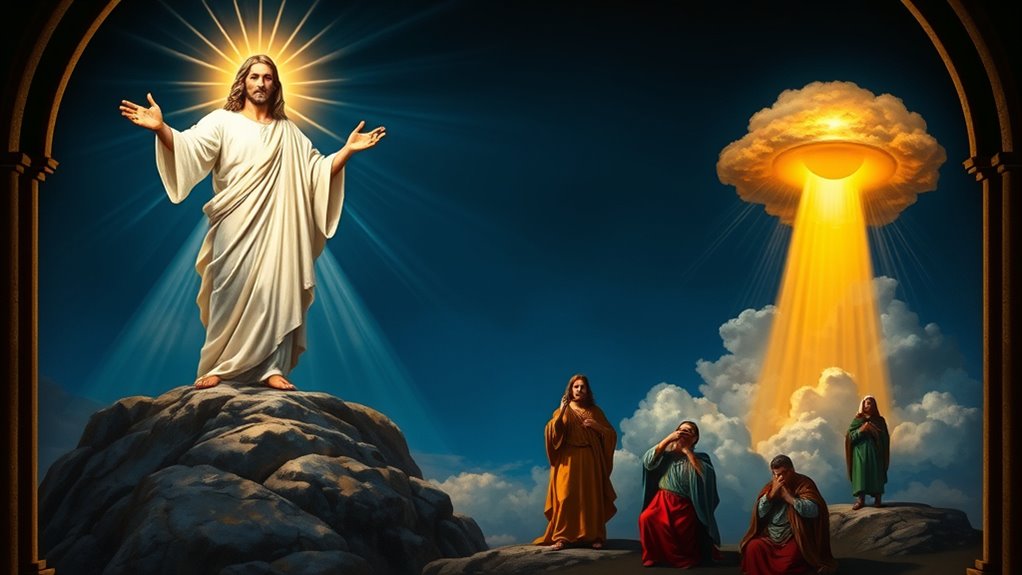
Six days after Peter’s declaration at Caesarea Philippi, Jesus took Peter, James, and John to a high mountain where his face shone like the sun and his clothes became white as light. Moses and Elijah appeared to discuss Jesus’ approaching death in Jerusalem, while God’s voice declared, “This is my Son, whom I love; listen to him.” This glimpse of glory following Jesus’ first prediction of suffering showed the disciples that the path through death led to resurrection, fundamentally reshaping their understanding of hardship and hope in following Christ.
Six days after Peter declared Jesus to be the Messiah at Caesarea Philippi, Jesus led three of his closest disciples—Peter, James, and John—up a high mountain for an event that would fundamentally reshape their understanding of his identity and mission. The timing was deliberate, occurring shortly after Jesus had delivered his first prediction of coming suffering, death, and resurrection recorded in Mark 8:31. The disciples needed to see something beyond the shadow of the cross that lay ahead.
Six days after Caesarea Philippi, three disciples witnessed glory beyond the coming cross on a high mountain.
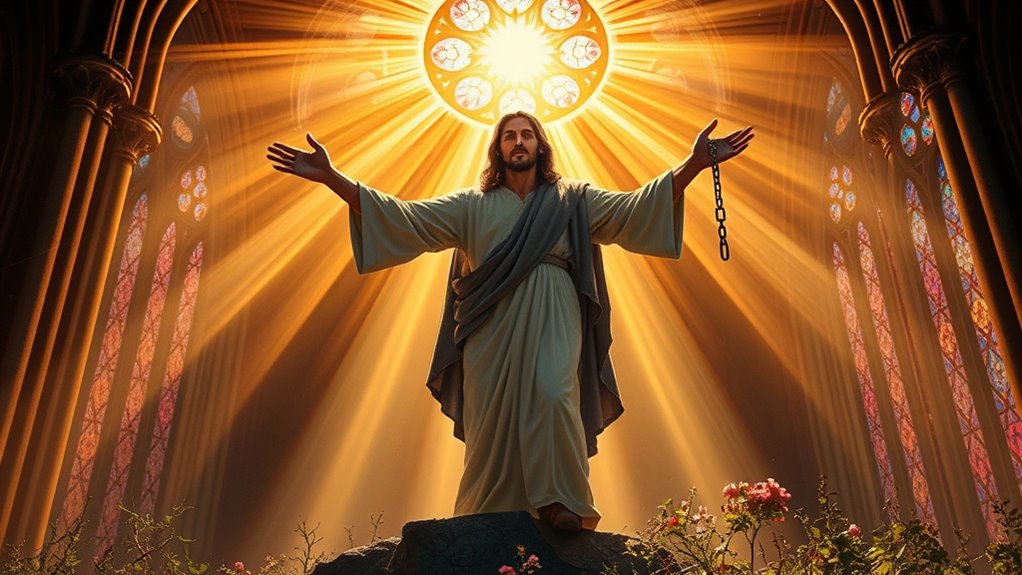
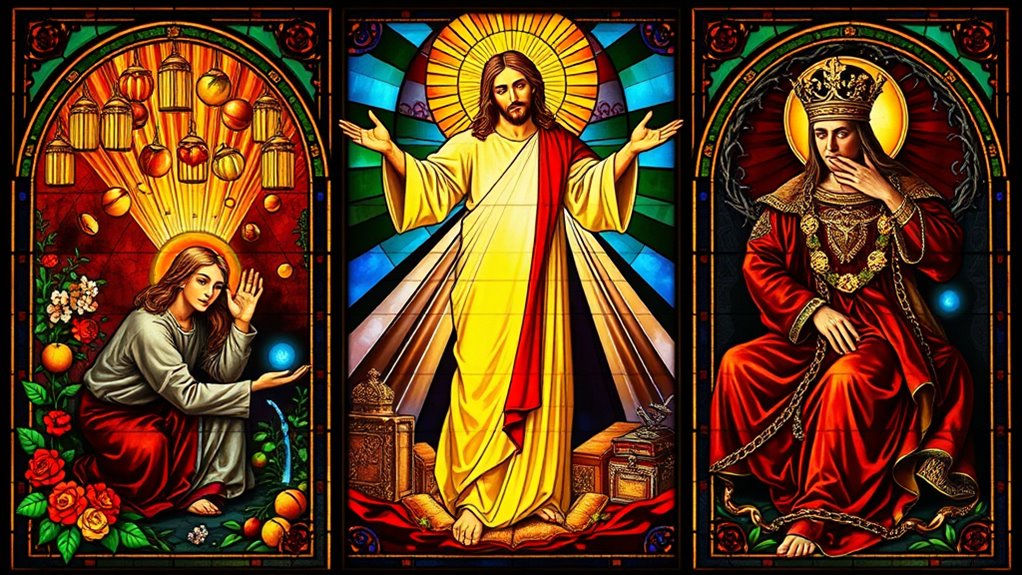
On the mountain, Jesus’ appearance changed dramatically. His face shone like the sun, and his clothes became white as light, revealing a glorified state that transcended ordinary human existence.
Moses and Elijah appeared beside him, representing the Law and the Prophets, and spoke with Jesus about his approaching death in Jerusalem. The presence of these two figures confirmed that Jesus fulfilled the entire scope of Hebrew Scripture.
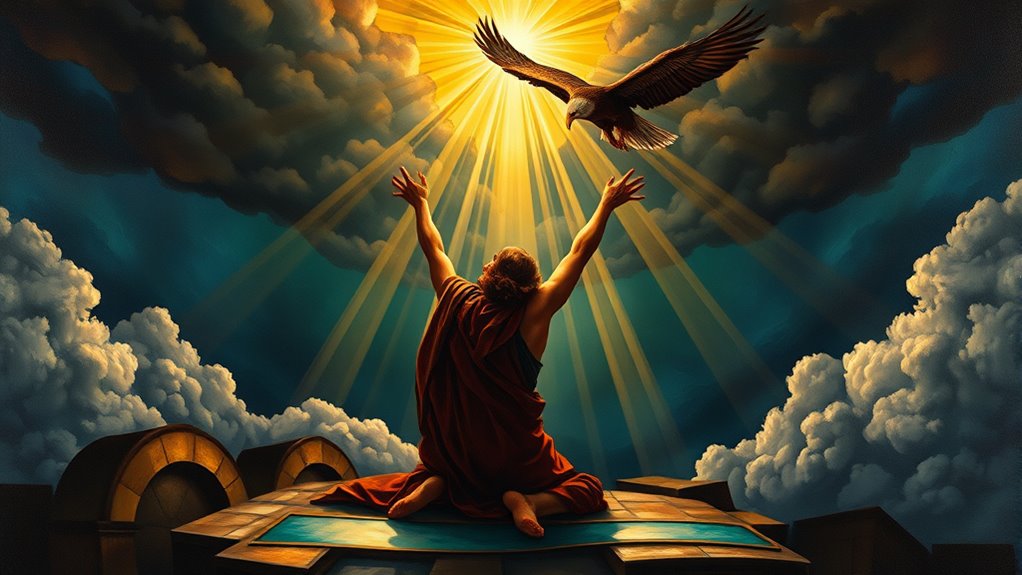
The disciples fell facedown in terror when a cloud enveloped them and God’s voice declared, “This is my Son, whom I love; listen to him.” This divine pronouncement echoed the words spoken at Jesus’ baptism, reinforcing his identity as the Son of God at a moment when his teachings about suffering might have caused doubt.
Jesus touched the frightened disciples and told them to get up and not be afraid, then instructed them to remain silent about what they had witnessed until after his resurrection.
The location is traditionally identified as Mount Tabor, though Mount Hermon remains an alternative possibility. The six-day waiting period deliberately paralleled Moses’ experience at Mount Sinai, where the cloud covered the mountain for six days before God spoke on the seventh.
This revelation served a specific purpose: to prepare the inner circle for the suffering ahead by showing them the glory that would follow. Peter later referenced this experience in 2 Peter 1:16-21 as eyewitness testimony to Jesus’ divine nature. The transfiguration demonstrated that the path through suffering led to resurrection glory, redefining how disciples understood both hardship and hope in following Jesus. This event also highlights the biblical principle of servant leadership, modeling humility and reliance on God even in moments of revealed glory.