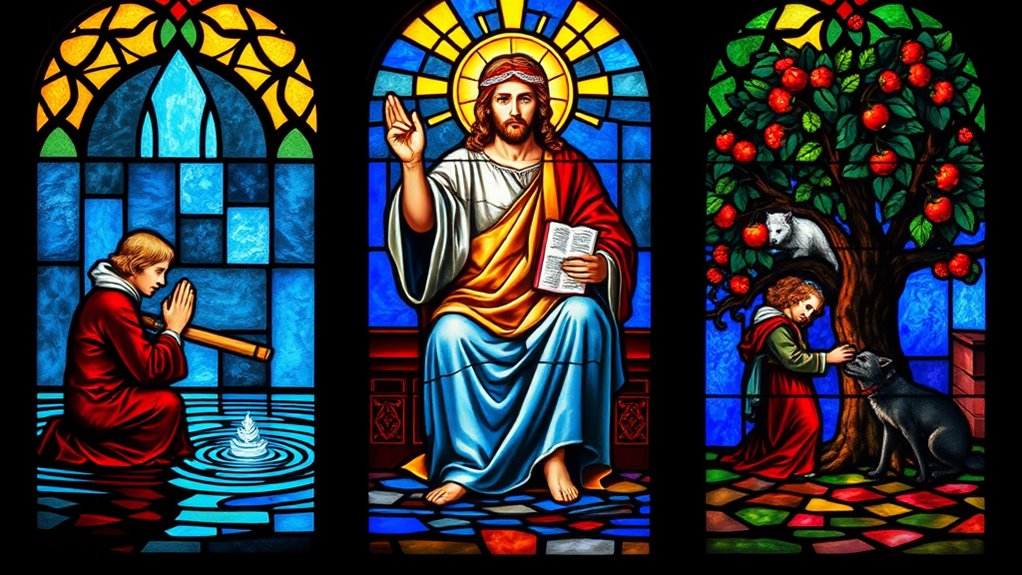
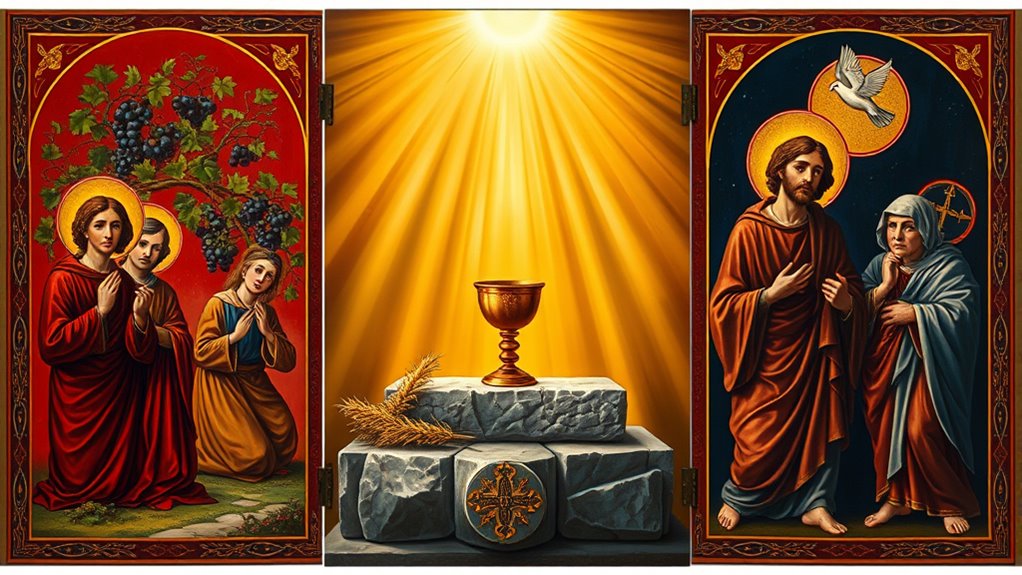
The Bible treats alcohol as morally neutral but emphasizes self-control and condemns drunkenness as sin. Wine appears throughout Scripture as something that gladdens the heart (Psalm 104:15), and Jesus turned water into wine at Cana. However, Ephesians 5:18 explicitly forbids drunkenness, and Romans 14:21 advises abstaining if drinking causes others to stumble spiritually. Certain groups like Nazarites and priests serving at the sanctuary were required to avoid alcohol completely. The scriptural principles surrounding alcohol’s proper use and potential dangers offer practical guidance for believers today.
Key Takeaways
- The Bible does not forbid alcohol but consistently condemns drunkenness as sinful and incompatible with Christian living.
- Wine is portrayed positively in Scripture, including Jesus turning water into wine and Psalm 104:15 mentioning its gladness.
- Self-control is the biblical principle; believers must avoid addiction and anything that masters their body.
- Specific groups like Nazarites and priests serving at the sanctuary were required to abstain from alcohol.
- Christians should abstain if drinking causes others to stumble spiritually, prioritizing love over personal freedom.
What Does Scripture Say About Alcohol Use?

The biblical record presents a nuanced perspective on alcohol consumption, neither endorsing excess nor prohibiting moderate use outright.
The Bible neither condemns responsible drinking nor condones excess, instead calling believers to wisdom and self-control with alcohol.
Scripture consistently condemns drunkenness, with Ephesians 5:18 commanding believers not to get drunk on wine, and Proverbs 23:29–35 detailing alcohol’s destructive potential. Romans 13:13 lists drunkenness among behaviors inconsistent with Christian conduct.
However, the Bible also acknowledges alcohol’s legitimate role in celebration and provision. Psalm 104:15 describes wine as gladdening human hearts, while Ecclesiastes 9:7 encourages drinking with a joyful spirit.
Jesus himself transformed water into wine at Cana, demonstrating acceptance of alcoholic beverages. First Timothy 5:23 even recommends wine for medicinal purposes.
The underlying principle emphasizes self-control rather than total abstinence, warning against excess while permitting responsible enjoyment.
The Bible was written in several ancient languages, primarily Hebrew with some sections in Aramaic and the New Testament in Koine Greek, reflecting the linguistic diversity of its historical contexts.
When Did God Require Abstinence From Alcohol?

While Scripture never imposes blanket prohibition on alcohol for all believers, it does mandate abstinence in specific circumstances tied to particular roles, vows, and sacred duties.
Numbers 6:3 requires Nazarites to avoid wine, strong drink, and grape products during their vow period, applicable to both men and women. Samson’s mother abstained during pregnancy because her son would hold Nazarite status from birth.
Leviticus 10:9 forbids priests from consuming alcohol while serving at the sanctuary, ensuring clear judgment during ministry. John the Baptist abstained from birth due to his unique prophetic calling, as noted in Luke 1:15.
The Rechabite clan maintained voluntary abstinence as ancestral tradition, described in Jeremiah 35. These requirements remained limited to particular contexts, never extending to all believers universally. Reading the Bible can be accomplished in about 70-80 hours total, making regular study a manageable commitment.
Applying Biblical Wisdom on Drinking Today
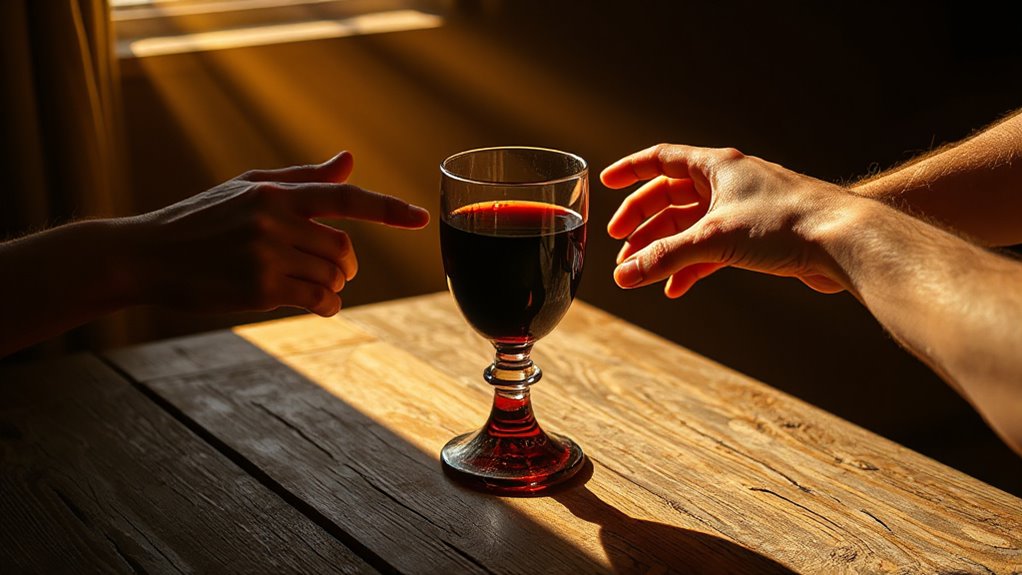
From Genesis to Revelation, Scripture addresses alcohol consumption through principles rather than rigid prohibition, creating a framework believers must interpret for contemporary life.
The Bible permits drinking in moderation while condemning drunkenness as sin that excludes inheritance of God’s kingdom, according to Galatians 5:21.
Ephesians 5:18 presents a clear choice between alcohol’s influence and being filled by the Holy Spirit.
Romans 14:21 adds another dimension: believers should abstain if their drinking causes others to stumble spiritually.
Modern application requires balancing personal freedom with wisdom, recognizing that alcohol itself remains morally neutral while addiction and excess constitute clear violations.
First Corinthians 6:12 warns against anything mastering the body, a principle extending beyond ancient cultures into today’s struggles with substance dependence.
Historical and linguistic context in Scripture also aligns with broader observations about human behavior and societal effects of alcohol cultural influences.