

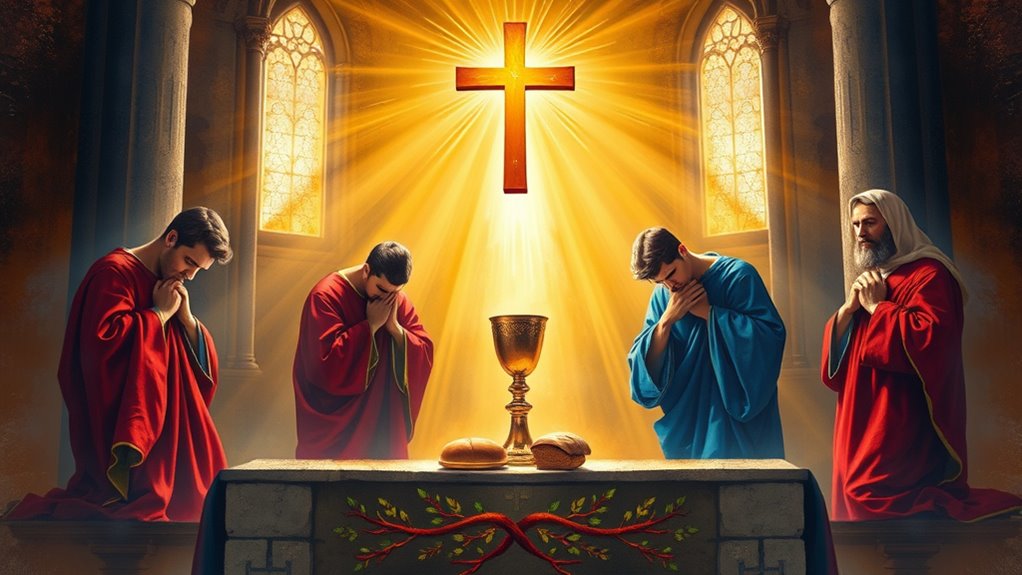
The Bible describes communion as a sacred meal Jesus established during the Last Supper, recorded in Matthew 26:26-28, Mark 14:22-25, and Luke 22:19-20. Jesus identified bread as his body and the cup as the new covenant in his blood, commanding disciples to repeat these actions in remembrance of him. Paul’s account in 1 Corinthians 11:23-26 emphasizes that communion proclaims Christ’s death until his return and requires self-examination before partaking. The practice continues to unite believers in worship, remembrance, and spiritual nourishment, connecting them to Christ’s sacrifice and resurrection power through specific preparation and participation.
Key Takeaways
- Jesus instituted Communion at the Last Supper, commanding disciples to eat bread and drink wine in remembrance of him.
- The bread represents Christ’s body broken on the cross; the cup symbolizes the new covenant through his blood.
- Paul instructs believers to examine themselves before partaking, ensuring they discern the Lord’s body and confess sins.
- Communion proclaims Christ’s death until his return, connecting believers to his sacrifice and binding them in fellowship.
- Scripture emphasizes reconciliation with others and proper spiritual preparation before participating in the sacrament.
What Communion Means: The Bread and Cup Explained
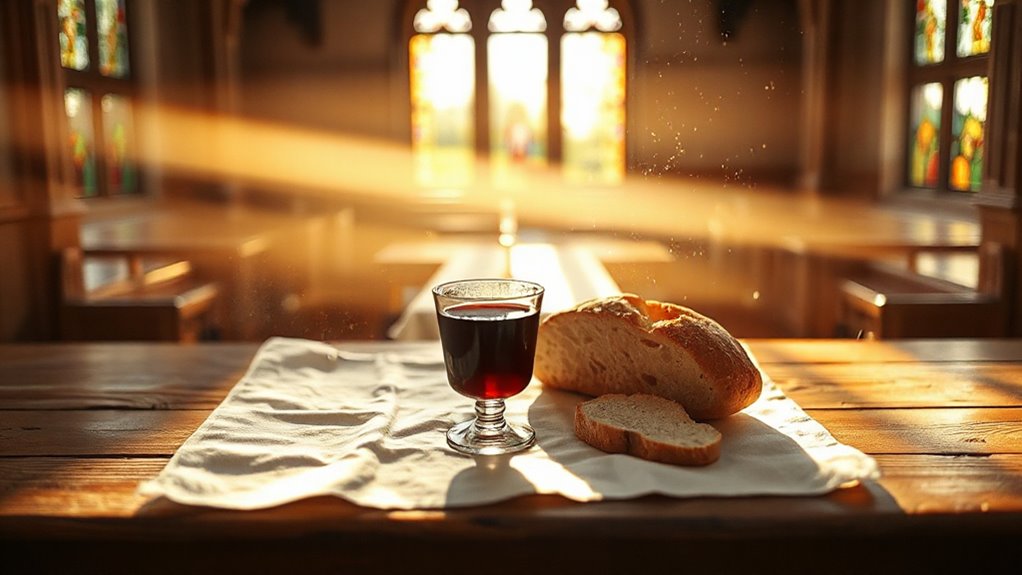
In Christian practice, communion stands as a tangible reminder of Christ’s sacrifice, expressed through two simple elements that carry profound meaning.
The bread represents Christ’s body broken on the cross, a physical symbol of redemption that believers consume to identify with his suffering. According to Luke 22:19, Jesus commanded his followers to eat bread in remembrance of him.
The cup holds equal significance, symbolizing the new covenant established through Christ’s blood shed for the forgiveness of sins, as Matthew 26:28 records.
Together, these elements transform an ordinary meal into sacred remembrance, pointing participants toward both physical sustenance and spiritual nourishment. The act connects believers to Christ’s resurrection power while binding them in fellowship with one another. The site of Jesus’ death at Golgotha underscores the historical setting behind these commemorative elements.
How Jesus Established Communion in Scripture

On the night before his crucifixion, Jesus gathered with his twelve disciples for what would become known as the Last Supper, transforming an annual Passover meal into the foundation for a Christian sacrament.
According to Matthew 26:26-28, Mark 14:22-25, and Luke 22:19-20, Jesus took bread, blessed it, broke it, and declared it his body given for them. He then took a cup, gave thanks, and identified it as the new covenant in his blood, poured out for the forgiveness of sins. Jesus commanded his disciples to repeat these actions in remembrance of him.
Paul later recorded in 1 Corinthians 11:23-25 that he received this tradition directly from the Lord, emphasizing that believers proclaim Christ’s death through communion until his return.
Archaeological and textual evidence supports the early preservation of texts and the historical context of these accounts.
Why Communion Still Matters for Christians
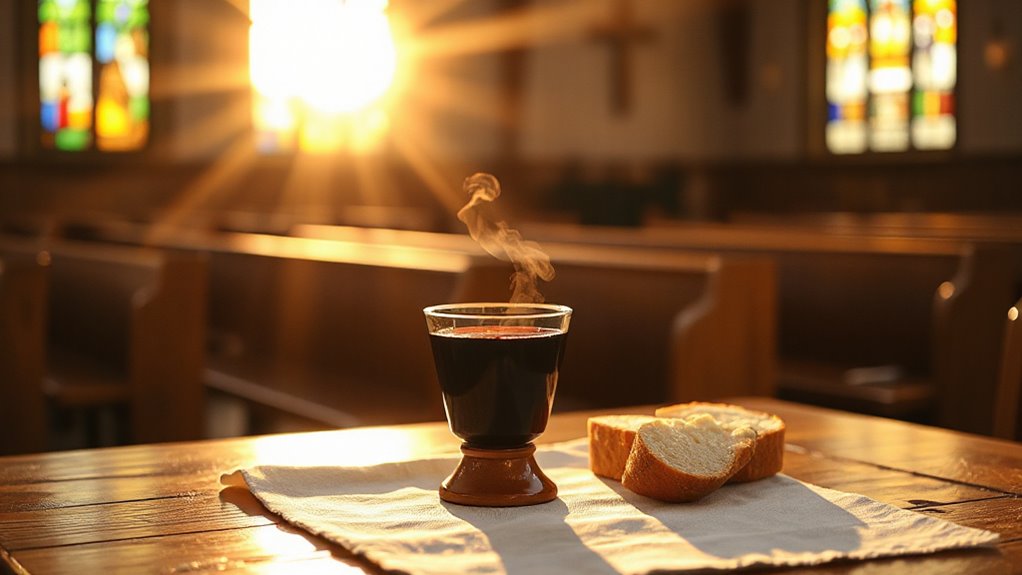
Two millennia after Jesus instituted the practice, Christians around the world continue to observe communion as one of their most meaningful acts of worship. The ritual remains relevant because it addresses enduring human needs: remembrance, spiritual nourishment, and community belonging.
When believers share bread and wine, they proclaim Christ’s death until his return, as described in 1 Corinthians 11:26. The sacrament offers opportunity for self-examination and confession while strengthening faith through tangible connection to God’s promises.
Communion also binds congregations together as one body, counteracting division with unity rooted in Christ. Perhaps most notably, the practice enacts God’s coming kingdom, where all are welcomed, fed, and forgiven. This vision gives communion ongoing purpose as both memorial and living participation in Christ’s presence. The practice also reflects core Christian belief in the unity of God and the distinct personhood of Jesus within the Trinity.
Preparing Your Heart to Take Communion

Approaching the communion table without preparation risks missing the sacrament’s full spiritual power, according to centuries of Christian teaching.
First Corinthians 11:28 instructs believers to examine themselves before eating the bread and drinking the cup. The Heidelberg Catechism specifies three elements: sorrow for sins, trust in Christ’s forgiveness, and desire for strengthened faith.
This preparation involves confessing sins, reflecting on Christ’s sacrifice, and considering personal unworthiness alongside God’s grace. The practice also requires reconciliation with others, laying aside grudges before participating in the communal feast.
Second Chronicles 19:3 promises blessing and clear conscience for prepared hearts. Believers bring anxieties and trials to the table, where they contemplate Christ’s atoning work and receive his peace, preparing themselves through meditation rather than treating participation casually. The Bible was written over many centuries, spanning roughly 1500–100 BC into the New Testament era, which shaped how communities understood and practiced sacraments.