



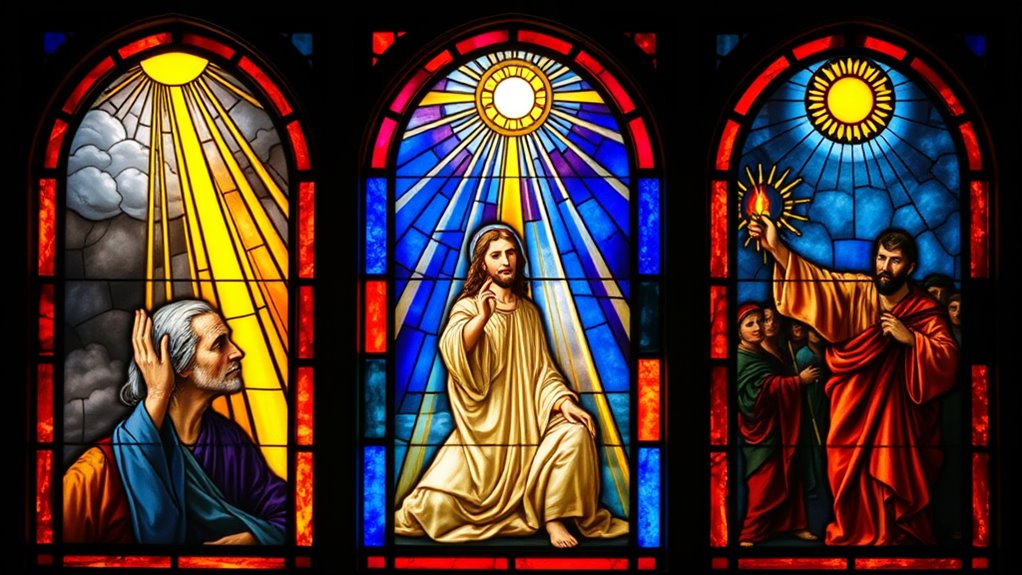
The Bible defines faith in Hebrews 11:1 as “assurance of things hoped for” and “conviction of things not seen,” presenting it as confident trust grounded in God’s character rather than vague optimism. Romans 4 highlights Abraham believing God’s promises, with that faith counted as righteousness. Hebrews 11:6 states faith is required to approach God, while passages in Acts, James, and John connect faith with healing, answered prayer, and empowered works. The following sections explore how Scripture’s teaching on faith shapes both understanding and practice.
Key Takeaways
- Faith is confident assurance in God’s promises and conviction about unseen realities, not mere wishful thinking or blind belief.
- Abraham’s faith was credited as righteousness, demonstrating that trust in God’s promises establishes right relationship with Him.
- Faith is the essential prerequisite for approaching God, requiring confidence in His existence and His faithfulness to reward seekers.
- Biblical faith activates God’s power for healing and miracles when believers trust in Jesus’ name and authority.
- Prayer offered in faith according to God’s will receives answers, enabling believers to perform empowered works like Jesus did.
How the Bible Defines Faith: From Hebrews to Romans

The Bible’s most explicit definition of faith appears in Hebrews 11:1, which describes it as “the assurance of things hoped for, the conviction of things not seen.” This statement, written to believers facing persecution and hardship, presents faith as a two-part reality: certainty about future promises and conviction regarding invisible truths. The Greek word *hypostasis*, translated as “assurance,” carries connotations of substance and firmness, suggesting faith provides tangible confidence rather than vague optimism. The word *elenchos*, translated as “conviction,” conveys a lively, active conviction that impels taking hold of unseen realities. This definition distinguishes biblical faith from secular misunderstandings that equate it with blind belief. Instead, Scripture presents faith as trust grounded in God’s revealed character and demonstrated power. Early Christians also connected faith with the person and work of Jesus, affirming his divine role within the unity of God as understood in the doctrine of the Trinity. The example from Genesis 15, echoed in Romans 4, illustrates this reality: Abram believed God, and this faith was counted to him as righteousness. Hebrews 11:6 reinforces this foundation, stating that approaching God requires firm confidence in His existence and His reliability as a rewarder of those who earnestly seek Him.
What Faith Accomplishes: Healing, Answers to Prayer, and Overcoming Fear

Understanding what faith is naturally leads to examining what faith does. According to the Bible, faith produces tangible outcomes in three primary areas.
First, it enables healing. Acts 3:16 emphasizes that “faith in his name has healed him,” while James 5:14-15 instructs the sick to call elders for prayer, stating “the prayer offered in faith will make the sick person well.” Mark 9:23 affirms that “anything is possible if a person believes,” establishing belief as the foundation for receiving healing.
Second, faith generates answers to prayer. John 14:14 establishes that praying in faith cultivates miracles, and 1 John 5:14-15 promises that requests made according to God’s will receive answers. When believers ask according to God’s will, they can have confidence that God hears and grants their petitions.
Third, faith empowers believers to perform works. John 14:12 promises believers will do the works Jesus did and “greater works than these,” while Matthew 10:1 records Jesus giving disciples authority to heal every disease.