




The Bible portrays fasting as a spiritual practice that enhances prayer and demonstrates dependence on God. Scripture records various types, including one-day fasts from sunrise to sunset, Esther’s three-day absolute fast, and the forty-day fasts of Moses and Jesus during spiritual preparation. Biblical fasting consistently paired physical abstinence with sincere prayer for purposes like seeking guidance, expressing repentance, or preparing for God’s calling. The early church continued this practice during worship and major decisions, such as commissioning Paul and Barnabas as missionaries, grounding the discipline in kingdom purposes rather than personal ambition or outward display.
Key Takeaways
- Fasting enhances prayer and demonstrates dependence on God, often combined with repentance and seeking divine guidance during crises.
- Biblical fasts vary from one-day sunrise-to-sunset fasts to forty-day extended fasts for spiritual preparation and breakthrough.
- Notable examples include Esther’s three-day absolute fast, Daniel’s partial fasts, and Jesus fasting forty days before ministry.
- Fasting should focus on kingdom purposes rather than personal ambitions, always accompanied by sincere prayer and humility.
- The early church practiced fasting during worship and major decisions, such as commissioning missionaries like Paul and Barnabas.
The Purpose and Spiritual Significance of Fasting in Scripture
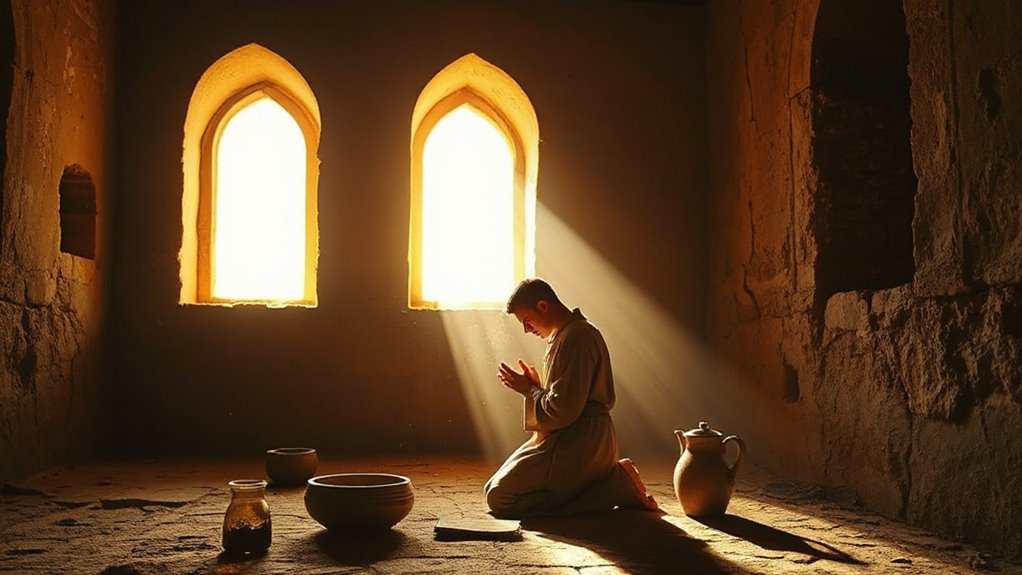
Biblical fasting serves multiple spiritual purposes that extend far beyond the physical act of abstaining from food. Many believers pair fasting with reading plans to maintain consistent Scripture engagement during fasts. According to Scripture, fasting intensifies prayer by adding urgency and sincerity, as seen in Ezra 8:23, though it does not compel God to change His will.
The practice enhances receptivity to divine guidance by shifting focus away from physical needs, creating an environment where believers can discern God’s direction more clearly. Fasting also expresses repentance and humility before God, as demonstrated in 1 Samuel 7:6 and Jonah 3:10, where communities used it to signal genuine sorrow over sin.
Additionally, believers have historically undertaken fasts when seeking deliverance or divine intervention during crises, reflecting their dependence on God’s power rather than human resources. Jesus Himself modeled this spiritual discipline by fasting 40 days in the wilderness before beginning His public ministry, demonstrating that fasting serves as preparation for fulfilling God’s calling. True biblical fasting must be rooted in kingdom purposes rather than personal ambitions, distinguishing it from mere dieting or physical discipline.
Biblical Examples and Practical Guidance for Fasting Today

Throughout Scripture, believers fasted for remarkably different lengths of time and purposes, offering a range of models that inform contemporary practice. Israel fasted one day from sunrise to sunset seeking God’s direction in battle, while Esther called for a three-day absolute fast—no food or water—before approaching the king to save her people. Archaeological finds such as the Dead Sea Scrolls help confirm the historical context in which these fasts occurred and the preservation of biblical practice.
Daniel chose a ten-day partial fast of vegetables and water, and later abstained from delicacies for twenty-one days while seeking revelation. Moses and Jesus each fasted forty days without food during periods of intense spiritual preparation.
The Israelites also observed a seven-day fast following the death of Saul, seeking comfort from grief and God’s guidance during a time of national transition.
The early church practiced fasting during worship and important decision-making moments, such as when Paul and Barnabas were commissioned for missionary work.
These examples suggest fasting today can be adapted to individual capacity and spiritual need, whether total or partial, brief or extended, always combined with sincere prayer rather than outward display.