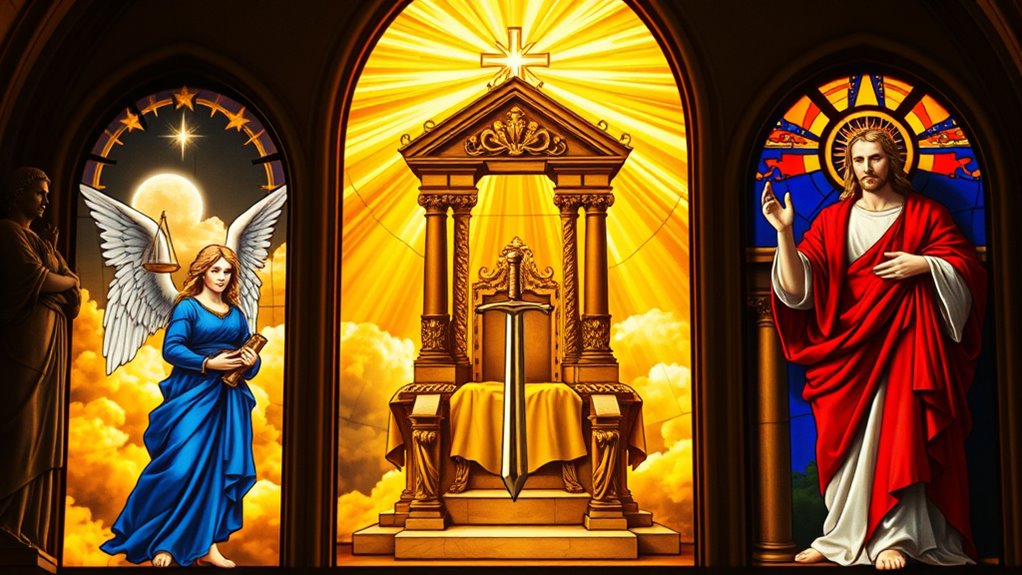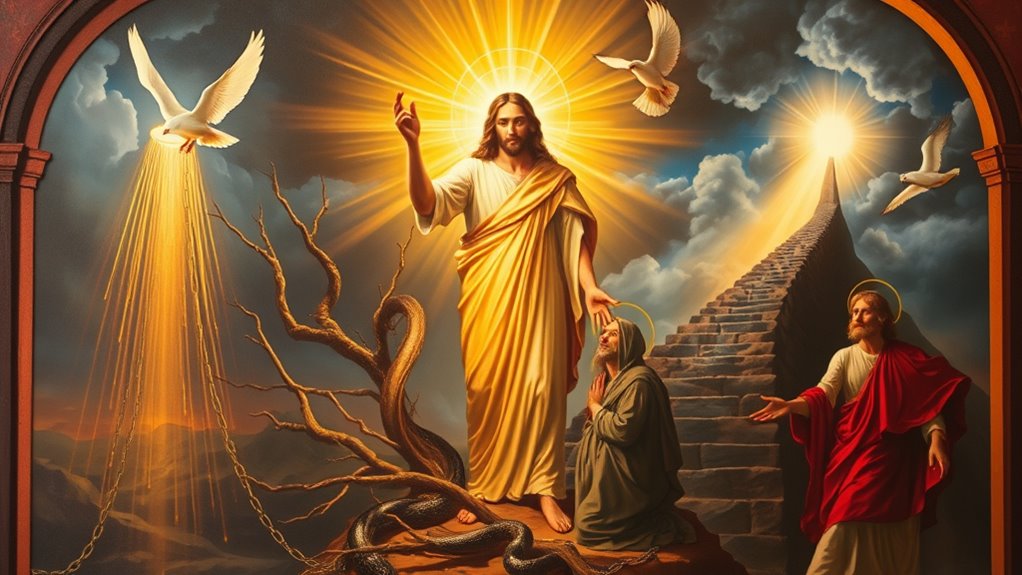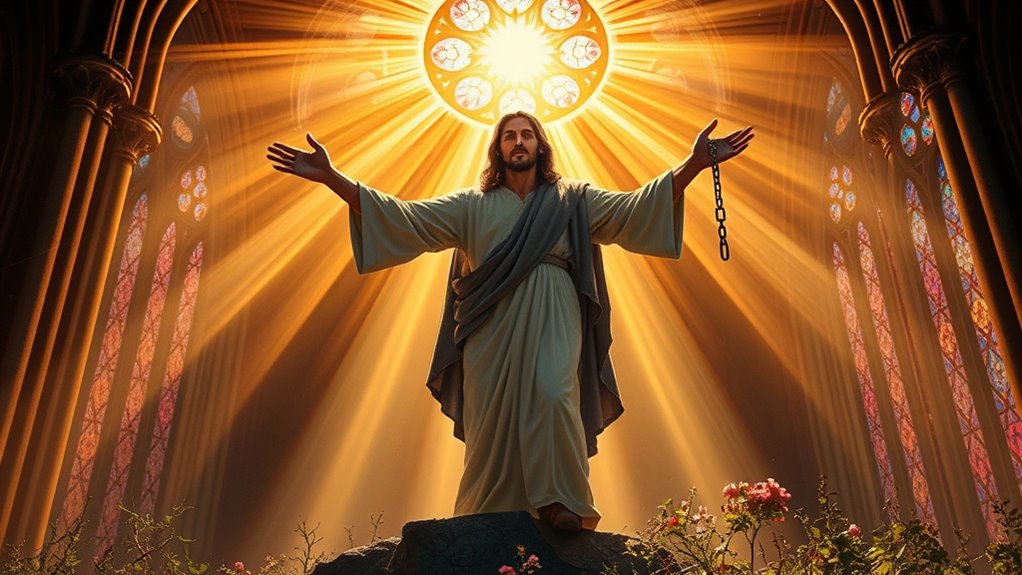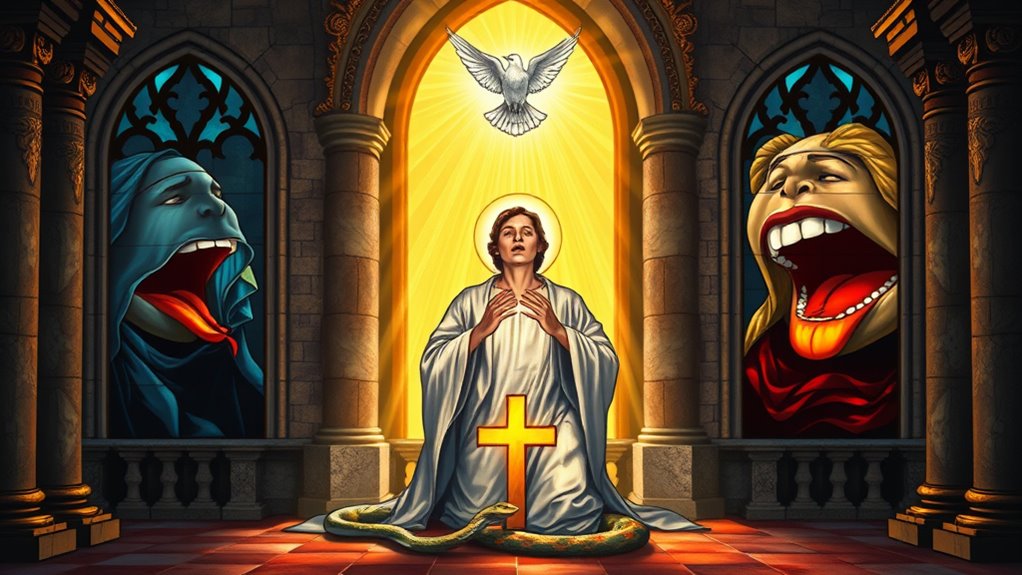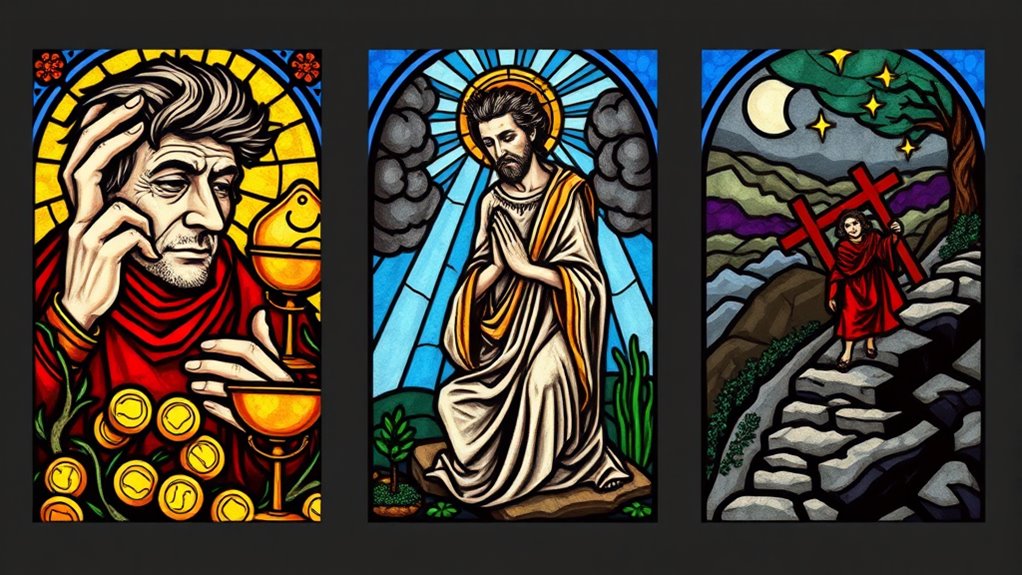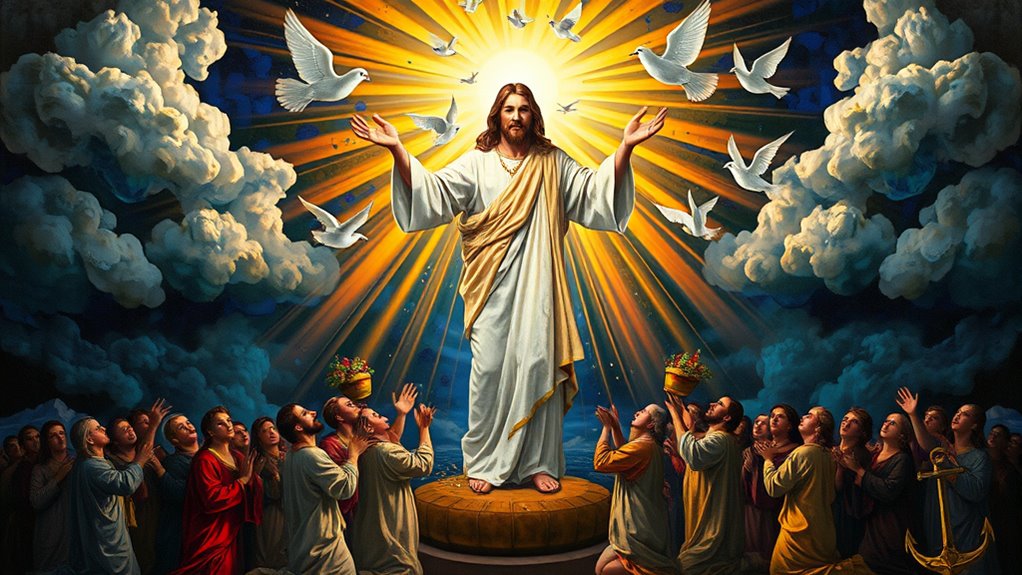
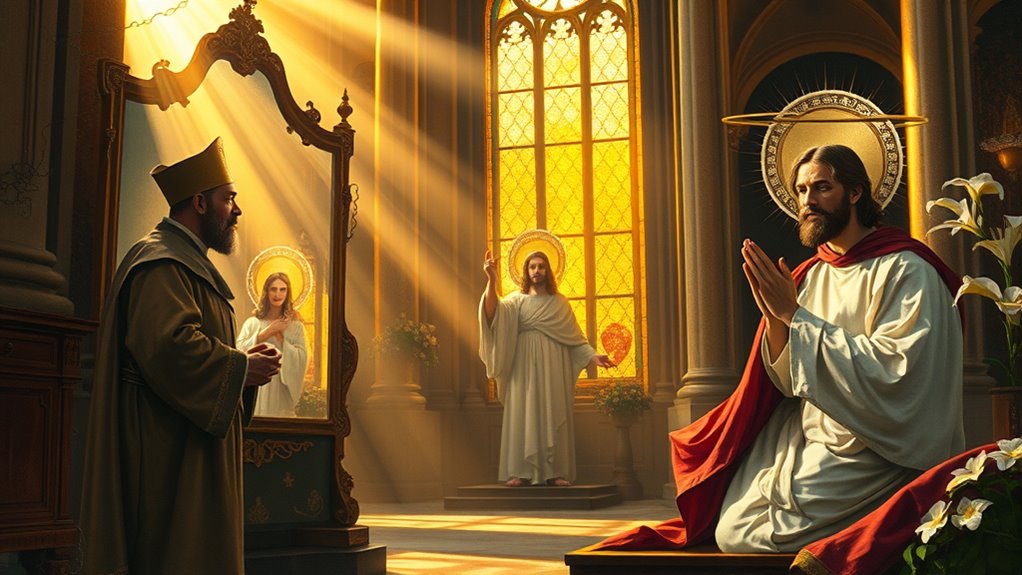
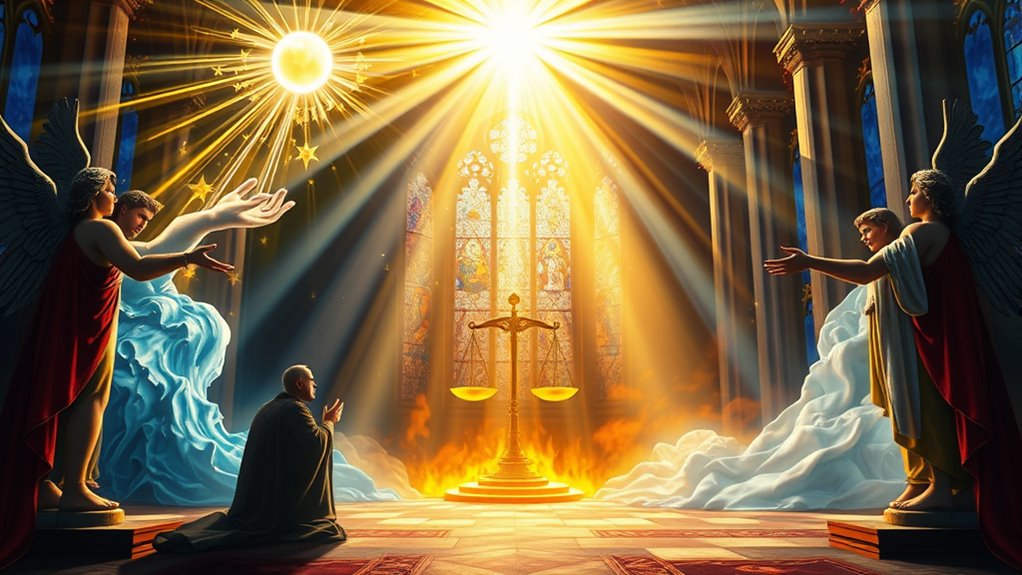
The Bible portrays humans as genuine decision-makers who face meaningful choices with eternal consequences, as seen in Deuteronomy 30:19 where God sets life and death before His people and commands them to choose. At the same time, Scripture affirms God’s sovereign control over all events, with passages like Proverbs 21:1 and Isaiah 46:9–10 emphasizing divine authority and foreknowledge. Jesus extends invitations such as “Come, follow me” and stands knocking in Revelation 3:20, waiting for a response. Both Reformed and Catholic traditions acknowledge this tension between divine governance and human responsibility, recognizing that Scripture holds these truths together even when reason struggles to fully reconcile them, and the interplay between God’s authority and human agency continues to shape theological understanding.
Key Takeaways
- The Bible presents God as both sovereign over all creation and holding humans genuinely responsible for their choices.
- Scripture includes invitations requiring human response, such as “choose life” in Deuteronomy and Jesus’ call to follow Him.
- Eden’s narrative establishes freedom with responsibility: Adam and Eve could choose but faced real consequences for disobedience.
- Different theological traditions interpret the sovereignty-freedom tension differently, though most affirm both divine control and human agency.
- God’s foreknowledge and eternal nature may allow Him to know choices without eliminating genuine human decision-making ability.
What the Bible Says About Human Free Will

Throughout the Bible, from Genesis to Revelation, the concept of human choice appears as a consistent thread in the relationship between God and humanity. Deuteronomy 30:19 presents this directly, calling heaven and earth as witnesses while setting life and death before people, urging them to choose life.
The Garden of Eden establishes this pattern early, where God commands Adam and Eve not to eat from the tree of knowledge of good and evil while permitting them to eat from every other tree. This command demonstrates both freedom and consequence.
In the New covenant, Jesus extends invitations rather than commands, telling Peter and Andrew in Matthew 4:19 to “Come, follow me.” Revelation 3:20 depicts Christ knocking at a door, waiting for someone to hear and open it.
The Catholic tradition affirms the role of human choice within God’s plan, as reflected in its canonical Scriptures which include deuterocanonical books that shaped early Christian thought.
Can God Be in Control If We Have Free Will?

The question of whether God maintains control while humans exercise genuine choice has generated centuries of theological discussion, with Scripture offering passages that seem to pull in opposite directions. Reformed theologians emphasize God’s absolute sovereignty, pointing to Proverbs 21:1, which states God “turns the king’s heart wherever He wills,” and Isaiah 46:9-10, where God declares the end from the beginning.
Meanwhile, passages like Deuteronomy 30:19-20 command people to “choose life,” implying meaningful agency. Catholic scholars propose that God’s eternal nature allows Him to experience all time simultaneously, knowing choices without causing them. Most traditions affirm both realities as scriptural truth—God governs all things while humans remain genuinely responsible for their decisions, even when reason struggles to reconcile these complementary perspectives. The doctrine of the Trinity emphasizes that God is one essence existing as three distinct persons, a framework that preserves divine unity while accounting for relational distinctions within God three persons.