



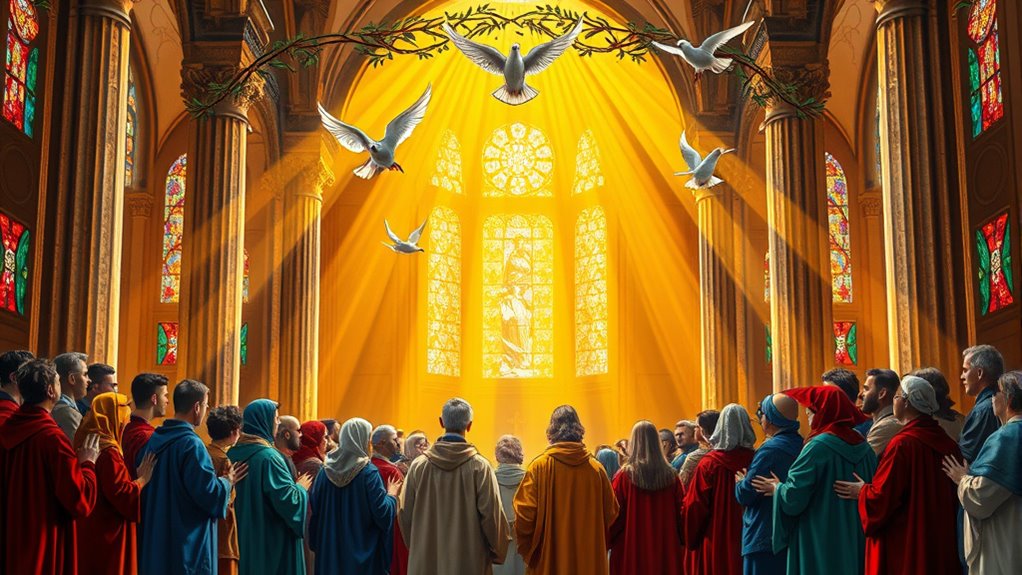
The Bible commands believers to gather regularly with other Christians, emphasizing corporate worship as essential rather than optional. Hebrews 10:25 specifically instructs not to forsake “the assembling of ourselves together,” particularly as the day of Christ’s return approaches. The early church modeled this practice through regular meetings for teaching, fellowship, communion, and prayer, as recorded in Acts 2:42. Church attendance enables believers to participate in practices requiring community, such as baptism and communion, while providing mutual encouragement and collective witness to the world. The benefits extend beyond spiritual growth to include measurable improvements in mental health and longevity among regular attenders.
Key Takeaways
- Hebrews 10:25 commands believers not to forsake assembling together, presenting church attendance as a divine expectation.
- The early church regularly gathered for teaching, fellowship, communion, and prayer as modeled in Acts 2:42.
- Corporate practices like communion and baptism require assembly and cannot be fulfilled in isolation.
- Gathering reflects God’s glory to the world and serves as the visible body of Christ to communities.
- Regular attendance provides spiritual growth through mutual encouragement, worship, and discipleship opportunities.
Why God Commands Us to Gather Together
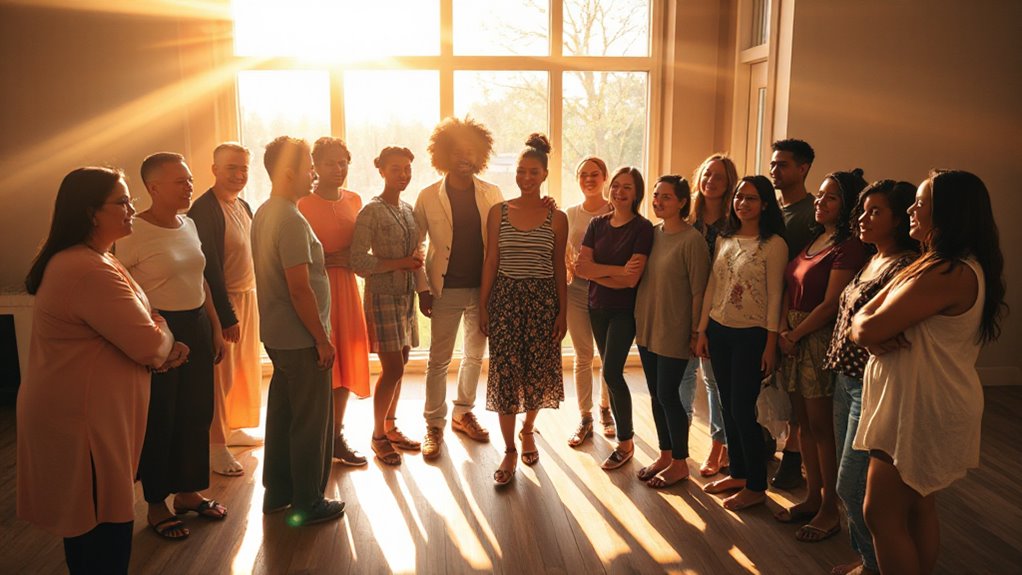
The biblical directive for Christians to gather regularly appears most explicitly in Hebrews 10:25, which instructs believers not to forsake “the assembling of ourselves together, as the manner of some is.” This command establishes church attendance not as a mere suggestion or cultural preference, but as a divine expectation woven into the fabric of Christian obedience.
The early church modeled this principle through devoted commitment to teaching, fellowship, communion, and prayer, as documented in Acts 2:42. Luke 24:53 records that the disciples maintained a continual presence in the temple complex, praising God regularly after Jesus’ ascension. Many essential Christian practices, including communion and baptism, require corporate participation and cannot be fulfilled in isolation. Regularly meeting also helps believers grow through consistent Bible reading and mutual encouragement.
The writer of Hebrews further notes that increased gathering becomes especially important as “the Day” approaches, suggesting that faithful attendance grows more crucial as believers anticipate Christ’s return. This corporate assembly functions as the light of the world, as Jesus taught in Matthew 5:14–16, where together the body of Christ reflects God’s glory to the surrounding world.
How Attending Church Strengthens Your Faith and Relationships
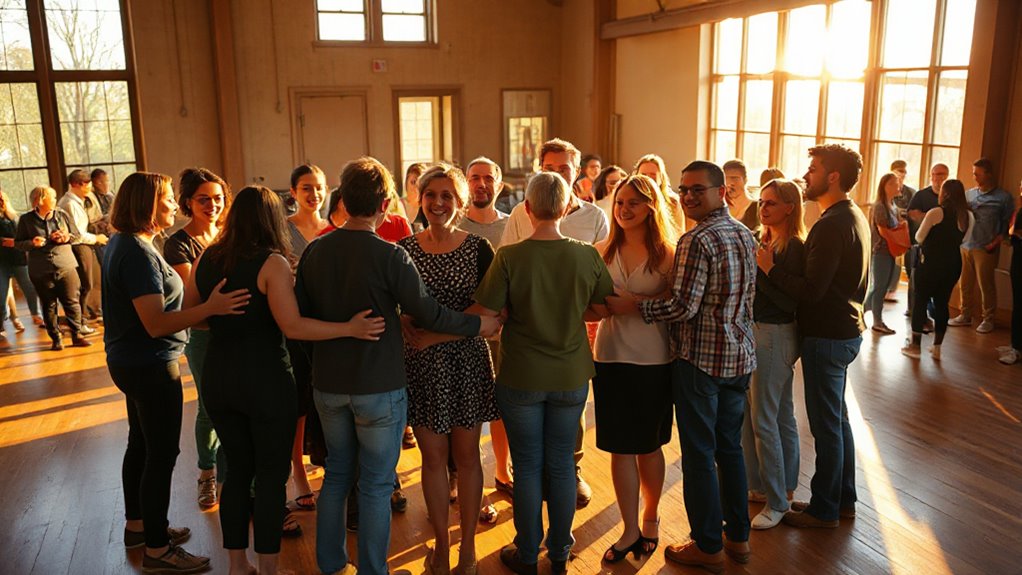
Beyond the biblical mandate to gather, church attendance produces measurable benefits that touch nearly every dimension of human life.
Church attendance delivers tangible advantages across mental health, longevity, happiness, and social wellbeing that science continues to document.
Regular churchgoers experience 22% less clinical depression than non-attenders, with social support and unique church factors building resilience.
Those attending more than once weekly see a 55% reduction in all-cause mortality risk, while lifespan increases average seven years for whites and fourteen for African Americans.
Church attenders report being “very happy” 44% more often than non-attenders.
The social connections formed counter loneliness, which poses health risks greater than obesity.
Childhood church attendance doubles adult Bible reading and prayer rates, while youth who attend show fewer deviant behaviors. Young people who attend weekly religious services or practice daily prayer show greater life satisfaction in their twenties and lower risks of depressive symptoms, smoking, illicit drug use, and STIs.
Students who attend church regularly demonstrate higher math and reading scores and show greater educational aspirations.
These outcomes extend beyond general social groups, pointing to something distinctive in religious community. The global Catholic community numbered 1.406 billion as of June 2023, illustrating the scale of organized religious participation worldwide.