

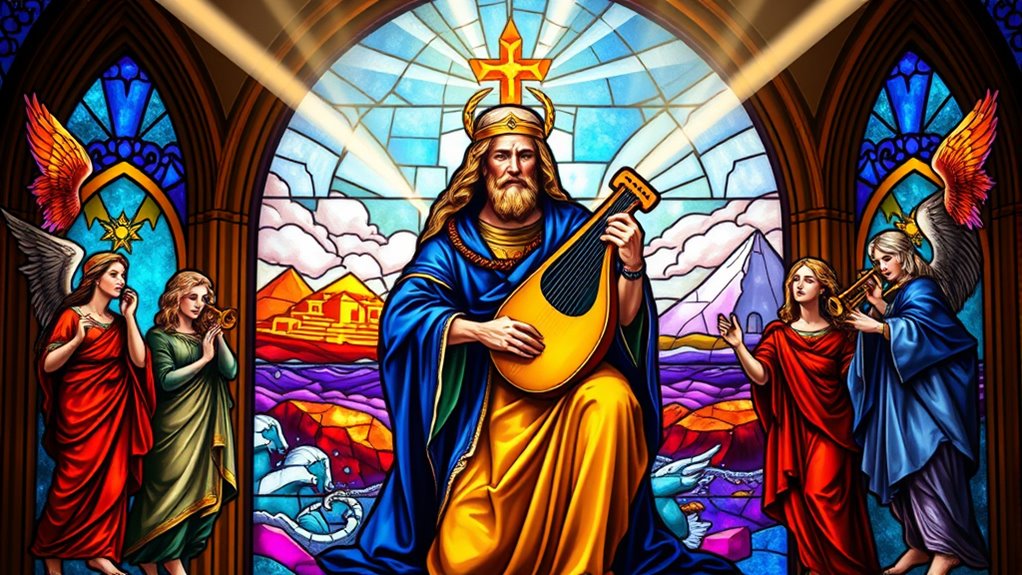
The Bible references music in more than 300 passages, establishing it as central to worship rather than mere entertainment. Scripture instructs believers to use psalms, hymns, and spiritual songs to teach truth, proclaim the gospel, and build unity among congregations. From David’s skillful harp playing to the temple musicians’ cymbals and trumpets, instruments served both practical and devotional purposes. The heavenly model shows continuous praise before God’s throne, emphasizing worship that reflects divine holiness over personal preference. The following sections explore specific biblical instruments and their roles in worship practices.
Key Takeaways
- Music is central to biblical worship, appearing in over 300 Scripture passages with more than 750 references to praise.
- Worship music should be God-centered, teaching believers truth and proclaiming the gospel rather than focusing on entertainment.
- Biblical music includes psalms, hymns, and spiritual songs that reflect God’s holiness and theological truth.
- Instruments like shofars, trumpets, timbrels, cymbals, and reed-pipes served specific worship and ceremonial functions in Scripture.
- Stringed instruments such as harps and lyres provided melodic and harmonic accompaniment in biblical worship practices.
How the Bible Uses Music in Worship and Praise
Music occupies a central place in biblical worship, appearing in more than 300 passages of Scripture with over 750 specific references to singing, instruments, and songs of praise. The Bible presents worship music as fundamentally God-centered rather than oriented toward human preferences or entertainment. Hebrew and Greek scriptural traditions also demonstrate how musical texts were preserved and transmitted across languages and cultures, reflecting the Bible’s original languages and their influence on worship practices in both the Old and New Testaments Biblical languages.
Heavenly worship models this pattern, with seraphim and saints continually praising God’s holiness and redemption. Biblical worship incorporates psalms from the Old Covenant Psalter, hymns that address theological truths directly to God, and spiritual songs containing biblically sound messages.
These musical expressions serve multiple purposes: teaching and admonishing believers, proclaiming the gospel, developing spiritual fruits like joy and thankfulness, and cultivating unity among worshippers. The Scriptures establish daily morning and evening worship with continual musical offering before the Lord. Collective singing functions as powerful motivation and encouragement, rallying congregants and proclaiming encouragement in Christ. Worship music must reflect God’s holiness rather than being reduced to personal taste or entertainment value.
What Musical Instruments and Practices Appear in Scripture?
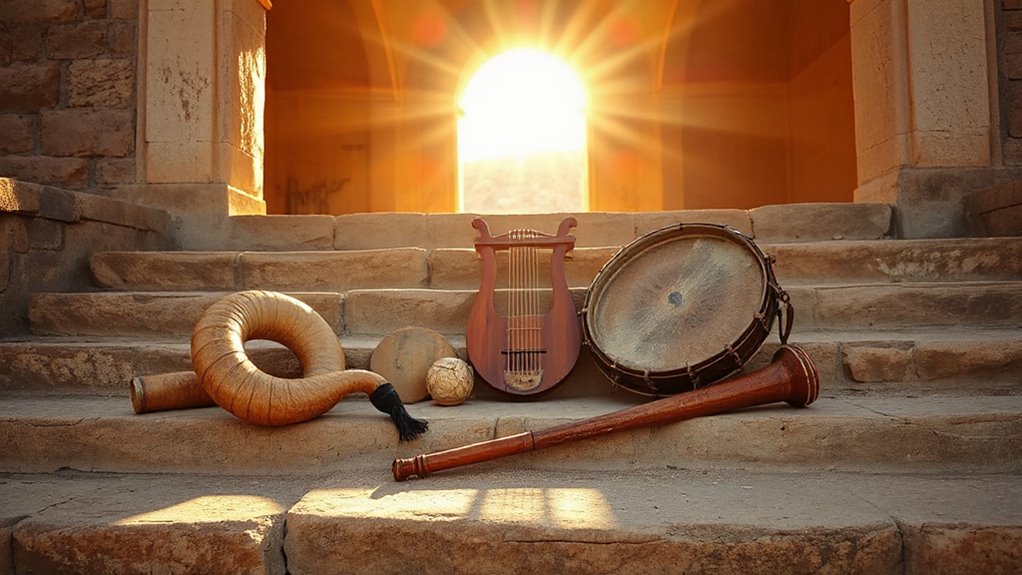
The instruments described throughout Scripture reveal a worship tradition that balanced signal-giving devices with melodic tools designed for genuine musical expression. The shofar, a ram’s horn, sounded divine calls at Mount Sinai and during the Jericho march, while silver trumpets coordinated camp movements and ritual gatherings. Archaeological and historical study also locates these practices within ancient Israelite worship sites, including Temple worship settings.
Percussion came primarily through the timbrel, a handheld frame drum played by women like Miriam after the Red Sea crossing and in spontaneous celebrations. Stringed instruments provided melody—harps and lyres traced back to Jubal in Genesis and later soothed King Saul through David’s skillful playing. The lyre typically functioned as a chording instrument, while the harp of ten strings served primarily melodic purposes, often doubling or outlining sung melodies.
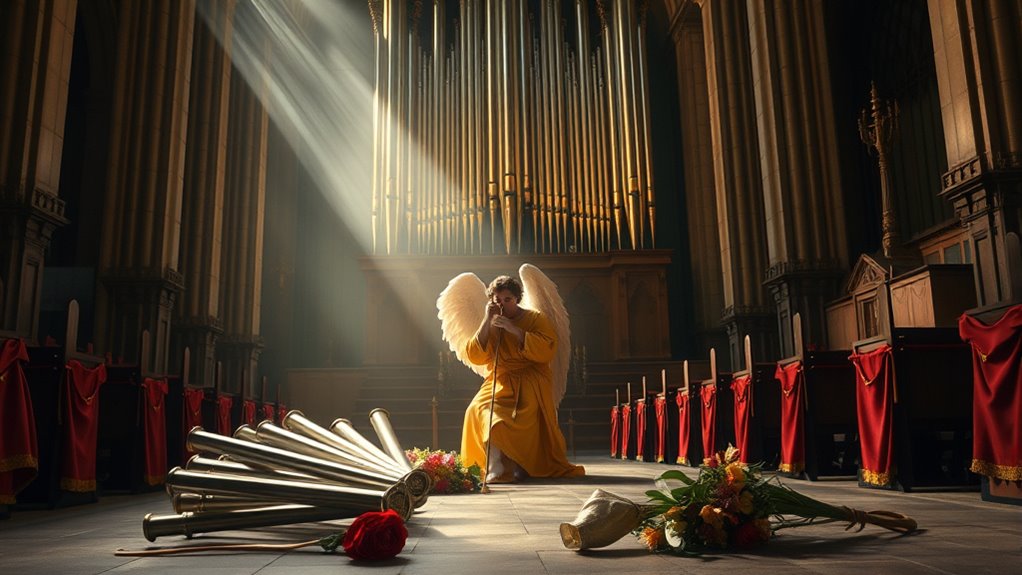
Cymbals, small copper clappers, accompanied Levite musicians in temple praise, though Paul later cautioned against their empty noise without love, underscoring music’s need for sincere devotion beyond mere sound. Wind instruments included the reed-pipe, a nasal woodwind similar to an oboe, commonly heard at celebrations and royal processions.