



The Bible does not mention voting directly but offers clear guidance for civic engagement. Romans 13:1 teaches that governing authorities are established by God, while Jeremiah 29:7 urges believers to seek the welfare of their cities. Micah 6:8 prioritizes justice, mercy, and humility in decision-making, and James 1:5 encourages seeking wisdom through prayer. Scripture suggests evaluating candidates by their fruits, as outlined in Matthew 7:20, rather than party loyalty. The biblical approach balances informed participation with ultimate dependence on God’s sovereignty, and the following principles explore how faith shapes responsible citizenship.
Key Takeaways
- Scripture affirms governing authorities are established by God while cautioning against placing ultimate trust in human leaders.
- Christians are called to seek the welfare of their cities through prayer and informed civic participation.
- Voting decisions should prioritize justice, mercy, and biblical values, seeking God’s wisdom through prayer before choosing candidates.
- Evaluate candidates by observable fruits and principles rather than simple party loyalty or choosing lesser evils.
- Trust God’s sovereignty over all political outcomes while maintaining faithful engagement in civic responsibilities.
What the Bible Says About Christians and Politics
The Bible presents a complex picture of how Christians should engage with political systems, neither commanding total withdrawal nor endorsing uncritical participation.
Scripture affirms that God establishes governing authorities, as Romans 13:1 notes that no authority exists except from Him. Daniel exemplified faithful administration in a foreign government while maintaining obedience to God above human decree. Christians are instructed in Jeremiah 29:7 to seek the welfare of their cities and pray for them. Proverbs 29:4 observes that justice from a king builds up the land.
However, Psalm 146:3 warns against placing ultimate trust in princes, as salvation comes through Christ alone. This balanced approach calls believers to participate as informed citizens while recognizing politics serves God’s purposes rather than representing final hope. Archaeological and historical evidence also helps confirm the biblical context and historical figures mentioned throughout Scripture.
How to Vote Without Compromising Your Faith

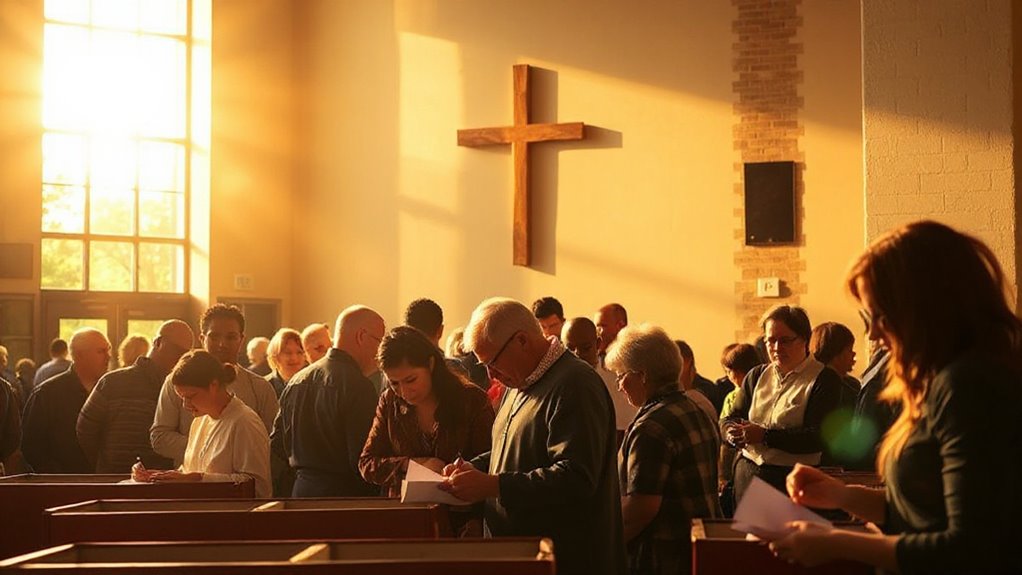
Guiding the voting booth as a Christian requires careful consideration of how personal faith translates into civic action. Believers are encouraged to prioritize biblical principles like justice, mercy, and humility from Micah 6:8 rather than party loyalty.
James 1:5 calls for seeking wisdom through prayer before casting ballots, while Romans 14:12 reminds voters they ultimately give account to God for their decisions. This framework suggests evaluating candidates by their fruits, as Matthew 7:20 instructs, and supporting those who align with biblical values regarding life, family, and religious freedom.
The approach rejects choosing “lesser evils” in favor of promoting godly leadership. Even when preferred candidates lose, trust remains anchored in God’s sovereignty, recognizing that Romans 13 affirms all authority flows from Him. Catholic voters may also consider how Church teaching on social doctrine informs issues like justice, subsidiarity, and the common good.