


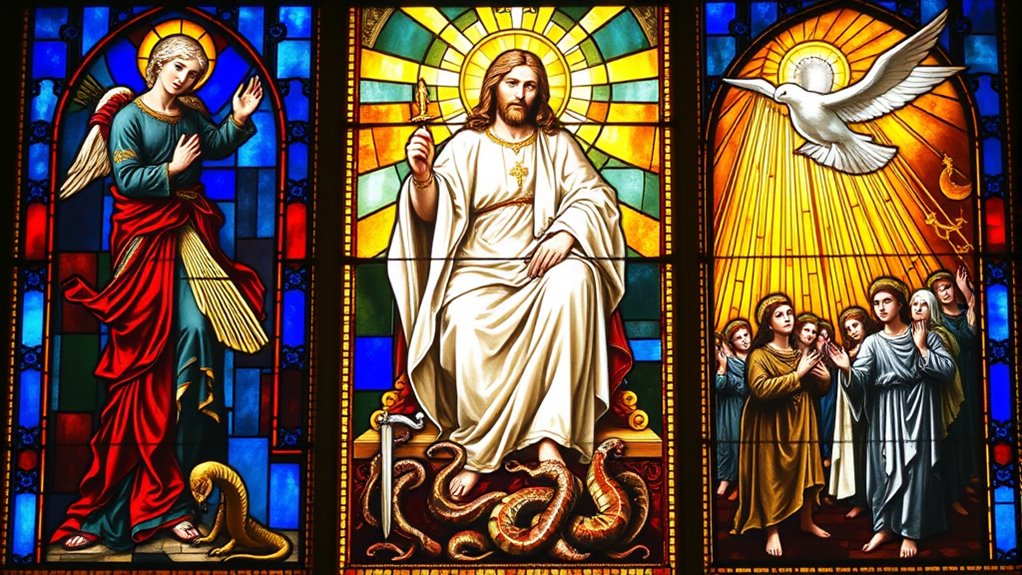

The Bible directly opposes racism through numerous passages affirming God’s impartiality and humanity’s shared ancestry. Deuteronomy 10:17 and Romans 2:11 state that God shows no favoritism, while Acts 17:26 declares all nations come from one ancestor. Galatians 3:28 proclaims unity in Christ beyond ethnic divisions, and prophets like Jeremiah and Micah demanded justice for the oppressed and protection of foreigners. Despite this clear teaching, passages like Genesis 9:18-27 were historically misused to justify racial hierarchies, distortions that modern biblical scholarship rejects as violating Scripture’s fundamental message of impartial love and universal inclusion.
Key Takeaways
- The Bible affirms all humans share common ancestry and God shows no partiality based on ethnicity or race.
- Scripture commands love for neighbors and condemns favoritism, discrimination, and prejudice as violations of God’s justice.
- Biblical visions include all nations, tribes, and languages united in worship, reflecting God’s universal redemptive plan.
- Prophets consistently demanded justice for the oppressed and protection for foreigners, challenging all forms of oppression.
- Historical misuse of Noah’s curse to justify slavery contradicts Scripture and is rejected by modern scholarship.
What Does the Bible Say About Racism?

The Bible addresses racism not through direct condemnation of the modern concept, which developed centuries after its writing, but through principles that undermine prejudice based on ethnicity or skin color. Deuteronomy 10:17 establishes that God shows no partiality, a theme echoed in Romans 2:11 and Acts 10:34.
Galatians 3:28 declares believers “neither Jew nor Greek, slave nor free, male nor female—all one in Christ Jesus,” dissolving ethnic divisions. The command to love one’s neighbor, central to Matthew 22:39 and repeated throughout Scripture, forms the foundation for rejecting discrimination.
Prophets like Jeremiah and Micah demanded justice for the oppressed and protection of foreigners. Acts 17:26 affirms that God “made all nations from one ancestor to inhabit the whole earth,” establishing humanity’s common origin. The Great Commission in Matthew 28:19 extends God’s message to all nations, while Revelation 7:9 envisions worshipers from every tribe and language gathered together. The promise to Abraham includes blessing “all peoples on earth”, demonstrating God’s intent for universal redemption beyond any single ethnic group. Additionally, the biblical affirmation of the unity of God and Christ in purpose reinforces the call to impartial love and justice, reflecting the core doctrine of the Trinity.
Which Bible Verses Do Racists Misinterpret?

How have certain biblical passages been twisted to support racial prejudice despite their original meaning? Genesis 9:18-27, describing Noah’s curse on Canaan, became the most commonly misused text. Nineteenth-century pastors falsely claimed Black people descended from Ham and were destined for slavery, though the curse applied only to Canaan and was fulfilled during Israel’s conquest of the Promised Land. They mistakenly believed “Ham” meant “black” and misread genealogies listing Egypt among Ham’s descendants. Influential theologian Abraham Kuyper endorsed this interpretation. Modern biblical scholarship unanimously rejects these arguments as ridiculous, yet the 2013 Billy Graham Evangelistic Association received questions about this myth. The Scofield Reference Bible also perpetuated the flawed interpretation during the early twentieth century. Other passages on mixed marriages and social order have been similarly distorted to justify racial hierarchies never intended by the original texts. Scripture clearly condemns discrimination, favoritism, and prejudice, as seen in James 2:1-8, making such misinterpretations a direct violation of biblical teaching. The broader canon recognized by Catholics, which includes the deuterocanonical books, also contains themes opposing injustice and oppression.