
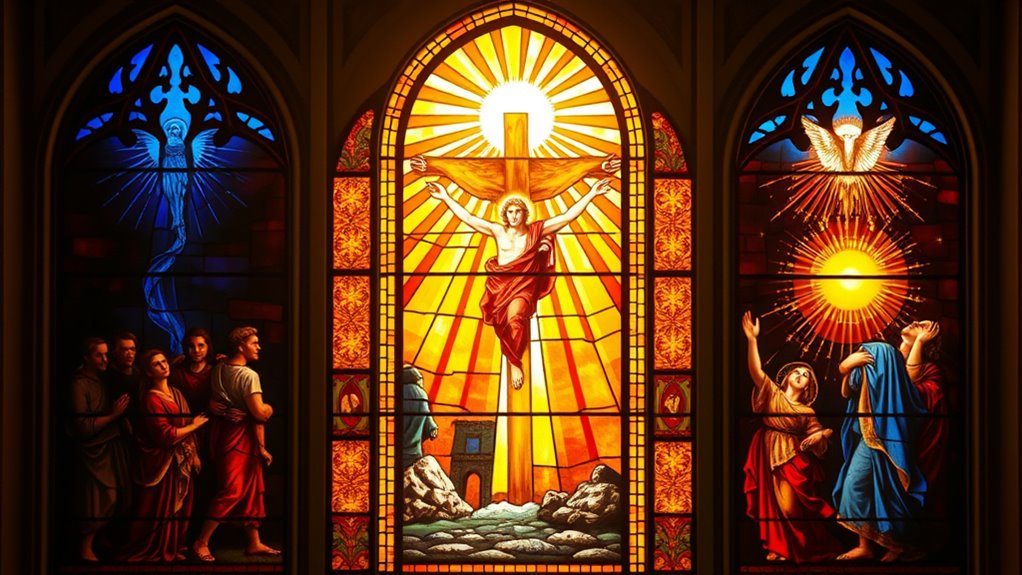
The Bible defines sin as lawlessness and rebellion against God’s commands, according to 1 John 3:4, which includes actions like lying and stealing that violate divine law. Jesus taught in Matthew 22:37-40 that God’s law centers on loving God and neighbor. Romans 6:23 states that sin’s consequence is death, creating separation from a holy God who cannot tolerate imperfection. However, Scripture presents Christ’s sacrifice as the solution, offering believers restored fellowship through faith and the promise that nothing can separate them from God’s love.
Key Takeaways
- Sin is transgression of God’s law and rebellion against Him, choosing anything over the Creator.
- Sin originated with Lucifer’s rebellion and entered humanity through Adam and Eve’s disobedience in Eden.
- The consequence of sin is death and eternal separation from God’s presence for the unrepentant.
- God’s holiness cannot coexist with sin, creating an unbridgeable divide requiring divine judgment.
- Jesus Christ’s sacrifice provides redemption, restoring fellowship with God through faith for believers.
What Does the Bible Say Sin Really Is?

According to Scripture, sin begins with a definition that appears deceptively simple but carries profound implications for human existence. First John 3:4 identifies sin as transgression of God’s law, or lawlessness. This encompasses actions that violate divine commands—lying, cheating, stealing—but extends deeper.
Jesus explained in Matthew 22:37-40 that God’s law centers on love: loving God completely and loving one’s neighbor. At its core, sin represents rebellion against God, a choice to prefer anything over the Creator. Many biblical authors across centuries address this reality, providing a consistent theological perspective on human failure and divine grace.
This rebellion originated with Lucifer’s desire to elevate himself above God, then spread to humanity when Adam and Eve consumed forbidden fruit in Eden. Their act fractured the relationship between humans and God, establishing sin as fundamentally relational rather than merely behavioral. Romans 6:23 connects the wages of sin to death, revealing separation from the life-giving God. Through Adam’s disobedience, sin entered the world, bringing death as its inevitable consequence to all humanity.
Why Sin Separates Us From a Holy God

While God’s love for humanity remains constant, His holiness creates an unbridgeable divide between Himself and sin. Isaiah 59:2 explains that iniquities separate people from God, causing Him to hide His face and withhold response to prayers.
This separation stems from God’s perfect nature, which requires judgment on imperfection. His righteous justice demands punishment for sin, making unredeemed humans enemies under sin’s rule. Scripture describes this condition as spiritual death, being dead in trespasses and sins. The Christian doctrine of the Trinity underscores that God’s holiness is unified even as He relates to humanity through distinct Persons.
The consequence for unrepentent sin is eternal destruction away from the Lord’s presence, as stated in 2 Thessalonians 1:8-9.
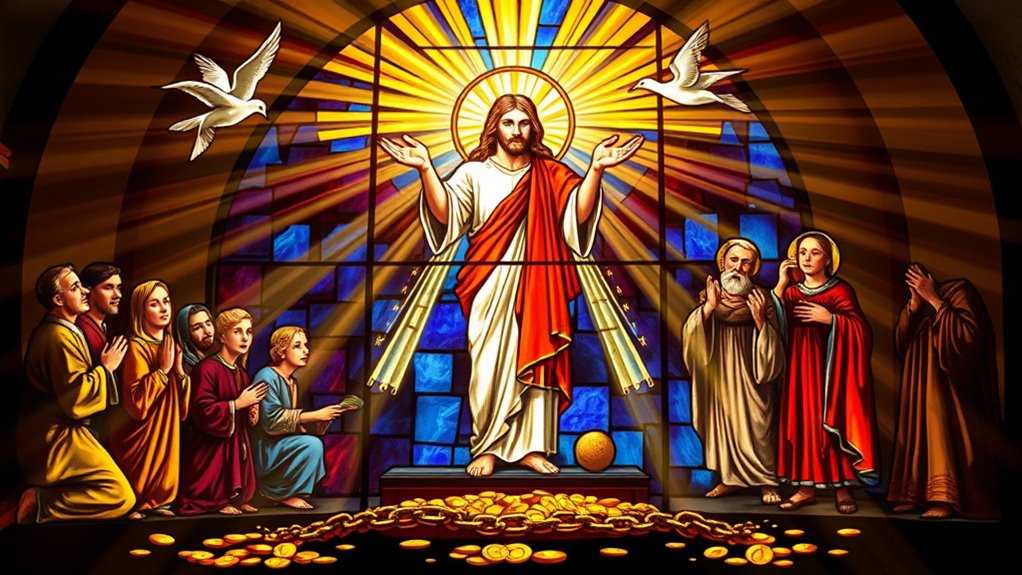
However, Christ’s sacrifice provides the solution. Through Jesus, who became sin to exchange righteousness with believers (2 Corinthians 5:21), the dividing wall breaks down. Faith bridges this gap, restoring fellowship that remains unbroken for those joined forever to Christ. Romans 8:35-39 promises that nothing shall separate believers from the love of God in Christ Jesus.