
The Bible does not mention “star signs” by name, and the term itself has no equivalent in Scripture. Genesis 1:14 describes celestial lights as markers of time and seasons, not as guides for personality or destiny. Deuteronomy 18:10–12 directly prohibits divination, and Jeremiah 10:2 warns against being shaped by signs in the heavens. What the Bible actually says about astrology and constellations goes considerably further than most expect.
Key Takeaways
- The Bible never uses the phrase “star signs”; it refers broadly to stars, constellations, and heavens without personality-based systems.
- Genesis 1:14 assigns celestial lights the purpose of marking seasons, days, and years—not determining human destiny.
- Deuteronomy 18:10–12 explicitly prohibits divination, classifying astrology-related practices as an abomination before God.
- Jeremiah 10:2 directly instructs believers not to be dismayed by signs in the heavens.
- Isaiah 47:13–15 describes astrologers and stargazers as ultimately powerless, unable to save themselves or others from destruction.
Does the Bible Directly Address Star Signs?

When examining what the Bible actually says about star signs, one detail stands out immediately: the phrase “star signs” does not appear anywhere in the canonical biblical text. Modern zodiac terminology simply did not exist in the language of ancient Scripture.
Instead, biblical writers used broader terms like “stars,” “constellations,” and “heavens” to describe the night sky. No single chapter or verse defines a category called “star signs” or organizes celestial bodies into a personality-based system. Ancient writers instead treated constellations as created objects and markers of time, not as a system for personal destiny; see constellations in Job for examples.
This absence is meaningful. It suggests that star signs, as understood today, are not a direct scriptural subject.
The Bible does reference specific constellations, such as Orion and Pleiades in Job 9:9, but those mentions describe created objects rather than tools for understanding human character or destiny.
God has every star numbered and named, as declared in Psalm 147:4, reflecting His sovereign knowledge over the heavens rather than any system of human fortune-telling.
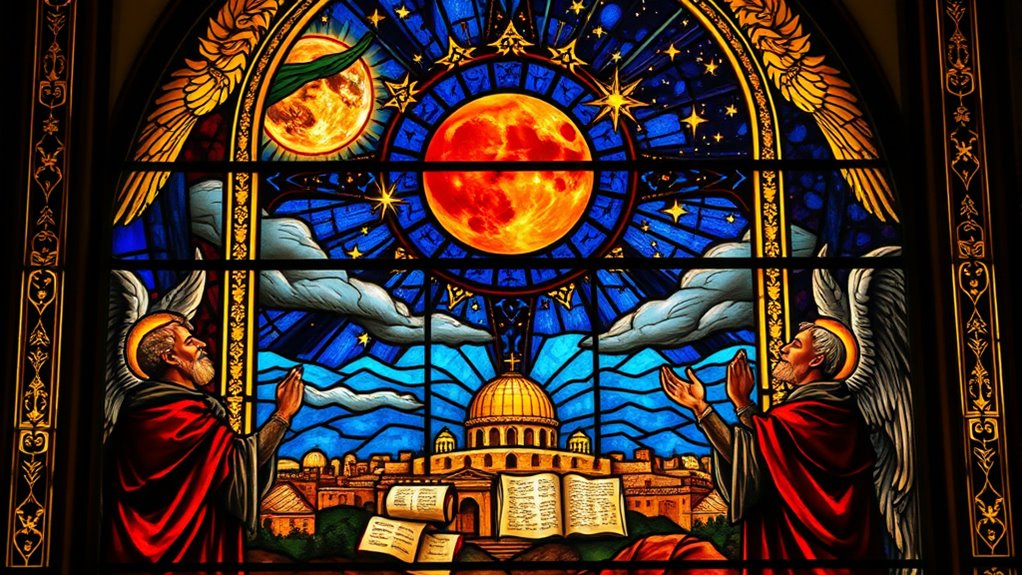
Genesis 1:14 states that God appointed the lights in the heavens for signs, and for seasons, indicating a divine purpose tied to marking time and communicating God’s design rather than predicting individual human affairs.
What Does Genesis 1:14 Actually Say About the Stars?

The fourteenth verse of Genesis offers one of the clearest windows into how the ancient Hebrew text understood the purpose of the stars. According to the passage, God placed lights in the expanse of the heavens to separate day from night, mark seasons, and measure days and years.
The Hebrew word used for “signs” is *oth*, meaning a visible token or indicator. This same word appears in Genesis 4:15 and Genesis 9:12, describing Cain’s mark and Noah’s rainbow respectively.
Scholars note that the fourth day of creation specifically addresses the arrangement of the sun, moon, and stars into the firmament. The text frames these lights as practical timekeepers and silent testimonies to divine order, not as tools for predicting human fate. God’s covenant promise in Genesis 8:22 reinforces this structure, declaring that seedtime and harvest, along with day and night, will never cease.
This framing stood in direct contrast to the beliefs of the original readers, who lived among cultures that treated stars as divine beings rather than as creations under God’s authority. The passage is rooted in an ancient Near Eastern context that preserved much of its wording in Biblical Hebrew.
What the Bible Says About Star Signs and Divination

Across multiple books of the Hebrew Bible and the New Testament, scripture addresses the practice of reading stars for personal guidance with consistent and direct language.
Deuteronomy 18:10–12 prohibits divination outright, calling it an abomination.
Leviticus 19:26 bans interpreting omens.
Isaiah 47:13–15 addresses Babylonian astrologers directly, describing their predictions as ultimately powerless.
Jeremiah 10:2 instructs readers not to be dismayed by signs in the heavens.
These passages share a common thread: celestial bodies were created by God for timekeeping, as Genesis 1:14 states, not for shaping human destiny. Jesus himself lived as a devout Jew within first-century Palestinian society.
Psalm 19:1 reinforces this, declaring that the heavens reflect God’s glory rather than human fate.
Ephesians 2:10 describes believers as God’s handiwork, with paths prepared in advance, placing destiny firmly in God’s hands rather than in zodiac signs or planetary positions.
Scripture consistently redirects attention away from stars and toward the God who created them. Astrology’s roots trace back to ancient Babylon, making it among the oldest forms of divination that scripture speaks against.
Is Following Star Signs Considered a Sin in the Bible?

Having established what the Bible says about star signs, a natural question follows: does following them constitute a sin? According to Scripture, the answer appears to be yes.
Deuteronomy 18:10-12 lists star consultation among practices described as detestable to God. Leviticus 19:26 directly forbids interpreting omens derived from celestial bodies.
These passages classify astrology not as harmless curiosity but as a violation of divine command.
The Bible frames the issue around authority. Romans 6:15-16 urges believers to break free from sinful patterns, while 1 Corinthians 8:6 affirms that true authority belongs to God alone.
Scripture consistently presents star sign reliance as rebellion against that authority.
Isaiah 47:13-14 declares that astrologers, stargazers, and monthly prognosticators shall be as stubble, unable to deliver themselves from destruction.
Proverbs 3:5-6 calls believers to trust in the Lord rather than relying on other guidance systems for direction in life.
However, the same texts that condemn the practice also point toward repentance and restored trust in God as a clear path forward. Jesus himself spoke in Aramaic in daily life and religious contexts, which reflects the biblical cultural setting these passages emerged from.
Constellations vs. Zodiac Signs: What the Bible Says

While the Bible openly acknowledges stars and constellations as part of God’s creation, it draws a clear line between recognizing them and using them for divination. Job 9:9 names Orion, the Pleiades, and Arcturus as divine arrangements, while Genesis 1:14 assigns stars the purpose of marking seasons and time. These references carry no astrological intent. The word “zodiac” never appears in Scripture. In fact, 2 Kings 23:5 records Judah’s kings burning zodiac-related worship sites, treating them as idolatry. Deuteronomy 17:2–7 reinforces this by prohibiting constellation-based worship entirely. The Bible presents constellations as evidence of God’s craftsmanship, not tools for personality analysis or fate prediction. Psalm 19:1 states they reveal God’s glory, nothing more. Isaiah 47:13–14 warns that astrologers and stargazers would be powerless to save Babylon from judgment. The biblical material aligns with the broader Christian doctrine that God alone is sovereign and that worship of created things, such as celestial bodies, is forbidden monotheistic belief.