




The Bible presents the devil as a real spiritual being who actively opposes God and humanity. The name *Satan* comes from the Hebrew meaning “adversary,” while *Devil* derives from the Greek *diabolos*, meaning “slanderer.” Scripture describes him as a murderer, liar, and deceiver of the whole world (Revelation 12:9). His defeat, however, is certain, grounded in Christ’s death and resurrection. Those who explore further will find a fuller picture of his tactics and ultimate judgment.
Key Takeaways
- The Bible uses names like Satan, Devil, and Beelzebub, each revealing his role as adversary, slanderer, and accuser against humanity.
- Revelation describes the devil symbolically as a dragon and ancient serpent who deceives the entire world.
- Scripture consistently links the devil to murder, lying, and deliberate opposition to God’s truth.
- The devil’s temptations are calculated, targeting specific weaknesses at carefully chosen moments, as seen in Matthew 4.
- The Bible promises the devil’s ultimate defeat, ending in permanent judgment in the lake of fire.
The Devil in the Bible: Identity and Names

The Bible uses several names and titles for the figure commonly known as the Devil, each carrying distinct meaning. The name *Satan* comes from the Hebrew *ha-satan*, meaning “adversary” or “accuser.” In early Hebrew texts, it functioned more as a role than a personal name.
The word *devil* derives from the Greek *diabolos*, meaning “slanderer” or “false accuser,” and appears frequently throughout the New Covenant alongside *Satan*. Other titles include *the evil one*, *the wicked one*, and *Beelzebub*, a term linked to the Philistine god Baal-Zebub, meaning “lord of the flies.”
The book of Revelation adds symbolic titles such as *dragon* and *ancient serpent*. The title *dragon* is a figure of speech emphasizing the Devil’s fierce and merciless nature. Together, these names paint a consistent biblical portrait of a figure defined by opposition, deception, and moral evil. In Revelation 9:11, a figure called *Apollyon* is named as “the angel of the bottomless pit”, identified as a king of demons and commonly interpreted as Satan or a powerful demon serving him.
The Devil’s Character: Murderer, Liar, Deceiver

The description links murder, lying, and a complete opposition to truth as interconnected qualities rather than separate offenses.
Revelation 12:9 expands this picture, calling the devil “the deceiver of the whole world,” while Revelation 12:10 identifies him as an accuser.
The Greek term *diabolos* itself means slanderer. Scholars frequently trace these traits back to Genesis 3, where deception introduced spiritual death, establishing a pattern that Scripture consistently attributes to the devil’s nature. Scripture also attributes to him the work of stoking fear and doubt, capturing the minds of those who remain apart from God. This pattern parallels how Scripture presents the devil in relation to Christ, highlighting his opposition to God the Father and the divine purposes revealed in the New Testament.
In the Garden of Eden, the devil did not rely on outright falsehood alone but mixed truth with lies to lead Eve and Adam into disobedience, revealing a cunning strategy aimed at tearing down humanity’s relationship with God.
How Satan Tempts, Deceives, and Attacks

Scripture portrays Satan’s approach to temptation as calculated rather than random, targeting specific vulnerabilities at carefully chosen moments. In Matthew 4 and Luke 4, Satan approached Jesus after forty days of fasting, pressing hunger, pride, and the desire for power in sequence.
Satan’s temptations are not random — they are calculated strikes against specific vulnerabilities at precisely chosen moments.
Theologians note this pattern as deliberate, exploiting physical weakness, misapplied Scripture, and worldly ambition simultaneously. Catholics and other Christians interpret these passages within broader teachings about spiritual warfare and human weakness, emphasizing the role of grace and discipline in resisting temptation and spiritual attacks.
Satan’s tactics, described in 1 John 2:16, include “the lust of the flesh, the lust of the eyes, and the pride of life.” He also distorts truth rather than simply promoting open rebellion, making sin appear reasonable or spiritually justified.
Genesis 3 reflects this same method of reframing reality to create doubt. Peter warns that Satan prowls like a lion, actively seeking someone to devour, underscoring that his attacks are persistent and predatory rather than occasional.
Despite these layered attacks, Scripture consistently presents awareness of Satan’s methods as meaningful protection against them. Believers are called to fight arm-and-arm together, recognizing that the struggle against temptation is a shared battle of faith rather than a solitary one.
How the Devil Is Defeated and Judged

Rooted in both Old and New scripture texts, the Bible presents Satan’s defeat not as a single moment but as a progression unfolding across redemptive history.
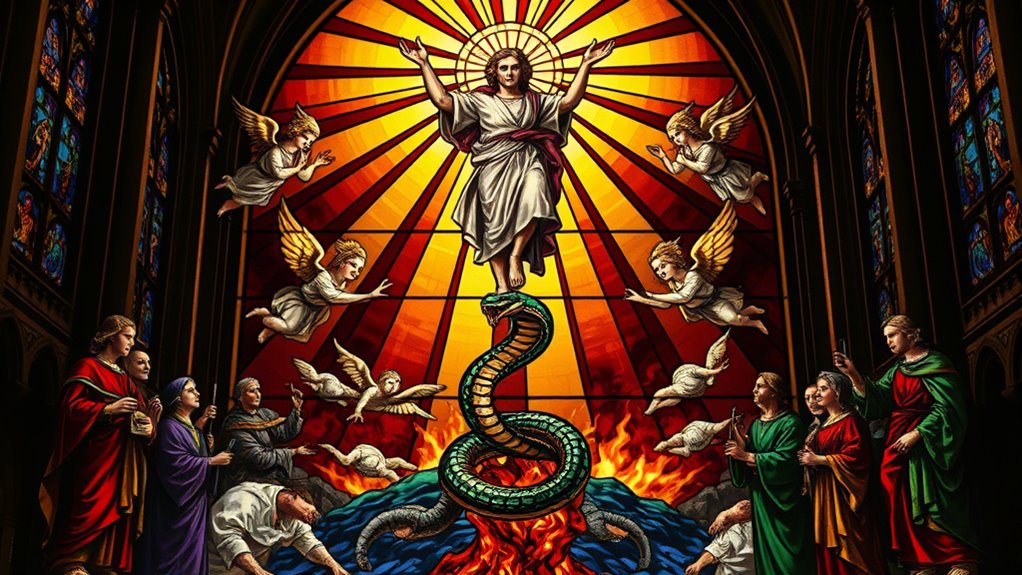
Genesis 3:15 offers an early promise that the serpent’s head would be crushed.
Colossians 2:15 and Hebrews 2:14 then describe Christ’s death and resurrection as a decisive disarming of Satan’s power.
Revelation 20:1–3 depicts a future binding that restrains his ability to deceive the nations.
After a brief, permitted release described in Revelation 20:7–9, Satan’s final rebellion fails immediately.
Revelation 20:10 records his permanent sentence: the lake of fire, described as eternal torment.
Matthew 25:41 confirms this judgment was prepared specifically for the devil and his angels.
The Bible frames this outcome as certain and entirely God’s doing. Prior to his final judgment, Satan is described as still accessing heaven, as seen in Job 1:6, where he appears among the sons of God before the Lord.
Paul connects this ultimate defeat to believers directly, asserting that God will bruise Satan under their feet, linking Romans 16:20 to the final fulfillment seen in Revelation 20.
These events reflect the broader biblical theme that God’s rule and divine sovereignty ultimately triumph over evil.