
The Bible introduces tithing when Abraham gave a tenth to Melchizedek in Genesis 14, later formalizing it as divine command in Leviticus 27:30 to acknowledge God’s ownership of all resources. While ancient Israelites practiced mandatory ten-percent giving, modern Christians view generosity differently—only five percent of churchgoers regularly tithe today, with average donations around 4.35 percent of income. Nearly half of church donations now occur online, particularly among younger givers who prefer purpose-driven contributions over obligation-based giving. The biblical foundation and contemporary practice reveal evolving perspectives on faithful stewardship.
Key Takeaways
- Tithing means giving one-tenth of income to God, first practiced by Abraham and Jacob before becoming formal Israelite law.
- Leviticus 27:30 establishes tithing as a divine command, recognizing God’s ownership over all resources and human stewardship responsibilities.
- Biblical tithing reflects ancient Near Eastern customs but gained unique theological significance in Israel’s worship and covenant relationship.
- Hebrews 7 connects Abraham’s tithe to Melchizedek with later Levitical practices, showing continuity in biblical giving principles.
- Tithing demonstrates devotion and acknowledgment of divine sovereignty rather than mere financial obligation or transactional exchange.
The Historical Foundation of Tithing in Scripture
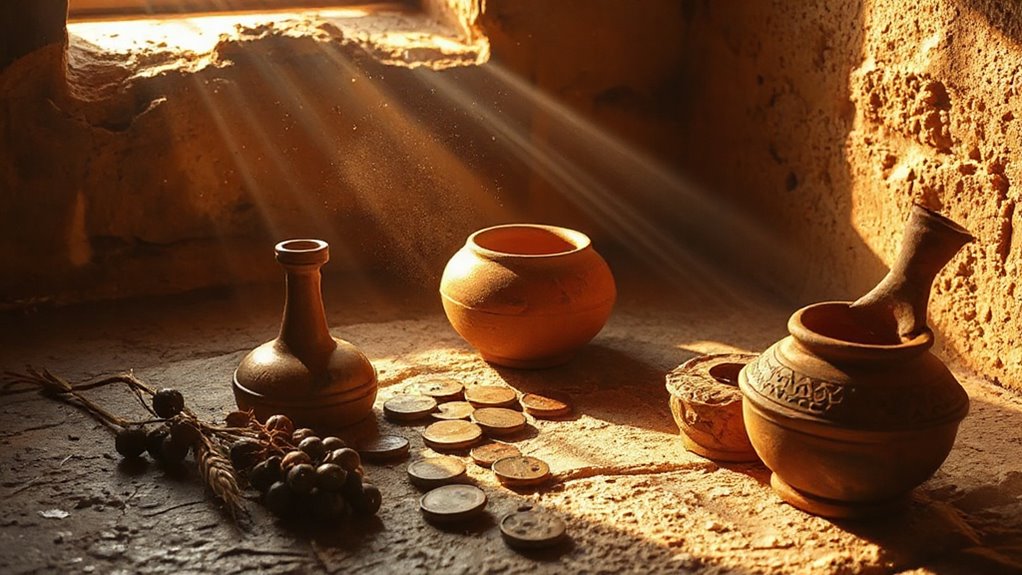
The practice of tithing, defined as giving one-tenth of one’s income or produce to God, traces its roots to the earliest narratives of the Hebrew Bible, appearing long before it became formalized law. Archaeological and linguistic research shows these stories were transmitted in Hebrew and reflect ancient Near Eastern contexts. Abraham gave a tenth of his battle spoils to Melchizedek, king of Salem and priest of God Most High, in Genesis 14:18-20.
Jacob later vowed to give God a full tenth in Genesis 28, establishing tithing as an act of devotion and recognition of divine authority. The concept may have been influenced by Middle Eastern customs, but it acquired unique theological meaning within Israelite religion.
Hebrews 7 connects Abraham’s tithe to later Levitical practices, suggesting continuity between pre-Mosaic traditions and the formal system that followed. The formal law of tithing appears in Leviticus 27:30, where it is presented as a divine command that acknowledges God’s sovereignty over all resources. Scripture consistently affirms that God owns everything, establishing the foundation for humanity’s role as stewards rather than ultimate possessors of creation.
How Christians Should Approach Giving Today

While tithing’s biblical roots stretch back to Abraham and Jacob, modern Christian giving looks markedly different from ancient practices. This shift coincides with decreasing engagement in Daily Bible reading and other foundational disciplines. Today, only about 5% of churchgoers regularly tithe the traditional 10%, with the average donation representing roughly 4.35% of household income.
Digital platforms have reshaped generosity, as approximately 49% of church donations now occur online, with Millennials leading this shift at 41%. Churches offering recurring donation options see a 25% increase in total giving, suggesting convenience matters. Smaller churches tend to see higher per-person giving compared to their larger counterparts.
Despite falling short of the tithe standard, Christians increasingly direct their gifts toward specific purposes, rising from 27% to 31% between 2015 and 2025. This reflects a desire for intentional, purpose-driven generosity rather than obligation alone. Notably, 88% of eGivers are willing to cover processing fees, demonstrating a commitment to ensuring their full intended contribution reaches the church.