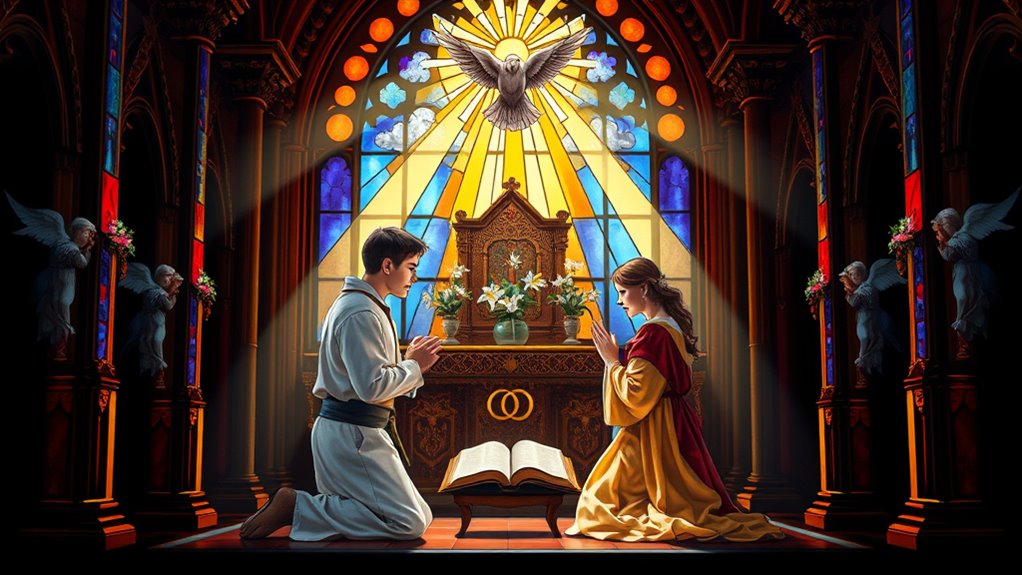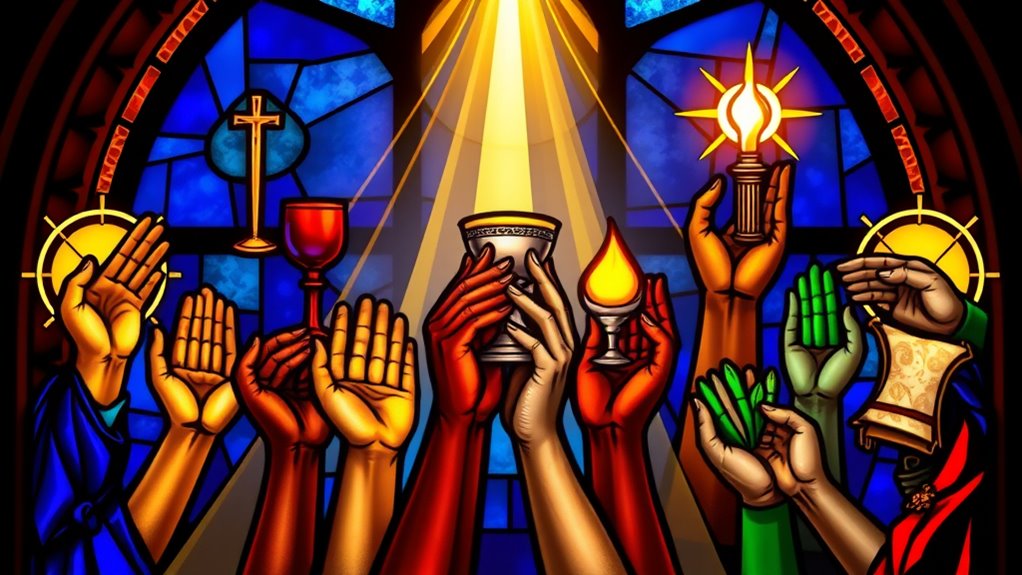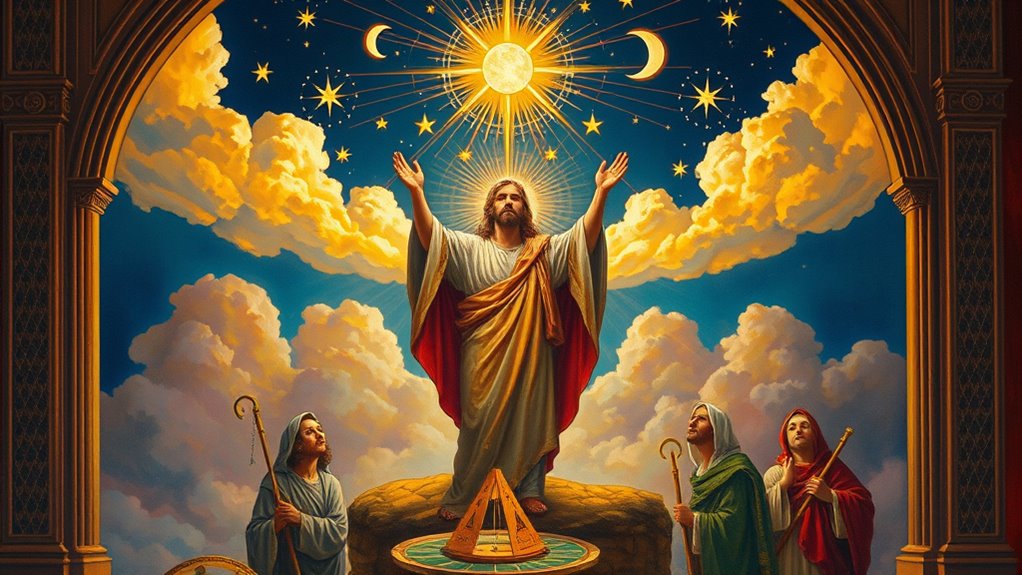


Biblical worship, rooted in Hebrew *saha* and Greek *proskyneo*, means to bow down in reverent acknowledgment of God’s supreme worth. The practice engages mind, heart, will, and body in response to God’s saving acts and self-revelation. Christians direct worship to Jesus based on his divine identity within the Trinity. Worship extends beyond Sunday gatherings into daily life, as Paul’s letter to the Corinthians suggests even eating and drinking can glorify God. Early believers practiced breaking bread with prayer and Scripture reading, transforming ordinary moments like cooking and conversation into acts of devotion when performed with gratitude and awareness of God’s presence.
Key Takeaways
- Worship literally means “to bow down,” expressing reverence, submission, and acknowledgment of God’s supreme worth and saving acts.
- True worship engages the whole person—mind, emotions, will, and body—not just outward rituals or weekly services.
- Christians worship Jesus as divine, believing He shares God’s essence as part of the Trinity alongside Father and Spirit.
- Daily activities like eating, working, and speaking become worship when done in Christ’s name with gratitude and awareness.
- Early Christians practiced worship through breaking bread, prayer, Scripture reading, and transforming ordinary moments into sacred acts.
What Does Biblical Worship Really Mean?

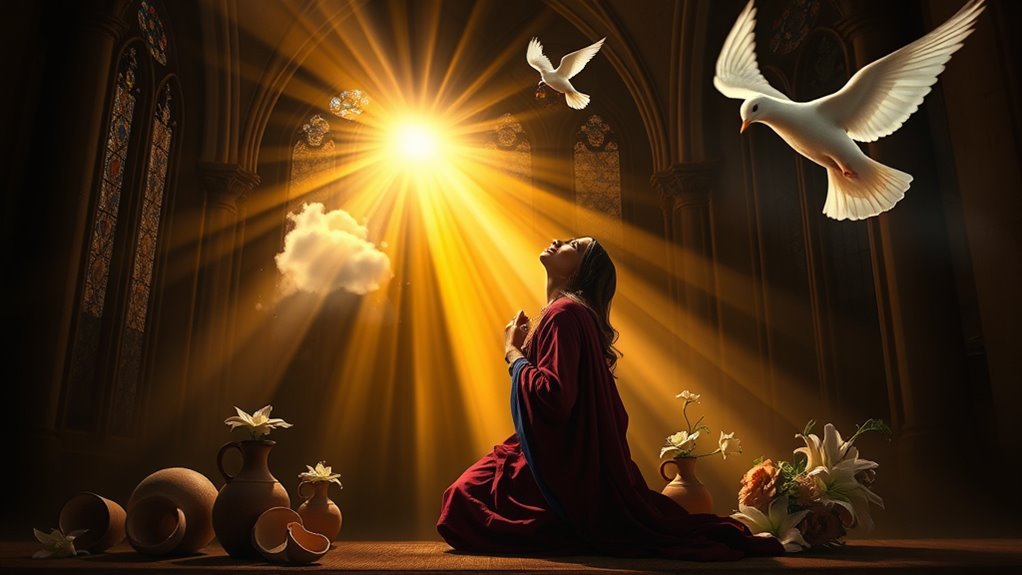
Biblical worship, at its most fundamental level, means bowing down before God in acknowledgment of His supreme worth. The Hebrew word *saha* and Greek word *proskyneo* both translate to “worship” and literally mean “to bow down,” describing a physical gesture of respect and submission.
Another Greek term, *proskyneo*, specifically means “to come forward to kiss the hand, as an act of adoration.” These linguistic roots reveal worship as an awed response to God’s saving acts and praiseworthy character.
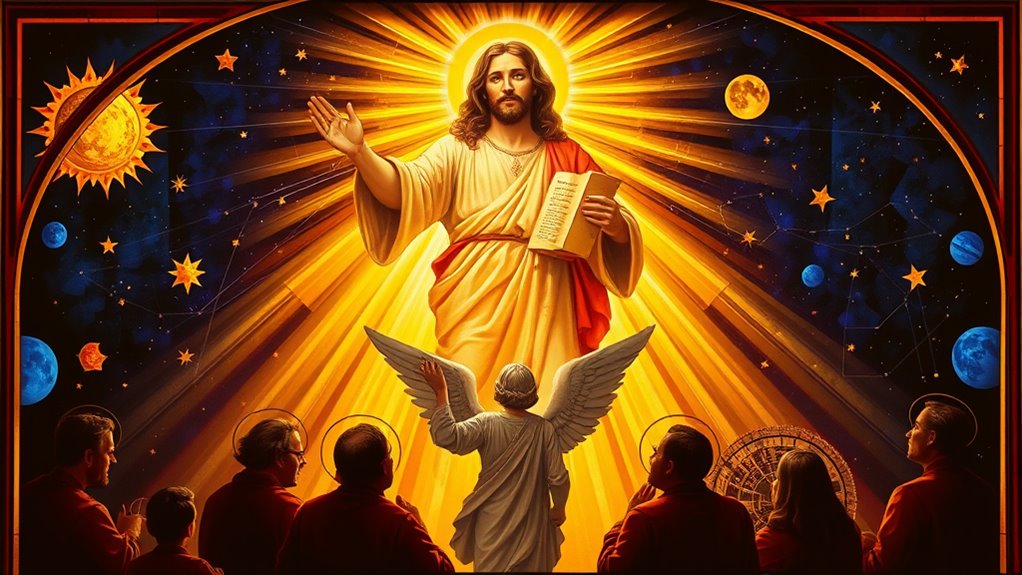
It encompasses both an attitude of the heart and actions of service, engaging the whole person—mind, emotion, will, and body. True worship represents a declaration of God’s worth, involving reverential acts of homage before the divine Sovereign in response to His gracious self-revelation. Christians often worship Jesus because he is understood to be divine as the Son of God and part of the Trinity, which affirms his shared divine essence with the Father and Spirit shared divine essence.
Turn Your Everyday Life Into Worship

Throughout history, followers of Christ have discovered that worship extends far beyond Sunday services and formal religious gatherings. Brother Lawrence, a seventeenth-century monk, famously practiced devotion while washing dishes in his monastery kitchen. This approach reflects Paul’s instruction in 1 Corinthians 10:31 that even eating and drinking can glorify God.
Colossians 3:16-17 expands this principle, directing believers to perform all actions in Christ’s name with thanksgiving. Romans 12:1-2 frames daily activities as spiritual worship when bodies become living sacrifices.
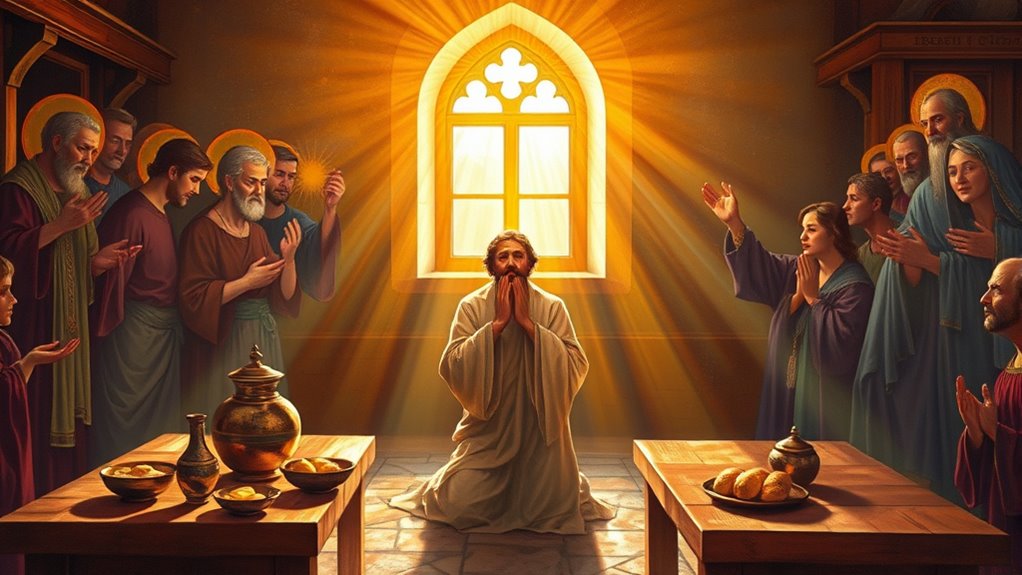
Early Christians demonstrated this lifestyle by breaking bread together with prayer, as recorded in Acts 2:42 and 46. These practices transform ordinary moments—cooking dinner, doing laundry, speaking words—into opportunities for worship when performed with awareness of God’s presence and gratitude toward Him. Reading the Scriptures regularly requires a surprisingly modest time commitment, often amounting to about 70-80 hours total for a complete read-through.