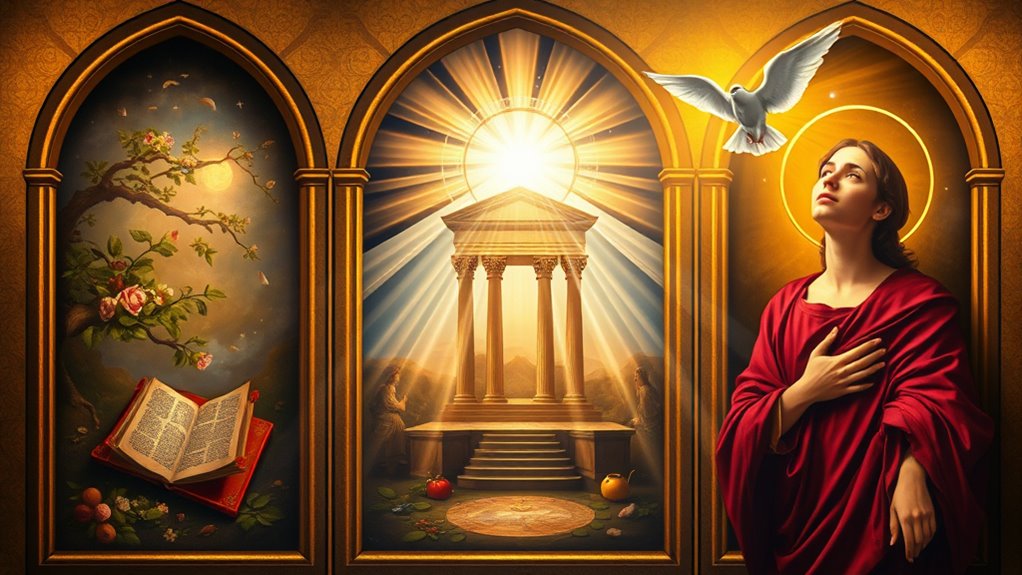
Protestantism, which began with Martin Luther’s Ninety-five Theses in 1517, broke from Catholic tradition by rejecting core structures like papal authority, the equal weight of Sacred Tradition alongside Scripture, and the hierarchical priesthood. Protestants embraced *sola scriptura*—Scripture alone—and dismantled practices such as confession to priests, prayers to saints, and belief in Purgatory. The Council of Trent formalized this division by condemning Protestant teachings, marking a decisive rupture with Christianity’s institutional foundations that had existed for over a millennium. The split reshaped how believers relate to God, Scripture, and church authority, influencing religious identity across five centuries of Western Christianity.
How did a single religious tradition give rise to two distinct paths that have shaped Western Christianity for over five centuries? The answer lies not merely in different interpretations of shared beliefs, but in a fundamental break with the institutional structures that had defined Christianity for over a millennium. This shift also affected how communities expressed agape sacrificial love in worship and practice.
The Reformation marked not just theological disagreement, but a decisive rupture with Christianity’s millennium-old institutional foundations.
The Protestant Reformation, sparked by Martin Luther’s Ninety-five Theses in 1517, began as a dispute over specific practices like the sale of indulgences. However, it quickly evolved into something more profound: a challenge to the entire system of religious authority. The Council of Trent, meeting from 1545 to 1563, formalized the division by declaring Protestant teachings heretical, cementing a separation that would endure for centuries.
At the heart of this split lies the principle of sola scriptura, the belief that scripture alone serves as the foundation for Christian doctrine. Protestants rejected the Catholic position that Scripture and Sacred Tradition carry equal divine authority, arguing instead that the Bible itself must judge all traditions. This disagreement fundamentally altered how believers understood truth and who had the right to interpret it.
The doctrine of justification revealed another critical divergence. Protestants taught that salvation comes through faith alone, with God declaring believers righteous based on Christ’s imputed righteousness. Catholics, meanwhile, viewed justification as an ongoing process of spiritual renewal within the Church, a position that led the Council of Trent to condemn the Protestant understanding as false.
These theological differences produced practical consequences. Protestants embraced the priesthood of all believers, dismantling the hierarchical distinction between clergy and laity. They rejected practices like confessing sins exclusively to priests, praying to saints for intercession, and the concept of Purgatory as a place of purification after death. The Catholic Church maintained its vertical hierarchical structure, with the Magisterium serving as the authoritative interpreter of both Scripture and tradition under the pope’s final authority.
The Protestant canon excluded the books of the Apocrypha, further distinguishing their Bibles from Catholic editions. The Roman Inquisitions targeted Protestants in France, Spain, and Italy, though Church law forbade the direct shedding of heretics’ blood, leaving civil authorities responsible for carrying out punishments.
Understanding Protestantism, then, requires recognizing it as more than alternative theology. It represents a deliberate departure from centuries of institutional practice, a restructuring of how Christians relate to God, Scripture, and one another that continues to define religious identity today.