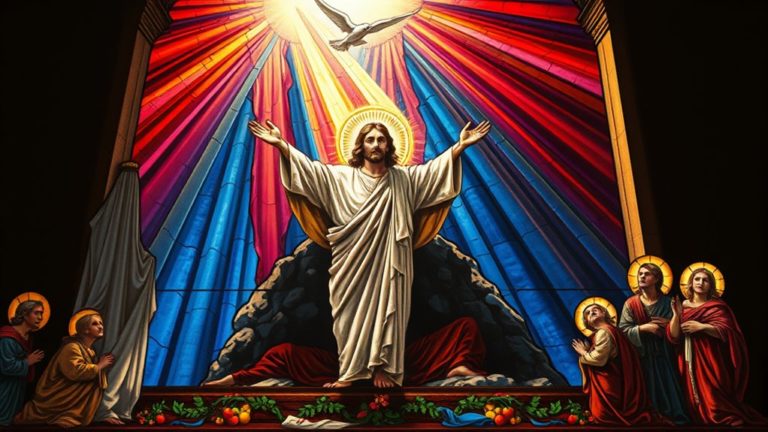







Paul refused to flee because the resurrection of Jesus functioned as a fixed point that made personal safety secondary to his calling. He re-entered Lystra after being stoned and left for dead. He continued speaking before rulers and hostile crowds. Marks on his body, referenced in Galatians 6:17, served as lasting evidence of uncompromised belief. Second Timothy 3:12 taught him to expect persecution. Those patterns of conviction, risk, and strategy reveal much more when examined closely.
The Conviction That Kept Paul in Hostile Territory
Conviction, more than courage alone, explains why Paul remained in places where most people would have left. His belief that Jesus had risen from the dead functioned as the fixed point around which every decision turned.
When Roman custody, Jewish opposition, or public hostility appeared, Paul did not treat them as signals to withdraw. Instead, he continued speaking before rulers, guards, and crowds. Prisons became platforms. Hostile cities became mission fields. His consistency across repeated trials reinforced something visible: Paul genuinely believed Christ’s lordship outweighed personal safety, social approval, and comfort.
That settled conviction, not impulse, kept him where danger was. Even when appeal to Caesar became necessary to avoid assassination, Paul framed it not as escape but as the fulfillment of God’s purpose to place him before the highest authority in Rome.
The physical cost of that conviction was permanent and measurable. After being stoned at Lystra and left for dead, Paul rose and re-entered the city, and the marks on his body, referenced in Galatians 6:17, remained as lasting evidence that his beliefs were not negotiable under threat of death.
This steadfastness reflects biblical principles of servant leadership that prioritize mission and care for others over personal safety.
The Jerusalem Riot That Nearly Ended His Ministry
When Paul arrived in Jerusalem, recorded in Acts 21:17–26, the atmosphere was already tense. Jewish believers had heard rumors that Paul was teaching Jews to abandon Moses. To ease those concerns, Paul participated in a public purification vow at the temple.
The gesture came too late. Jews from Asia recognized him in the temple, falsely accused him of bringing a Gentile named Trophimus into restricted areas, and stirred a mob that intended to kill him. Roman soldiers intervened before the crowd succeeded. Paul was arrested, then carried by soldiers for his own protection, transferring the conflict from street violence into Roman custody.
Warnings had preceded Paul’s arrival, as a prophet named Agabus had foretold in Caesarea that Paul would face bonds and hardship in Jerusalem, yet Paul pressed forward, declaring his readiness to die for Jesus.
Disciples in Tyre had also, through the Spirit, urged Paul not to go up to Jerusalem, yet Paul remained resolute, unwilling to count his life dear if it meant finishing the mission entrusted to him. Some believers urged him to heed prophetic discernment and reconsider, but Paul remained determined to follow his calling.
Why Paul Believed Persecution Was Part of His Calling
Paul did not treat persecution as a failure of faith or a sign that something had gone wrong. He understood suffering as built into his calling. Three reasons shaped that conviction:
- Jesus had warned followers that the world would hate them as it hated him first.
- Paul’s Damascus encounter began a mission that immediately included danger and resistance.
- Second Timothy 3:12 confirmed that godly living produces persecution, not comfort.
Ministry success, in Paul’s view, was never measured by safety. Faithfulness to the calling mattered more than avoiding the hardships that came with it. He personally endured five times forty lashes, three beatings with rods, and a stoning, yet pressed forward without abandoning his mission. At the end of his life, standing alone before Nero’s tribunal, he testified that the Lord stood by and strengthened him even in that most critical moment. This conviction reflects the biblical tension between human responsibility and divine sovereignty.
How Roman Custody Gave Paul Access to Governors and Kings
Roman custody, which might have silenced Paul entirely, instead placed him inside the official machinery of the empire. Transferred to Caesarea Maritima, he stood before Governor Felix, who held hearings repeatedly rather than issuing a quick verdict. Felix’s two-year delay kept Paul within reach of formal proceedings. The process mirrored how oppressive political power in Revelation exerts control through official institutions.
When Festus replaced Felix, Jewish leaders pressed the new governor, but Paul again defended himself publicly. Festus then consulted King Herod Agrippa II, arranging a formal audience before the king and Bernice. What began as arrest became a series of hearings before some of the region’s most powerful figures. Agrippa, after hearing Paul’s full defense, concluded that Paul had done nothing deserving death or imprisonment.
Paul’s case before these authorities was ultimately bound for Rome, as his appeal to Caesar redirected the proceedings entirely away from Jerusalem and toward the imperial court.
Why Paul Appealed to Caesar Instead of Disappearing?
Facing a hostile transfer request and a governor susceptible to political pressure, Paul invoked one of the most significant legal tools available to a Roman citizen: a formal appeal to Caesar. Rather than disappearing, Paul chose lawful confrontation.
Three factors shaped that decision:
- A transfer to Jerusalem carried documented assassination risk (Acts 25:3).
- Festus had already shown willingness to accommodate local political pressure.
- Acts 23:11 indicated Rome itself was central to Paul’s mission.
The appeal shifted jurisdiction away from a compromised regional court and legally redirected Paul toward the imperial capital. Once invoked, the appeal could not be unilaterally overturned by Festus, as jurisdiction had transferred to imperial authorities in Rome. After the appeal was lodged, King Agrippa II and Berenice arrived in Caesarea, and following Paul’s defense before them, even Agrippa privately concluded that Paul deserved no death or punishment. This decision also reflects the biblical theme that earthly authority is legitimate but ultimately subordinate to God’s authority.