The 1925 Pontevedra apparitions divide Catholics because the Catholic Church has never formally investigated or endorsed them, leaving the visions in uncertain status despite their influence on Marian devotion. Sister Lúcia dos Santos reported seeing the Virgin Mary and Child Jesus, who promoted the Five First Saturdays devotion that gained diocesan approval in 1939. However, without Vatican recognition, some faithful embrace these encounters as extensions of Fátima while others remain cautious about accepting messages lacking clear ecclesiastical validation. The distinction between authentic revelation and private spiritual experience continues to spark theological debate.
How does the Catholic Church decide which visions deserve full recognition and which remain in spiritual uncertainty? This question has shadowed the Pontevedra apparitions for nearly a century, dividing Catholics over events that occurred in a Spanish convent in 1925 and 1926.
The Pontevedra apparitions have divided Catholics for nearly a century, caught between devotion and the absence of formal Church recognition.
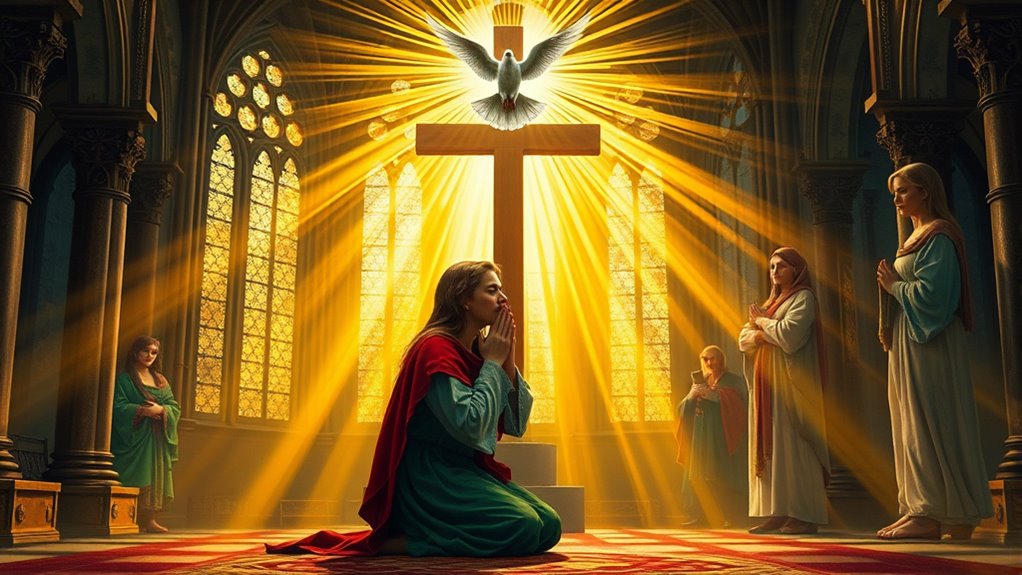
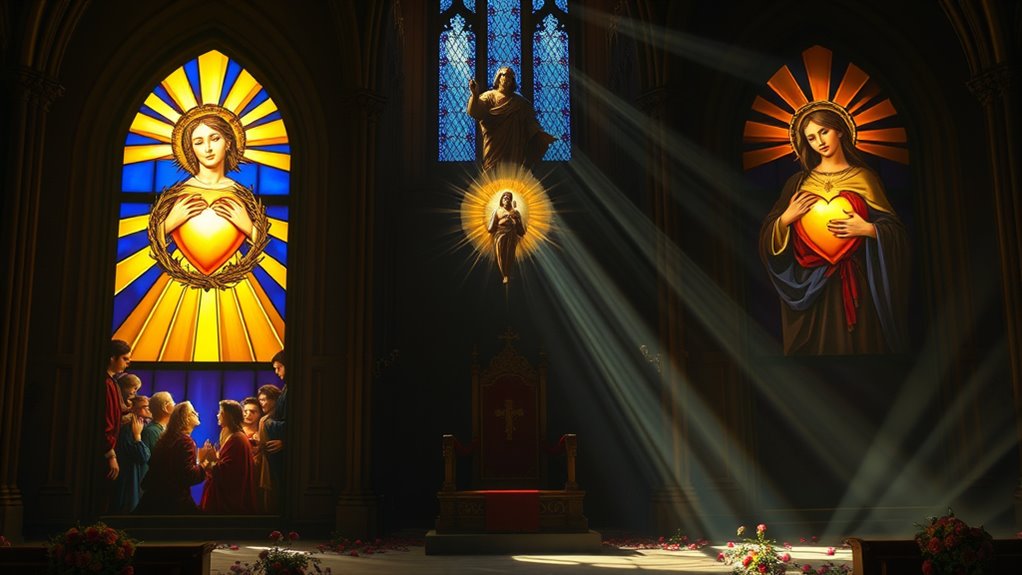
Sister Lúcia dos Santos, one of three children who witnessed the famous 1917 Fátima apparitions, reported seeing the Virgin Mary at the Dorothean convent in Pontevedra on December 10, 1925, and again on February 15, 1926. During these encounters, Mary presented her Immaculate Heart surrounded by thorns, symbolizing sorrow over human sin. The Child Jesus appeared alongside her, reproaching Lúcia for insufficient promotion of the Five First Saturdays Devotion and noting that many believers started this practice but few completed it.
The visions occurred while Lúcia was a postulant, unable to pursue teaching due to anticlerical laws and lacking proper certification. Her accounts emphasized reparation through confession, communion, prayer, and meditation on the Rosary, practices that would become central to Marian devotion in Portuguese and Spanish communities.
Despite this influence, the Catholic Church has never initiated a formal canonical inquiry into the Pontevedra apparitions’ authenticity. In practice, devotional emphasis and dissemination often follow approved liturgical texts, with many Catholics in the United States using the NABRE. The First Saturdays Devotion received approval from the bishop of Leiria-Fátima in 1939 at the diocesan level, but the Holy See has not granted universal recognition. This leaves the apparitions in what some describe as a liminal space, neither fully endorsed nor explicitly rejected.
This ambiguity has created division among the faithful. Some Catholics view the Pontevedra vision as a continuation of the Fátima message, deepening its call for reparation and devotion. Others point to the absence of universal Church confirmation as reason for theological caution, criticizing promotions of messages lacking clear validation. The devotion itself bears striking resemblance to the 17th-century First Fridays devotion revealed to Saint Margaret Mary Alacoque, suggesting a pattern of sacred heart devotions across Catholic history.
The vision touches core Catholic themes of sin, repentance, and spiritual rigor, yet its ecclesiastical status remains unresolved. After the apparitions, Jesus reportedly eased some devotional conditions to encourage greater participation, suggesting adaptability within the spiritual framework. The original apparition site where these events occurred now faces urgent reconstruction needs as humidity and water leaks have caused severe deterioration to the shrine’s structure.
One hundred years later, the Pontevedra vision continues to inspire devotion while raising questions about how the Church distinguishes authentic divine encounters from other spiritual experiences.