


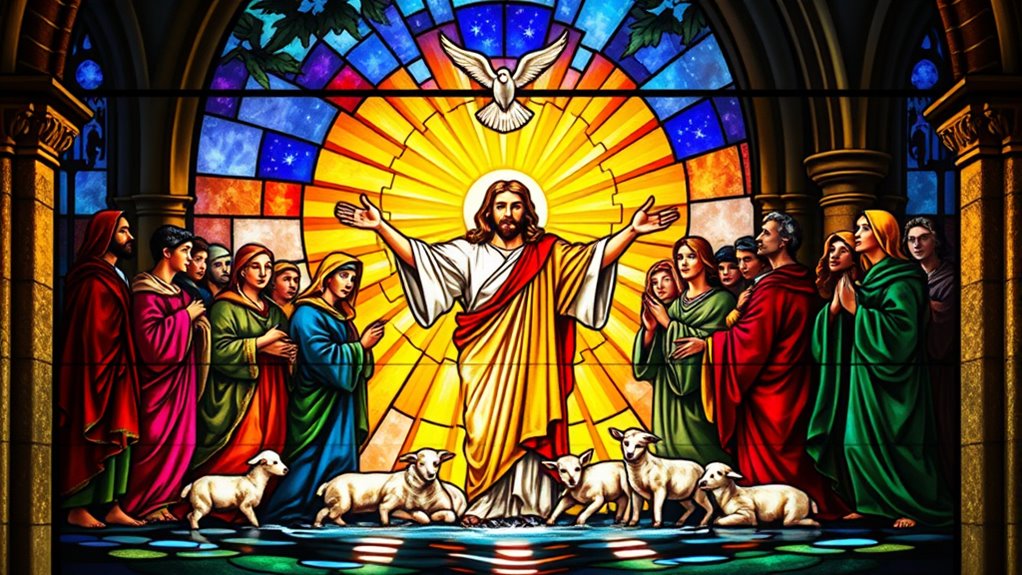
The Bible does not directly address transgender identity in modern terms, though Genesis 1:27 describes God creating humanity “male and female” in the divine image. Some theologians interpret this as a fixed binary, while others see it as a merism indicating a broader spectrum. Christian communities increasingly emphasize that transgender individuals bear God’s image and deserve compassion, inclusion, and pastoral care. Denominational guidelines affirm transgender people may participate fully in church life, including baptism and leadership roles. The church’s response balances biblical interpretation with care for vulnerable individuals facing considerably higher rates of mental health challenges.
Key Takeaways
- The Bible does not directly address transgender identity as a modern concept or use contemporary terminology.
- Genesis 1:27 describes humanity created “male and female,” interpreted by some as binary and others as a spectrum.
- All people, including transgender individuals, are created in God’s image and possess inherent dignity and worth.
- Christian communities increasingly emphasize compassionate pastoral care, inclusion, and protection of transgender individuals from harm.
- Transgender youth face significantly higher mental health risks, requiring informed, Scripture-rooted support that rejects bullying and abuse.
Creation and Gender in Biblical Texts

The Bible’s opening chapters in Genesis have long served as the foundation for theological discussions about sex and gender, with interpreters reaching markedly different conclusions from the same ancient text. Genesis 1:27 states that God created humanity “male and female” in the divine image. Many conservative theologians read this as establishing a fixed binary pattern, linking sexual differentiation to procreation and declaring it “very good.” Others interpret “male and female” as a merism, similar to “heaven and earth,” suggesting a spectrum rather than two exhaustive categories. Some Jewish and Christian traditions even describe the first human as originally androgynous, later divided into man and woman. Genesis 2 introduces the woman as a “helper fit for him,” prompting debates about complementarity, role differentiation, and equality. The Hebrew words for “male” (zār) and “female” (nĕqē) in these passages relate to biological sex, connecting the terms directly to physical and reproductive characteristics. Genesis 2:7 emphasizes that humans are made from dust, yet this humble origin does not diminish their unique relationship with God or their inherent dignity as purposefully created beings. Some readers reconcile these texts with ancient creation timelines, seeing them as compatible with broader interpretive frameworks.
Inclusion, Identity, and Pastoral Care in Christian Community

How should Christian communities respond when transgender individuals seek belonging, baptism, or leadership roles? Many denominational guidelines affirm that transgender people are made in the image of God and must receive compassion, love, and care, even where theological disagreement exists. The historical context of Jesus as a Jewish teacher who ministered to marginalized people can inform Christian approaches to inclusion and compassion Jewish context.
Transgender individuals are made in the image of God and deserve compassion, love, and care within Christian communities.
The Vatican’s Dicastery for the Doctrine of the Faith states that transgender people may be baptized, serve as godparents, and witness marriages, indicating no automatic sacramental exclusion.
Welcoming ministries intentionally integrate trans Christians into worship and leadership development.
Yet pastoral protocols emphasize balancing fidelity to Scripture with active hospitality and protection of vulnerable people. Caregivers must maintain relational boundaries carefully within the church community, with oversight and accountability frameworks ensuring proper conduct and transparency.
Research shows transgender youth experience two to three times higher rates of anxiety, depression, and suicidal ideation, underscoring urgent pastoral responsibility to reject bullying and abuse while offering informed, compassionate care. Biblical pastoral care must be rooted in Scripture, guiding individuals based on divine truth rather than human opinion.