



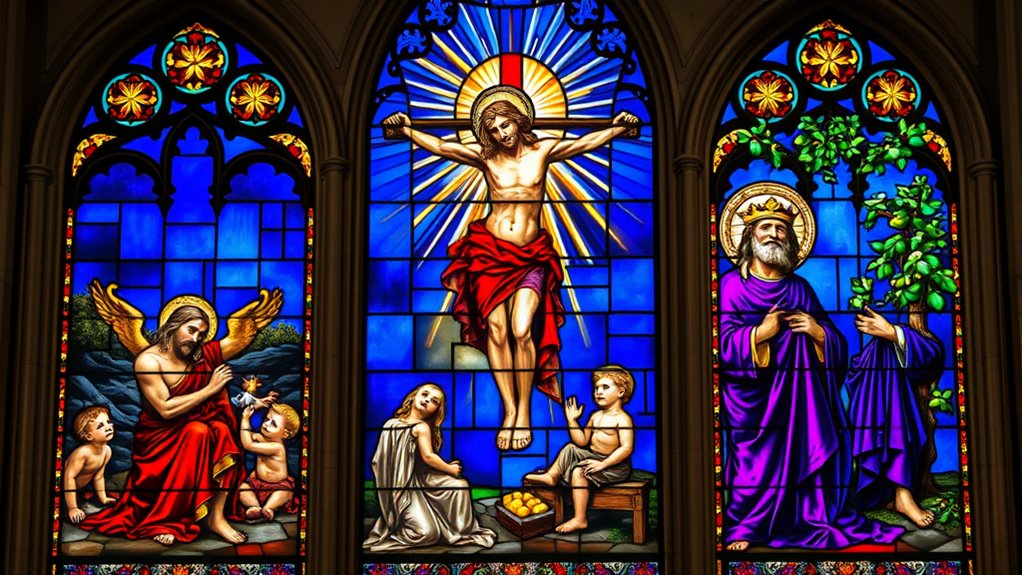
The Bible does not teach karma, but it presents a principle of reaping and sowing in Galatians 6:7, which states that “a man reaps what he sows.” This agricultural metaphor suggests that actions produce corresponding consequences, yet it operates differently from karma because grace intervenes through Christ’s sacrifice. According to Ephesians 2:8-9, salvation comes through grace via faith rather than accumulated deeds. Examples like David, who faced earthly consequences for adultery yet received God’s blessing through Solomon, demonstrate how mercy shapes outcomes beyond simple cause and effect, a dynamic explored more fully below.
Key Takeaways
- The Bible teaches “reaping and sowing” rather than karma: actions produce consequences aligned with what was sown.
- Unlike karma’s cycle of reincarnation, biblical consequences occur in this life and impact spiritual destiny beyond death.
- Grace through Christ breaks the pure cause-and-effect pattern, offering forgiveness and salvation beyond earned consequences.
- Galatians 6:7-9 promises that sowing to the Spirit yields eternal life, while sowing to flesh brings destruction.
- Biblical examples show God mercifully tempers consequences with blessing, as seen with David after his sin.
What the Bible Teaches About Reaping and Sowing
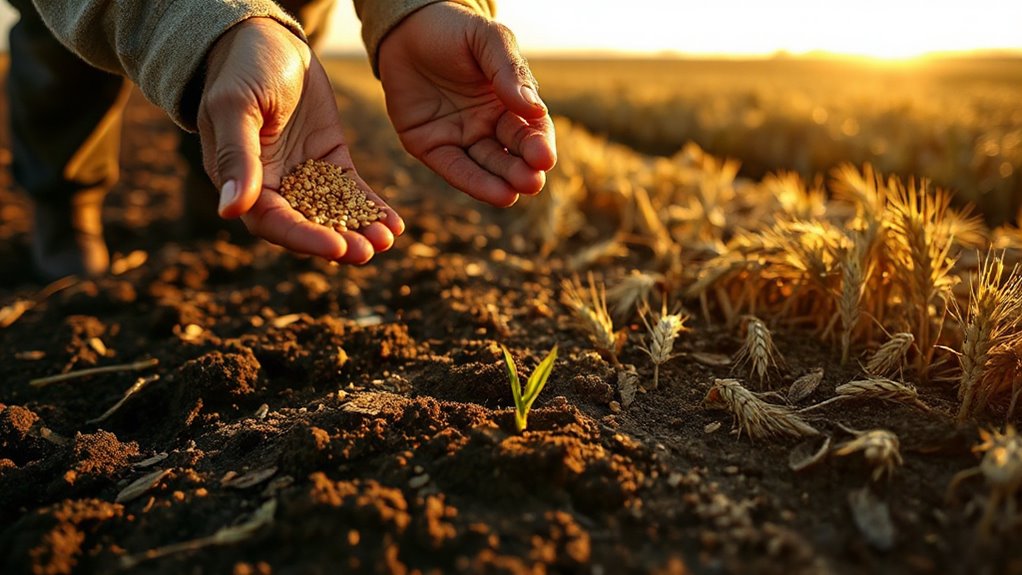
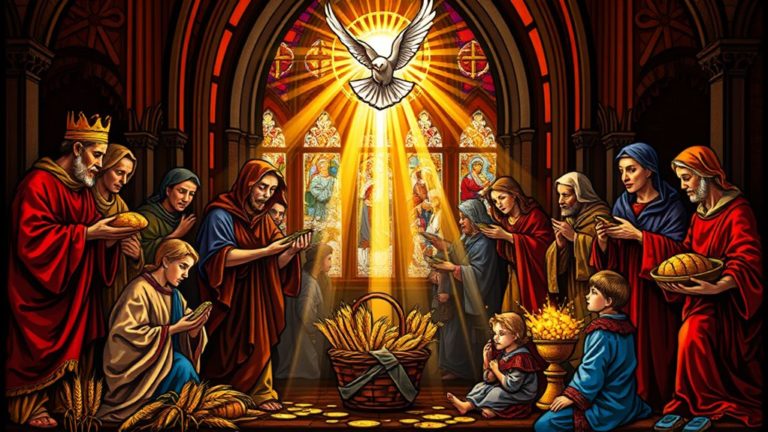
The Bible presents a framework for understanding consequences through agricultural metaphors, most directly in Galatians 6:7, where Paul writes that “a man reaps what he sows.” This principle operates with straightforward consistency: planting apple seeds produces apple trees, not orange trees, and sowing anger into relationships yields fractured connections rather than peace.
The seeds we plant today—whether kindness or anger, generosity or selfishness—will inevitably determine the harvest we gather tomorrow.
The pattern extends to spiritual matters as well. Galatians 6:8 specifies that sowing to the flesh reaps destruction, while sowing to the Spirit reaps eternal life.
Scale matters too. According to 2 Corinthians 9:6, sparse sowing yields sparse harvests, while generous sowing produces abundant returns.
The process requires patience, as Galatians 6:9 promises harvest at the proper time for those who persevere without giving up.
Catholic tradition also emphasizes the role of grace alongside human action, teaching that God’s mercy and the sacraments shape how consequences and blessings are received.
How Grace Breaks the Cycle of Consequences

While sowing and reaping operates with agricultural precision, grace introduces a factor that transcends natural law.
According to Ephesians 2:8-9, salvation comes through grace via faith, not works, preventing human boasting.
This grace does not eliminate consequences but provides power for righteous living alongside them, as Romans 6:11-15 indicates.
When Adam and Eve sinned, God expelled them from Eden yet clothed them with animal skins in Genesis 3:21, demonstrating care amid judgment.
David faced consequences when his child died following adultery and murder, yet God later blessed him with Solomon.
Grace forgives through Christ’s sacrifice while earthly repercussions teach and refine.
Hebrews 12:6-8 explains God disciplines those He loves, yielding peaceful fruit of righteousness rather than perpetual punishment.
The Christian doctrine of the Trinity affirms one God in three persons, showing how divine unity and relational distinction shape understanding of grace and judgment Trinitarian belief.