
The Bible does not mention Islam by name, as the faith was founded by Muhammad in the 7th century AD, long after Scripture was completed. However, biblical texts reference Ishmael, considered an ancestor of Arab peoples, and certain prophecies address nations now associated with the Muslim world. Christians often study these passages to better understand Islam’s place in biblical history. Those who explore further will find the connections run deeper than expected.
Does the Bible Directly Mention Islam?

Across its many books and centuries of composition, the Bible contains no explicit mention of Islam by name, nor does it reference the Prophet Muhammad directly. Scholars across traditions confirm this absence throughout both the Old and New covenants. Islam emerged in the 7th century AD, centuries after the biblical texts were written, making direct reference historically impossible.
Genesis 25 does outline the descendants of Ishmael, connecting biblical narrative to Arabic peoples, but no passage names Islam as a religion or movement. This absence is straightforward rather than controversial.
The Bible and Islam share common ground through figures like Abraham, Moses, and others, but that connection belongs to a different conversation. On direct mention, the answer remains clear and consistent: none exists. Some Muslim scholars interpret certain biblical passages as foreshadowing the Prophet Muhammad, though these interpretations remain debated and are not universally accepted across religious traditions. The Qur’an itself refers to Jews and Christians as people of the book, a designation that reflects Islam’s recognition of the Bible as an earlier divine revelation.
What Does the Bible Say About Ishmael and Arab Origins?
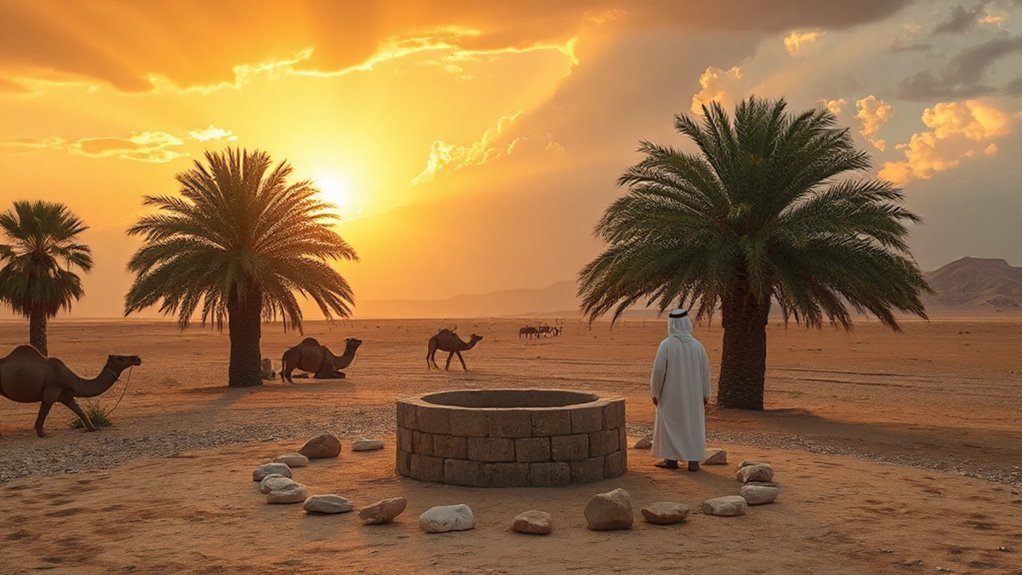
Ishmael’s story begins in Genesis 16, where Abraham fathers a son with Hagar, the Egyptian maidservant of his wife Sarai. Born when Abraham was 86, Ishmael received his name, meaning “God hears,” by divine instruction. Though not included in the Abrahamic covenant passed to Isaac, Ishmael received his own significant promises.
God declared in Genesis 17:20 that Ishmael would father twelve princes and become a great nation. Those twelve sons, listed in Genesis 25:12-16, settled from Havilah to Shur, near Egypt.
Both Jewish and Islamic traditions identify Ishmael as the ancestor of Arab peoples. Muslims specifically trace the lineage of the Prophet Muhammad through Ishmael via Adnan, making this biblical figure central to understanding Islam’s claimed Abrahamic roots. Biblical portrayals of Ishmaelites depict them as having a nomadic, pastoral existence, with notable expertise in handling camels and navigating borderland territories.
Ishmael was circumcised at age 13 alongside Abraham during the mass circumcision of Abraham’s household, marking a significant moment of inclusion in the covenantal community even as the formal covenant line passed through Isaac.
What Does Bible Prophecy Reveal About Muslim Nations?
From Ishmael’s descendants emerged the Arab peoples who today make up much of the Muslim world, and the Bible does not leave their future unaddressed.
The Arab world traces its roots to Ishmael — and Scripture speaks directly to its prophetic future.
Ezekiel 38–39 describes a Russia-led coalition, including Iran, Turkey, Libya, and Ethiopia, invading Israel and being supernaturally destroyed on its hills. That intervention, the text indicates, will cause both Israel and surrounding nations to recognize God’s authority. Following the war, the staggering scale of carnage will require seven months of burial and seven years to burn the weapons left behind by the invading forces.
Isaiah 19 offers a quieter but equally striking forecast: Egypt, Assyria, and Israel one day worshipping the same God in peace.
Revelation 9:16 references an eastern army of 200 million advancing before Christ’s return, while Megiddo serves as the setting for a final major conflict.
Across these passages, judgment and restoration appear together, suggesting a complex but ultimately redemptive trajectory for Muslim-majority nations. Jeremiah 12:14–17 holds out the promise of an Arab remnant turning to God following the Tribulation.
How Can Christians Share the Gospel With Muslims?

Sharing the gospel with Muslims calls for a combination of genuine relationship-building, consistent prayer, and clear, confident communication.
Christians are encouraged to offer friendship and hospitality, ask about family and work, and remember names of loved ones.
Practical help alongside gospel conversations opens natural doors for deeper discussions.
Prayer remains foundational — praying consistently by name for Muslim friends, asking God to work in their hearts and circumstances.
Personal witness also carries weight, focusing on what God has done rather than glorifying past failures.
Since Muslims already recognize Jesus as a prophet, pointing directly to the Gospels — particularly John or Mark — provides common ground. A helpful starting point is asking a Muslim friend whether they are 100% certain they are going to Heaven, as this question often opens the door to sharing the Gospel message.
Christians are advised to present the gospel boldly yet humbly, gifting New Testaments and patiently addressing questions as they arise. In one survey of 100 Muslim converts, 85% cited Christian love as a major factor in their coming to faith in Christ.