The Bible defines idols broadly, covering carved statues in Exodus 20:4-6, but also money, pride, and coveting in Ephesians 5:5 and Philippians 2:3. God forbids bowing to human-made images and treats idolatry as a violation of the First Commandment, which calls for complete devotion. Prophets dismissed idol-makers as “all nothing,” and Jonah 2:8 warns that clinging to worthless idols forfeits grace. The full picture of what qualifies as idolatry, and what follows it, runs deeper still.
Key Takeaways
- The Bible strictly forbids making or worshipping carved and molded images of anything in heaven, on earth, or in water.
- Idolatry violates the First Commandment, which calls for exclusive love and devotion to God above all else.
- Scripture broadens idolatry beyond statues to include materialism, covetousness, pride, rebellion, and self-centeredness.
- Idols are spiritually worthless, unable to speak or act, and clinging to them forfeits God’s grace.
- Idolatry leads to spiritual corruption, divine judgment, and ultimately separation from God at final reckoning.
What the Bible’s Core Commands Say About Idols
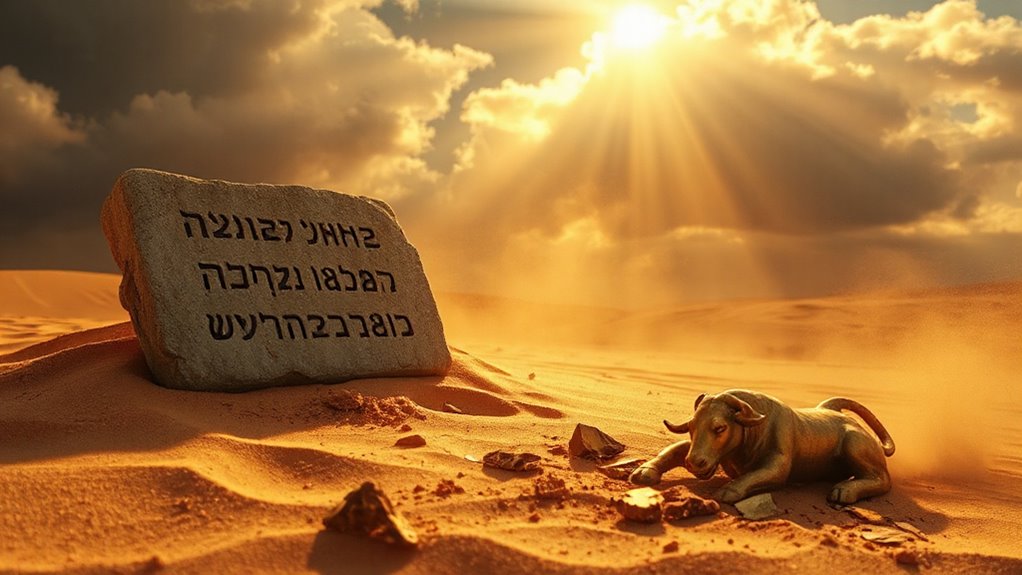
The Bible’s clearest statement on idols appears early in Scripture, embedded within the Ten Commandments. Exodus 20:4-6 instructs against making carved images of anything found in heaven, earth, or water, and forbids bowing down to or serving such objects. God is described there as jealous, promising consequences extending to the third and fourth generations of those who reject him. The passage balances that warning with mercy shown to thousands who love and obey his commands.
Deuteronomy 4 reinforces this, prohibiting representations of humans, animals, or heavenly bodies. The reasoning runs consistently through both passages: God has no physical form, the Israelites witnessed no visible shape at Sinai, and no human-made image could accurately represent him.
The Hebrew term for a carved image or idol is pecel, while maccekah refers specifically to molded or metal images, reflecting the distinct forms idolatry could take in the ancient world. When Israel violated these commands at Sinai, Moses destroyed the golden calf by grinding it to powder and making the people drink it, rather than repurposing the gold.
What the Bible Says Counts as Idolatry Today

Beyond carved statues and golden calves, the Bible extends the concept of idolatry into territory that feels familiar today. Scripture identifies materialism as a clear entry point. Job 31:24-25 connects trust in riches to idol worship, and Ephesians 5:5 labels coveting as idolatry outright.
Coveting what you own, earn, or accumulate isn’t ambition — Scripture calls it idolatry.
Self-focus presents another category. Philippians 2:3 warns against pride and self-elevation, patterns that mirror the original temptation in Genesis 3:5. First John 2:16 names the pride of life among worldly lusts that compete with God.
Rebellion also qualifies. First Samuel 15:23 directly compares stubbornness to idol worship. Galatians 5:19-21 groups selfish ambition and envy alongside idolatry as works of the flesh.
Social media, relationships, politics, and personal comfort can function as modern idols whenever they claim the devotion Scripture reserves for God alone. Tim Keller described an idol as anything more important than God, absorbing the heart and imagination in ways that displace genuine worship. Religious rituals and celebrations with pagan-derived origins can also become forms of idolatry when they redirect worship away from the true living God.
Why God Treats Idolatry as Such a Serious Sin

Recognizing what qualifies as idolatry today raises a natural follow-up question: why does God treat it so severely? Scripture points to several reasons.
First, idolatry directly breaks the First Commandment, which calls people to love God with all heart, soul, mind, and strength (Mark 12:30). Placing anything above God strips him of glory he alone deserves.
Second, idolatry roots every other sin. When a person substitutes something for God, self moves into God’s position, prioritizing personal desire over divine purpose (Mark 8:33).
Third, it denies God’s sovereignty. Psalm 24 declares God owns the earth and everyone in it. Scripture also notes that kings who led Israel into idolatry received harsher judgment than David, whose sins included adultery and murder. The pattern suggests idolatry strikes at the foundation of the entire relationship between humanity and God. God’s demand for exclusive devotion is so foundational that Scripture warns friendship with the world places a person in enmity with him (James 4:4).
Fourth, idolatry leads to spiritual corruption and discontentment, pulling the heart away from reliance on God’s grace and ultimately eroding genuine faith in him altogether.
Why the Bible Calls Idols Spiritually Worthless
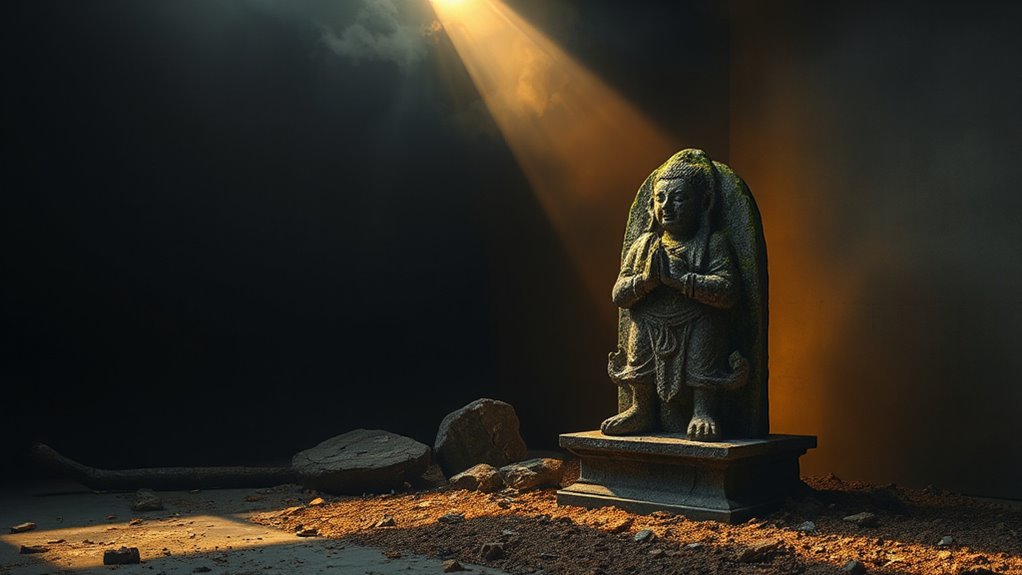
Scripture does not simply forbid idol worship — it also explains why idols deserve no worship in the first place. The Bible describes idols as spiritually worthless because they cannot speak, move, or act without human assistance. Isaiah notes that those who fashion idols are “all nothing,” and the objects they treasure profit no one. Idols carry no power to guide, redeem, or protect.
Jonah 2:8 warns that clinging to worthless idols causes worshipers to forfeit the grace that could otherwise be theirs. Perhaps most notably, those who follow powerless objects gradually become spiritually powerless themselves. The Bible presents this not as punishment but as a natural consequence — people tend to reflect what they revere. True guidance, the Scriptures consistently affirm, belongs to God alone.
Idolatry is also presented in Scripture as a direct violation of the First Commandment, which instructs God’s people to have no other gods before Him. The consequences of persistent idolatry are seen throughout Israel’s history, including the Assyrian exile, when the Israelites were deported from their homeland after generations of abandoning God in favor of worthless idols.
What Happens to Idols on Judgment Day

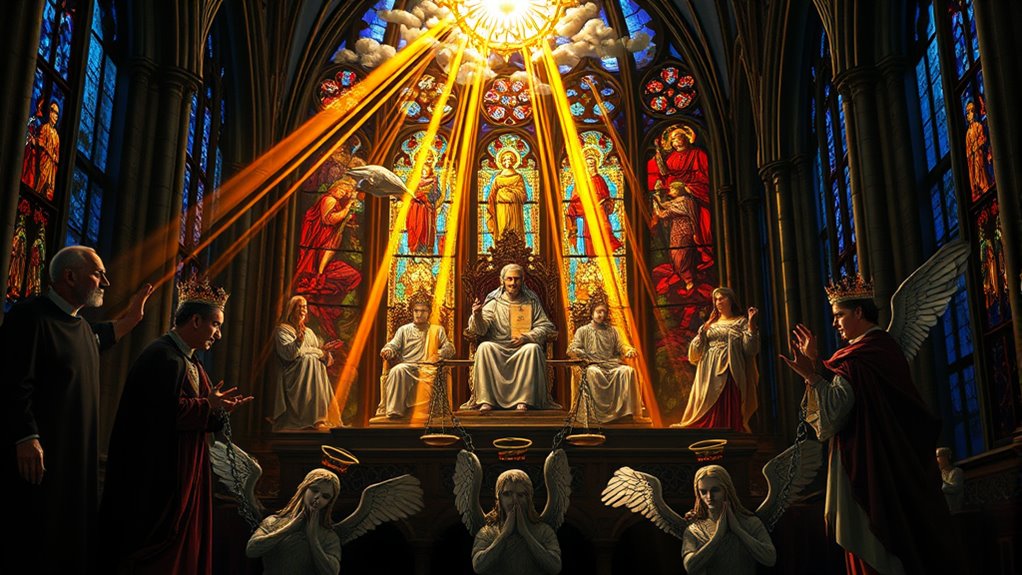
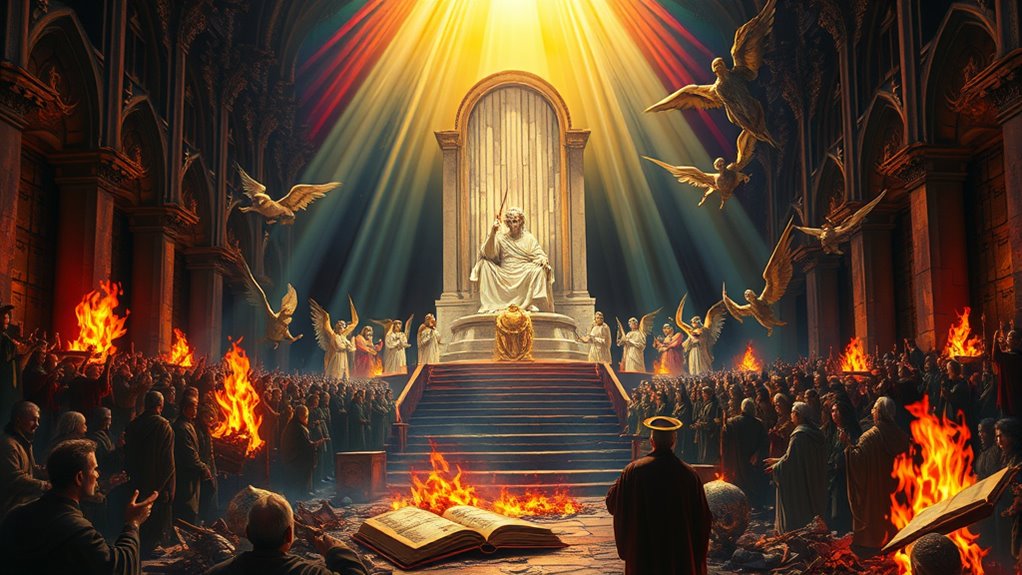
At the close of human history, according to biblical accounts, idols do not escape the final reckoning — they are gathered alongside the worshippers who once devoted themselves to them. Scripture describes a procession toward judgment in which false gods accompany those who served them, treated not as sacred objects but as counterfeits in a final divine audit.
The Great White Throne Judgment, detailed in Revelation 20, establishes that anyone absent from the Book of Life enters the Lake of Fire. Death and Hades themselves are thrown in as well, ending their function permanently. Modern expressions of idolatry — phones, social media, digital consumption — face the same standard. Biblical teaching consistently frames repentance before that day as the only meaningful alternative to joining that procession.
Human history moves in a straight line toward a definitive end, and Scripture affirms in Hebrews 9:27 that man dies once and then faces judgment, leaving no room for cycles of rebirth or second chances through reincarnation.
Islamic eschatology similarly teaches that a trumpet blast signals the final cataclysm, after which all living creatures except God are extinguished before the resurrection and judgment begins.