


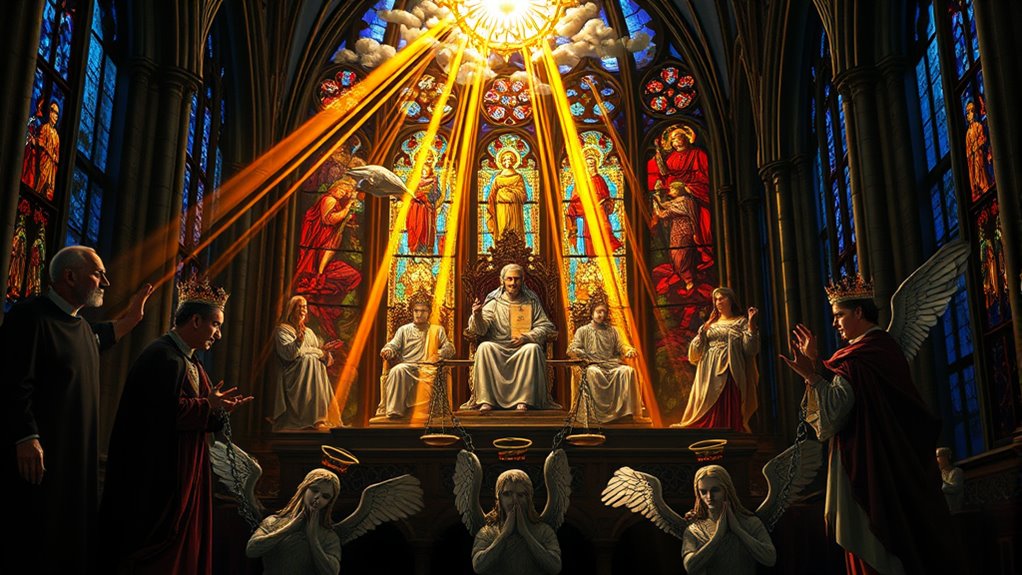
In 1 Corinthians 6:3, Paul tells the Corinthian church that believers will one day judge angels — a claim scholars consider among the boldest in his letters. The Greek word krino carries the force of authoritative condemnation, not simple discernment. Most evangelicals read “angels” as fallen spiritual powers, connecting the verse to 2 Peter 2:4 and Jude 6. Paul’s deeper purpose was rhetorical: if Christians hold future cosmic authority, present lawsuits between believers become difficult to justify. Further exploration of the text reveals why this interpretation carries significant stakes.
Does Paul Mean Fallen Angels or Holy Angels in 1 Corinthians 6:3?
When Paul writes in 1 Corinthians 6:3 that believers “will judge angels,” he leaves the word “angels” without any modifier, and that silence has kept interpreters debating for centuries.
Two main positions have emerged. The first holds that Paul means fallen angels, pointing to 2 Peter 2:4 and Jude 6, which explicitly place sinful angels under coming judgment. The second reads “angels” more broadly, suggesting believers will exercise governing authority over the entire angelic order.
GotQuestions notes both possibilities, though most evangelical commentators treat rebellious angels as the primary referent while allowing the broader authority reading as a reasonable secondary option. Regardless of which angelic identity is in view, Paul’s deeper concern is that this future role reflects shared authority with Christ in the age to come.
The Greek term krino, translated “judge,” also carries the meaning to rule or govern, which suggests that Paul may have in view something beyond condemnation and more akin to an administrative authority believers will exercise over angels in the age to come. Additionally, pastoral discussion often connects this with broader themes of spiritual authority and how believers relate to angelic activity.
Why Paul Brings Angels Into a Lawsuit Dispute
The rhetorical strategy behind 1 Corinthians 6:3 becomes clearer when the verse is read inside its immediate context. Paul was addressing Corinthian believers who were taking personal disputes to Roman courts rather than resolving them internally. His argument moved in stages: saints will judge the world, then angels, so ordinary conflicts should be manageable within the community. The angel reference also echoes biblical warnings about discerning true and false spiritual authorities and testing prophecy against Scripture, which underscores the need for scriptural discernment. The angel reference served as rhetorical escalation, widening the contrast between small property grievances and future cosmic responsibility. Paul’s concern was practical. Those destined for eschatological authority were, ironically, unable to arbitrate everyday disagreements, a mismatch he found difficult to justify. First-century Roman courts were notoriously corrupt, with magistrates and jurists widely known for accepting bribes and ruling in favor of the socially powerful.
Revelation 3:21 promises that conquerors will sit with Christ on his throne, suggesting that the judging authority Paul references is not independent but participatory in Christ’s authority, a shared reign rather than a separately derived one.
What the Greek Word for “Judge” Actually Means Here
Translating it simply as “discern” weakens Paul’s actual claim considerably.
The Greek verb used here is KRINO, whose primary meanings include to separate, select, pronounce judgment, and condemn — distinct from ANAKRINO, which relates to examination and discernment rather than authoritative sentencing.
This future active form appears in the eschatological declaration that believers “will judge the world” on the last day, anchoring the verb firmly in the context of final, authoritative adjudication alongside Christ. Historical warnings about deceptive figures and end-times judgment in texts like 1 John and Revelation lend further weight to the authoritative sense of KRINO, which readers should consider in light of the broader biblical themes.
Which Angels Paul Had in Mind and Why It Changes Everything
Ambiguity over a single word quietly shapes how readers understand one of Paul’s most striking claims.
The Greek *angeloi* can mean heavenly beings or human messengers, but most scholars favor celestial beings here. The real debate concerns which kind.
The word *angeloi* could mean heavenly beings or human messengers — most scholars lean celestial, but debate continues.
Many commentators, including sources like GotQuestions and BibleRef, identify fallen angels, pointing to Jude 6 and 2 Peter 2:4, which describe rebellious angels awaiting judgment. That reading makes Paul’s argument sharper: believers will one day participate in condemning guilty spiritual powers.
A minority view includes holy angels, understanding “judge” as administrative authority rather than condemnation. The distinction meaningfully changes what Paul was claiming. Passages like Psalm 8 and Romans 8 support this by portraying humans as destined heirs and rulers placed over God’s creation, implying a governance role that extends even to angels in a glorified state.
Scripture consistently depicts angels as created spiritual beings who serve God, which frames how we weigh these interpretive options.
Why Believers’ Future Authority Over Angels Makes Suing Fellow Christians Inexcusable
Once the question of which angels Paul had in mind is set aside, a related question comes into focus: what practical work does that claim actually do in his argument?
Paul uses future authority as a present-day rebuke. His logic moves in four clear steps:
- Believers will judge the world
- Believers will judge angels
- Minor disputes between Christians are consequently manageable internally
- Taking those disputes before unbelieving courts contradicts that destiny
The contrast is deliberate. If greater responsibility awaits, present dependence on outside courts reflects poorly on the community’s spiritual maturity and covenant identity. Both Peter and Jude confirm that fallen angels await judgment, which means the authority Paul describes is not abstract but anchored in a real future event with real spiritual stakes. Revelation’s imagery of oppositional powers similarly warns against yielding to worldly deception.