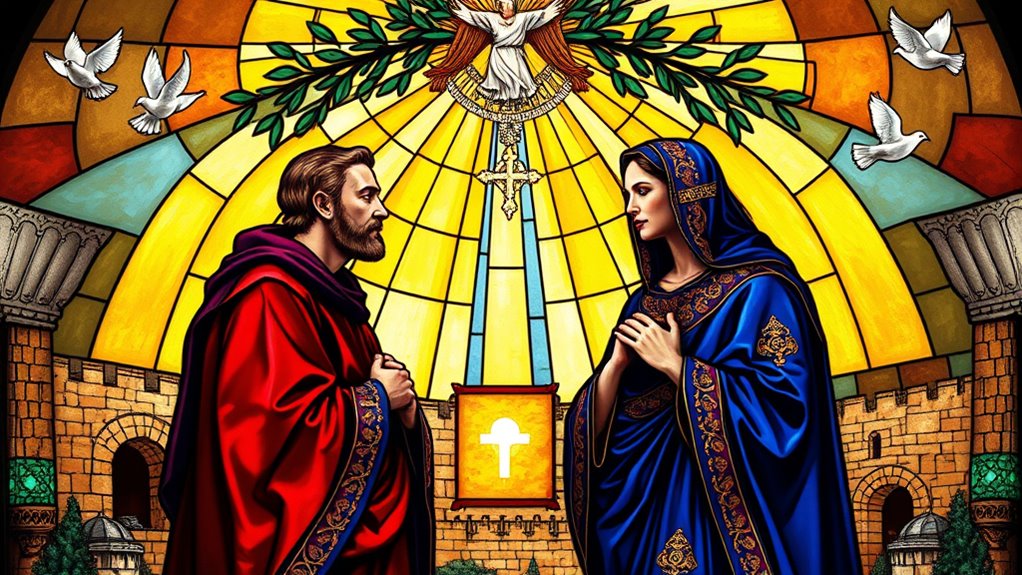
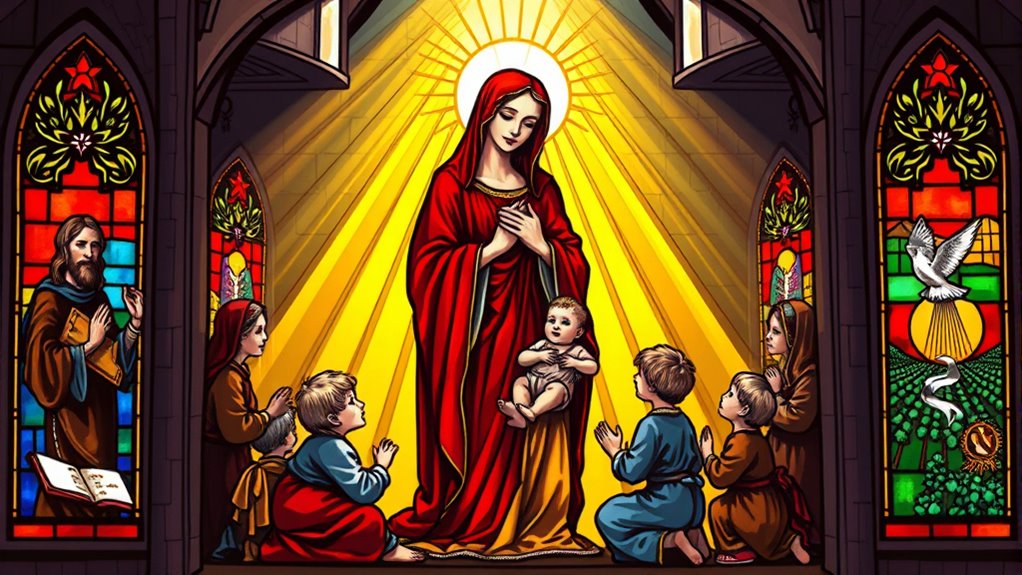
The Bible presents mothers with consistent dignity, connecting their identity to creation and their worth to divine standards. Genesis 3:20 names Eve “mother of all living,” while Proverbs 31:10 states a mother’s worth exceeds rubies. Isaiah 49:15 compares God’s compassion to a nursing mother’s love. Women like Hannah, Jochebed, and Mary shaped pivotal moments in biblical history through faith and sacrifice. The full picture goes deeper still.
Key Takeaways
- The Bible establishes maternal identity as part of God’s design from creation, with Eve named “mother of all living” in Genesis 3:20.
- Proverbs 31:10 declares a mother’s worth surpasses rubies, elevating her value beyond any earthly or material measure.
- Scripture honors mothers who shaped history, including Jochebed, Hannah, Ruth, Sarah, and Mary, through faith and obedience.
- The Bible instructs mothers to teach faith daily, guide children early, and discipline with love and consistency.
- A mother’s enduring faith carries generational impact, as seen in 2 Timothy 1:5 and Psalm 127:3–5.
What the Bible Says About a Mother’s Identity and Worth

The Bible presents a mother’s identity as something rooted in both divine design and daily devotion. In Genesis 3:20, Eve is named “mother of all living,” establishing maternal identity at creation’s foundation. Reading a gospel or following a reading plan can help readers explore these themes consistently.
From the very beginning, a mother’s identity was woven into creation itself — by divine design.
Proverbs 31:10 places a mother’s worth above rubies, while Proverbs 31:28 describes her children rising to call her blessed.
Isaiah 49:15 compares God’s own compassion to a nursing mother’s love, elevating maternal care to a divine standard.
Ephesians 6:2-3 identifies honoring one’s mother as the first commandment paired with a promise.
Ruth 1:16-17 further illustrates this worth through Ruth’s loyalty to Naomi, treating her as her own mother.
Across these passages, the Bible consistently frames a mother’s identity as both spiritually significant and practically honored. Proverbs 31:25 describes a mother as one who is clothed with strength and dignity, affirming that her character is a defining mark of who she is. In 1 Samuel 1:26-27, Hannah’s story reflects how a mother’s identity is also shaped by prayer and petition, demonstrating that her devotion to God is inseparable from her role as a mother.
Mothers Who Shaped Biblical History
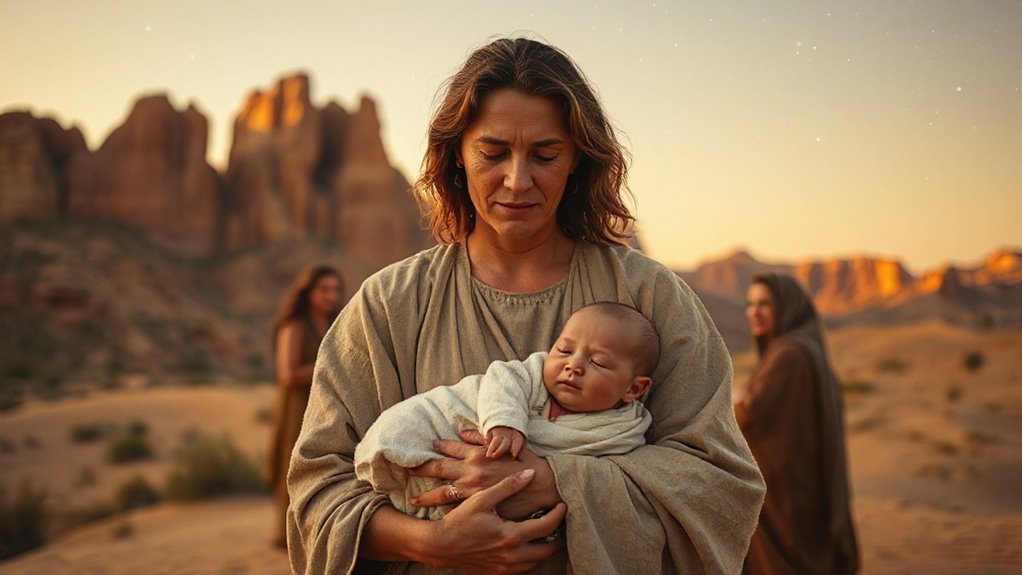
Throughout the Bible, mothers appear not only as caregivers but as figures whose decisions and faith helped shape the course of Israel’s history.
Sarah bore Isaac at ninety years old, fulfilling God’s promise of nationhood (Genesis 21:1–7). Jochebed hid infant Moses for three months, preserving the leader who would later free Israel from Egypt (Exodus 2:1–10). Ruth remained loyal to Naomi and eventually became the great-grandmother of King David (Ruth 4:13–22). Hannah’s persistent prayer brought Samuel into the world, who would serve as both judge and prophet (1 Samuel 1:20). Mary accepted the angel’s call and bore Jesus (Luke 1:38). Bethlehem’s connection to David and prophecy underscores the historical significance of maternal lines in biblical narratives and their fulfillment in key events Bethlehem prophecy.
Each of these women made choices, often under difficult circumstances, that quietly redirected the future of their people. Deborah, described in Scripture as a mother in Israel, led the nation as both judge and prophetess, demonstrating that the mantle of motherhood could extend beyond the home into the spiritual guidance of an entire community.
In the centuries that followed, women continued to shape the faith in remarkable ways, as seen in figures like Helena, whose search for Christ’s tomb in Jerusalem transformed the city into a Christian pilgrimage center and led to the building of the Church of the Holy Sepulchre.
How the Bible Says Mothers Should Live

While the Bible honors mothers through narrative and praise, it also offers practical instruction about how they should live.
Titus 2:4–5 encourages mothers toward self-control, kindness, and purposeful work at home. Many find that establishing a consistent prayer routine supports these virtues in daily life.
Proverbs 22:6 calls them to guide children early, shaping habits and values that tend to endure.
Deuteronomy 6:6–7 describes a teaching role woven into daily life—morning conversations, shared meals, ordinary moments.
Hebrews 12:5–11 connects loving discipline with lasting character, while Proverbs 13:24 frames consistent correction as an act of care rather than control.
Proverbs 31:25 presents strength and dignity as qualities a mother carries into uncertainty.
Isaiah 40:31 offers a quieter promise—that endurance is possible when hope is grounded in something beyond circumstance.
Psalm 127:3–5 reminds mothers that children are gifts from the Lord, a foundation that gives weight and meaning to every act of care they offer.
2 Timothy 1:5 points to the lasting power of a mother’s faith, showing that sincere faith passed down through generations shapes the spiritual lives of children long after the teaching moments have passed.