



The Bible addresses adoption on two levels. Spiritually, Romans 8:15 describes believers receiving a “spirit of adoption,” while Ephesians 1:5 explains God predestined this relationship through Christ before creation. Galatians 4:7 adds that adopted believers become heirs of God. Practically, Psalm 68:5 calls God “Father to the fatherless,” and James 1:27 identifies caring for orphans as genuine faith in action. Both dimensions connect in ways worth exploring further.
Key Takeaways
- God spiritually adopts believers through Christ by grace, not merit, granting them full sonship and inheritance rights as His children.
- The Holy Spirit enables adopted believers to cry “Abba, Father,” confirming their new relational standing before God.
- Adoption was part of God’s eternal plan, purposed before creation according to His will and pleasure.
- All three persons of the Trinity—Father, Son, and Holy Spirit—are involved in the act of spiritual adoption.
- Scripture commands believers to care for orphans and the fatherless, reflecting God’s own heart toward the vulnerable.
What Does the Bible Actually Say About Adoption?

When people turn to the Bible with questions about adoption, they find the topic woven into both the Old and New scriptures, though in distinct ways. The New covenant addresses spiritual adoption directly, using the Greek term *huiothesia*, meaning a legal status granted by grace rather than earned. Romans 8:15 describes believers receiving a spirit of adoption, while Ephesians 1:5 explains God predestined this adoption according to His own will and pleasure. Early Christians appealed to apostolic authorship and widespread acceptance when recognizing authoritative teachings about such doctrines.
The Old Testament approaches the subject differently, emphasizing care for orphans and the fatherless. Psalm 68:5 presents God as a father to the fatherless, and Deuteronomy 10:18 notes His commitment to their justice and provision.
Together, these passages form a consistent scriptural picture of belonging, protection, and intentional care. Moses and Esther stand as two of the most prominent Old Testament figures whose lives were shaped by physical adoption circumstances, demonstrating how God worked through adoptive relationships to accomplish His purposes. Isaiah 1:17 further reinforces this theme by calling believers to defend the orphans and plead for the widow as an expression of seeking justice.
What Is God’s Plan for Spiritual Adoption Through Christ?

Before a single moment of creation passed, according to Ephesians 1:4–5, God had already determined to adopt believers into His family through Jesus Christ. This plan, Scripture notes, was not a reaction to human merit but an expression of divine will rooted in love.
Galatians 4:4–5 explains that Christ came specifically to redeem those under the law so they could receive adoption.
John 1:12 adds that believers become sons by receiving Christ and trusting in His name.
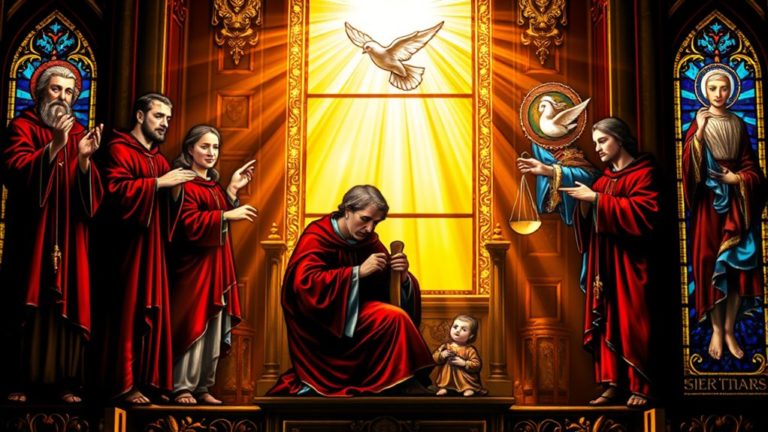
Romans 8:15 identifies the Holy Spirit as the “Spirit of adoption,” the one who enables believers to cry “Abba, Father.” This understanding aligns with the Catholic teaching that the Spirit and the Church work together in the believer’s incorporation into Christ.
Together, these passages present spiritual adoption as a coordinated act involving all three persons of the Trinity, designed ultimately to praise God’s glorious grace. Prior to this adoption, believers were separated, alienated, and without hope, strangers to the covenants of promise and without God in the world, as Ephesians 2:12 makes sobering clear.
Multiple translations of Ephesians 1:5, including the KJV, ESV, and NIV, consistently render this adoption as occurring according to God’s will, reflecting that the act of predestining believers for sonship was rooted entirely in His pleasure and purpose rather than human initiative.
How Does Physical Adoption Mirror God’s Grace in the Bible?

Spiritual adoption, as Scripture presents it, is not merely a theological concept but a pattern that shows up in the physical world as well.
Adoption is not confined to theology — its pattern is woven into the very fabric of human experience.
Physical adoption mirrors divine grace in several measurable ways.
First, both involve deliberate choice rather than biological necessity, reflecting Ephesians 1:5, where God predestined believers for adoption according to His will. This mirrors the Trinitarian truth that the Son participates in the Father’s redemptive plan as a distinct Person in the Godhead co-eternal.
Second, both operate through unconditional love. As 1 John 3:1 notes, God loved humanity before any human act of obedience.
Third, physical adoption legally changes a child’s name and status, paralleling Ephesians 2:19, which declares believers are no longer strangers.
Finally, physical adoptees gain full inheritance rights, mirroring Galatians 4:7, where believers become heirs of God.
Mercy Hill Church affirms that adoption is fundamentally about grace, not performance. Romans 8:15–17 further confirms that believers receive a spirit of adoption, through which they are counted as children and heirs alongside Christ.
Just as physical adoption is never partial or temporary, the belonging it creates is forever, not conditional on behavior, reflecting the certainty with which God holds His adopted children in an unbreakable bond.
What Does the Bible Say About Caring for Orphans and the Fatherless?

The Bible treats care for orphans and the fatherless not as optional charity but as a direct reflection of God’s own character. Psalm 68:5 identifies God as “Father to the fatherless,” establishing a standard that believers are expected to mirror.
Exodus 22:22-24 warns against mistreating fatherless children, promising divine judgment against those who do. Isaiah 1:17 moves beyond passive concern, commanding active defense of the fatherless as a requirement of genuine piety.
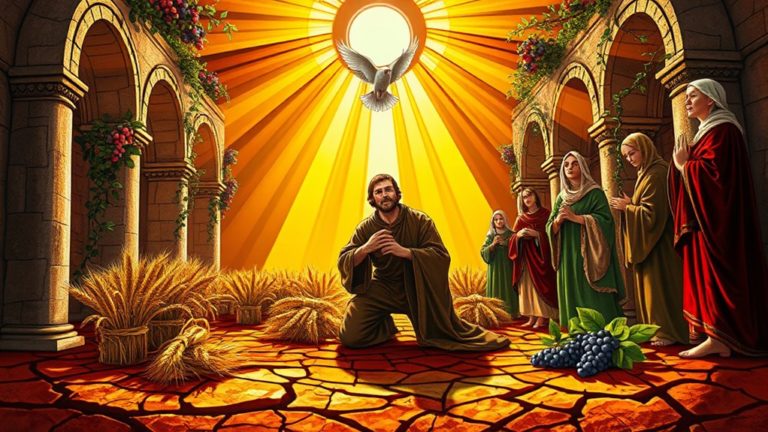
Practical provisions appear throughout the law as well. Deuteronomy 24:19-21 instructed farmers to leave unharvested grain, olives, and grapes for the vulnerable. Deuteronomy 14:28-29 directed communities to store tithes so the fatherless could eat and be filled. These laws reflect an ongoing biblical concern for social structures that protect the vulnerable, including provisions for orphans and widows.
Together, these texts present orphan care as woven into both worship and daily life. Hosea 14:3 affirms that in God the fatherless find compassion, grounding the call to care for orphans in the very nature of who God is.
James 1:27 makes the connection explicit, declaring that religion God accepts as pure and faultless includes looking after orphans in their distress.