
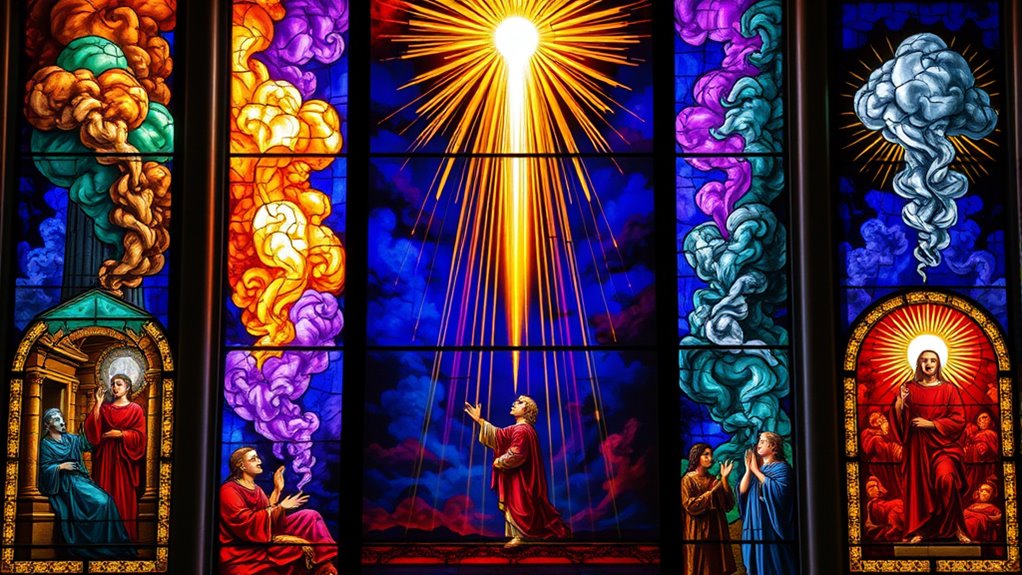
The Bible uses smoke in at least five distinct ways. It marks God’s presence, as seen when Mount Sinai filled with smoke in Exodus 19:18. It signals divine judgment, with Genesis 19:28 describing smoke rising from Sodom like a furnace. It also represents prayer, transience, and worship offerings. Significantly, 22% of scriptural smoke references appear in Revelation. Each layer of meaning carries deeper significance worth exploring further.
Key Takeaways
- Smoke signals God’s holy presence, as seen when Mount Sinai was wrapped in smoke during the Lord’s arrival in Exodus 19:18.
- Smoke accompanies divine judgment, rising from destroyed Sodom and Gomorrah and symbolizing irreversible ruin throughout Scripture.
- Joel 2:30 describes columns of smoke as cosmic signs preceding the great and dreadful day of the Lord.
- Incense smoke in worship represents prayers rising to God, established in Exodus 30:7-8 and echoed in Revelation 8:4.
- Scripture uses smoke as a metaphor for human transience, with Psalm 102:3 comparing fleeting human days to fading smoke.
How Smoke Reveals God’s Presence and Glory
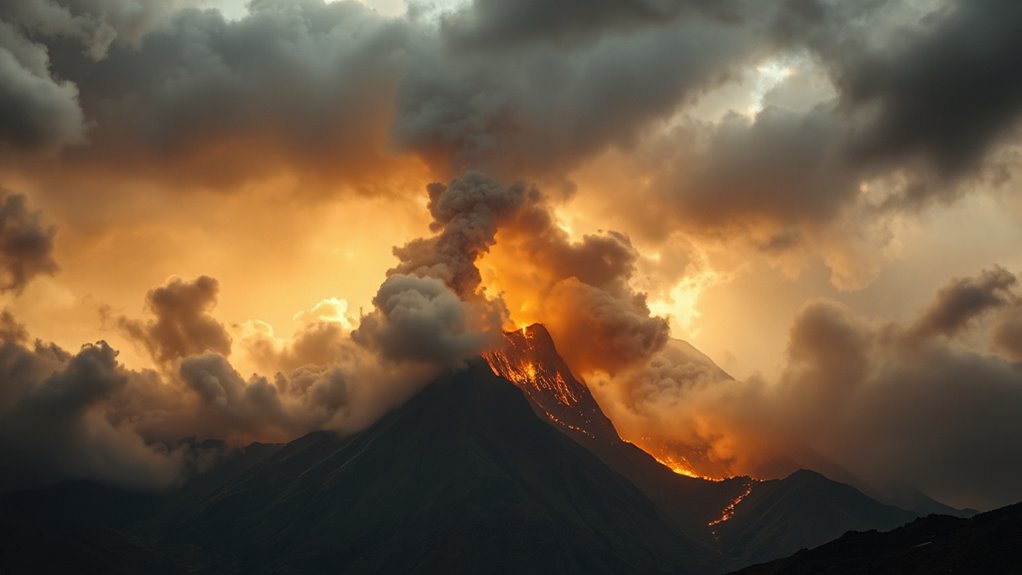
Throughout Scripture, smoke appears repeatedly as a tangible marker of divine presence, signaling to human observers that something extraordinary and holy is nearby.
Smoke rises through Scripture as a recurring, unmistakable sign that the holy and invisible God is present.
When God descended on Mount Sinai, Exodus 19:18 records the entire mountain wrapped in smoke because the Lord arrived in fire.
Isaiah 6:4 similarly describes smoke filling the temple while the prophet stood before God.
Revelation 15:8 extends this pattern into heaven itself, where smoke from God’s glory and power fills the celestial temple.
These accounts share a consistent pattern: smoke serves as visible evidence of an otherwise invisible God.
First Timothy 1:17 reinforces this idea by describing God as unseen, making smoke a meaningful bridge between divine reality and human perception. At Mount Sinai, the presence of smoke was accompanied by an awe-inspiring, fearsome atmosphere that emphasized the seriousness of God’s covenant communication with His people. Scholars often place these biblical events and writings within a broader historical framework that spans the late first millennium BC through the early centuries AD, highlighting connections to historical dating and the development of early Christian tradition.
What Smoke Means in the Bible’s Judgments and Warnings
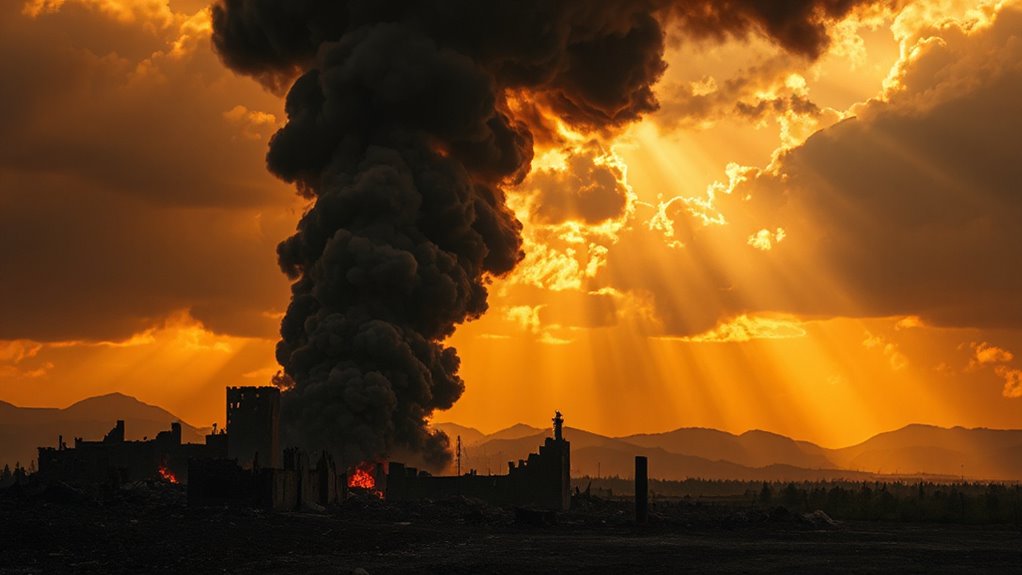
While smoke in Scripture often marks the nearness of God’s holiness, it carries a sharply different weight when it appears in passages describing divine judgment.
Genesis 19:28 records Abraham watching smoke rise from Sodom and Gomorrah like a furnace after their destruction.
Isaiah 34:10 states that smoke from judgment rises forever, signaling complete and irreversible ruin.
Revelation 9:2 describes smoke from the abyss darkening the sun itself.
Deuteronomy 29:20 connects smoke directly to God’s burning anger toward covenant-breakers.
Yet these warnings also carry purpose.
Psalm 37:20 notes the wicked vanish like smoke, suggesting their power is ultimately temporary.
Hosea 13:3 similarly compares those who chase idols to morning smoke that quickly disappears, reminding readers that wrongdoing carries no lasting foundation.
Scholars note that 22% of scriptural references to smoke appear in Revelation, underscoring how central judgment imagery is to that book’s visions of the Lord’s Day.
Joel 2:30 describes blood, fire, and columns of smoke as signs preceding the great and dreadful day of the Lord, marking smoke as a signal of approaching divine reckoning.
Ancient observations about the Earth’s curvature and celestial phenomena made by early scholars can deepen understanding of how cosmic signs like smoke were perceived in biblical contexts, especially in apocalyptic imagery about the heavens and earth Earth’s shape.
How Smoke in Scripture Captures Prayer, Offerings, and Life’s Brevity
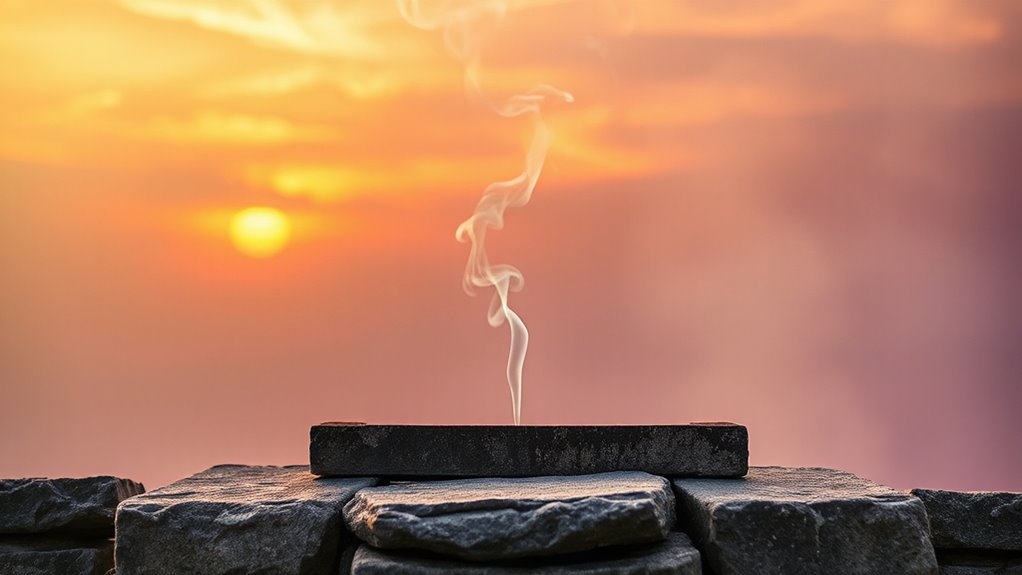
Beyond its role in divine encounters and judgment, smoke in Scripture also shapes how ancient writers understood prayer, worship, and the limits of human life. Psalm 141:2 compares prayer to rising incense, asking God to receive it as an evening offering. Revelation 8:4 reinforces this image, showing incense smoke carrying the saints’ prayers upward before God. The site where Jesus was crucified—Golgotha—was located just outside Jerusalem’s ancient walls, a reminder that sacred acts often occurred at liminal spaces like city boundaries and outside the city walls.
Exodus 30:7-8 established incense burning as a formal, daily obligation within Israel’s worship. Smoke from Levitical sacrifices similarly signaled completed offerings, marking the moment gifts reached God. In Revelation 8:3, an angel standing at the golden altar before the throne receives much incense to offer alongside the prayers of all the saints.
Yet Scripture also uses smoke to acknowledge life’s fragility. Psalm 102:3 compares human days to fading smoke, and Isaiah 51:6 extends that image to the heavens themselves.
Together, these passages use smoke to hold both reverence and humility in quiet tension. First Nations smudging ceremonies, which burn cedar, sage, or sweet grass as offerings, reflect this same instinct toward smoke rising in worship that Scripture itself affirms across cultures and traditions.
That’s Only 3 H2S From the Revised Outline. the Original Outline’s Title-Level H2 “What Does Smoke Represent in the Bible?” Was Critiqued as Duplicating the Article Title, and the Revised Outline Replaced It While Retaining 3 Distinct H2S. Only 3 Revised H2S Exist in the Provided Material
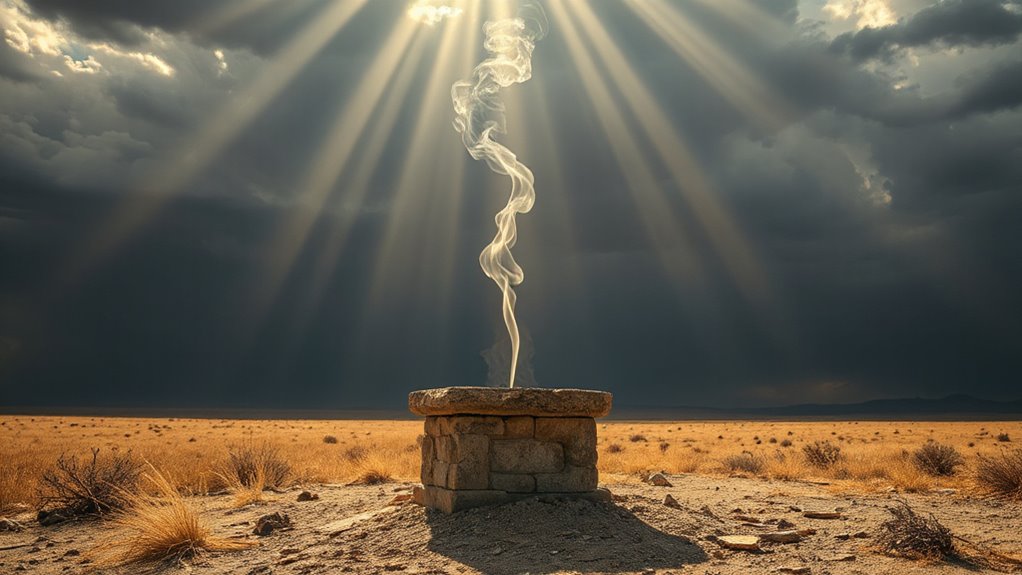
Smoke’s role in Scripture does not end with divine presence, judgment, or worship. The Bible also uses smoke as a metaphor for transience and the fragility of life.
Psalm 102:3 describes human days as fleeting like smoke, quietly acknowledging life’s brevity. Psalm 37:20 states that the wicked will perish like smoke, while Hosea 13:3 compares idol worshipers to smoke that quickly dissipates. Isaiah 51:6 extends this imagery further, noting that even the heavens will vanish like smoke. The Old Testament contains roughly 23,145 verses, showing the breadth of contexts where such imagery appears.
These passages do not present impermanence as cause for despair. Instead, they invite readers to reflect on what endures beyond the temporary. Across its many uses, smoke in Scripture consistently points toward something greater than itself, whether God’s presence, His justice, or humanity’s need for what does not fade. At Pentecost, Peter cited Joel’s prophecy of fire and vapor of smoke as a sign that the first Christians were witnessing God’s power made manifest.