



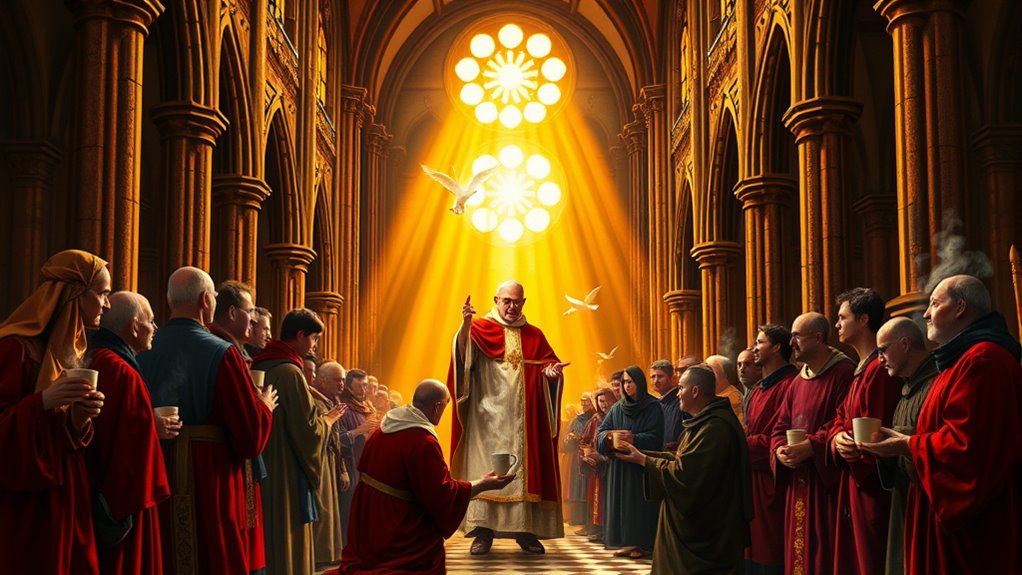
Coffee entered Catholic Europe through Venetian trade routes in the early 1600s, carrying an Islamic origin that immediately alarmed clergy. Church leaders labeled it “Satan’s drink,” fearing its ties to Sufi ritual and its potential to displace sacramental wine. Pope Clement VIII resolved the controversy in 1600 by simply tasting it, then reportedly blessing it rather than banning it. That single decision opened Catholic monasteries, parishes, and daily life to a drink that would become deeply embedded in the culture.
How Coffee Traveled From the Islamic World to Catholic Europe?
Before coffee became a morning ritual for millions of Catholics, it spent centuries as a drink of the Islamic world, shaped by prayer, trade, and politics.
Sufi mystics in 15th-century Yemen first brewed *qahwa* to sustain nightlong meditation.
From Yemen, coffee traveled to Ottoman Turkey, Safavid Iran, and the Mughal Empire.
By 1554, Arab merchants had opened Istanbul’s first coffeehouse.
Venetian traders eventually carried coffee westward, bringing it to Livorno in 1632 and Venice in 1640.
For roughly 200 years, coffee remained almost exclusively within Muslim communities before European commerce finally opened a path toward Catholic culture. Yemen dominated global coffee trade for two centuries, serving as the world’s principal producer and exporter before cultivation spread beyond its borders.
The coffeehouses that emerged across cities such as Mecca, Cairo, and Istanbul became fixtures of urban life, serving as gathering places for scholars, merchants, and mystics alike.
These social hubs also prompted debates about morality and community standards, encouraging gentle correction and communal norms rather than harsh condemnation.
Why Clergy First Called Coffee ‘Satan’s Drink’?
When coffee first arrived in Catholic Europe through Venetian trade routes in the early 17th century, it carried with it a reputation that made many clergy deeply uneasy.
Its Islamic origins, unfamiliar bitterness, and energizing effects raised immediate suspicion among church leaders who viewed it as a foreign threat.
Its foreign origins, strange taste, and stimulating nature made coffee an immediate object of suspicion for church leaders.
- Coffee was linked to Sufi rituals and Islamic culture, earning it the label “Satan’s Drink”
- Clergy feared it might replace wine, which held sacred meaning in Christian sacraments
- Its dark color and addictive qualities led advisors to the Pope to call it a “bitter invention of Satan”
Christian leaders also believed that nothing fueled Muslim armies like coffee, deepening their association of the beverage with Ottoman power and Islamic expansion.
This Western rejection persisted for more than 700 years after coffee’s initial discovery before the Catholic Church finally moved toward acceptance.
The controversy echoes broader Christian concerns about foreign religious practices influencing European worship and social life.
Why Pope Clement VIII Blessed Coffee in 1600?
Despite the warnings of his advisors, Pope Clement VIII chose to taste coffee before deciding its fate in Catholic Europe.
Upon drinking it, he reportedly declared it too delicious to leave exclusively to infidels, and on January 18th, 1600, he blessed the beverage instead of banning it.
His endorsement effectively removed the religious stigma attached to coffee’s Islamic origins.
Historians note, however, that the tasting story may be legend rather than confirmed fact.
Still, whether literal or symbolic, Clement’s approval marked a turning point, opening Catholic Europe to a drink it had previously regarded with deep suspicion. That same year, the Jubilee of 1600 drew an estimated three million pilgrims to holy places, reflecting the broad cultural and spiritual influence Clement wielded across the Catholic world.
Before reaching European shores, coffee had already traveled a remarkable path, having become central to Islamic Sufi rituals and the vibrant café culture of the Middle East. Acknowledging both prayerful tradition and popular practice, some contemporaries saw coffee as compatible with Christian worship.
How Catholic Monasteries Made Coffee Their Own?
Pope Clement VIII’s blessing in 1600 cleared the way for coffee to move beyond debate and into daily Catholic life, and few institutions embraced it more naturally than monasteries. Monks had practical reasons to adopt it: long prayer vigils, physical labor, and unsafe water supplies that once forced morning beer consumption. Coffee addressed all three needs quietly and effectively.
When Pope Clement VIII blessed coffee in 1600, monasteries became its most devoted and practical adopters.
- Monks rising at 3:00 AM for Matins used coffee to maintain alertness through extended prayer.
- Capuchin monks developed a milky preparation so distinctive it was eventually named cappuccino in their honor.
- Coffee gradually replaced beer as the standard morning beverage across monastic communities.
The Jesuits carried coffee further still, introducing it to new regions through their missionary work and helping establish cultivation across Latin America and Asia. Today, that monastic tradition continues with Benedictine monks who hand-roast specialty-grade coffee, with a portion of every sale directed toward chapel restorations, seminary scholarships, and convent repairs. Monastic adoption of coffee also influenced broader Catholic devotional life through liturgical rhythms that shaped daily schedules.
How Coffee Became a Symbol of Catholic Community?
Once Pope Clement VIII granted coffee his papal blessing in 1600, the drink moved quietly but steadily from controversy into the center of Catholic communal life.
Post-Mass coffee hours replaced older *agape feast* traditions, offering parishioners time to welcome newcomers and strengthen community bonds.
Hospitality, a core Catholic value, found a practical expression in the shared cup.
Parishes across Catholic Europe incorporated coffee into social gatherings, making it a reliable symbol of belonging.
What had once carried a diabolical reputation became, through papal endorsement and everyday practice, something far simpler: a reason for Catholics to remain together after worship.
This practice also echoed longstanding Christian commitments to hospitality and care for the poor, connecting social fellowship with faith-driven generosity.