



The Bible records women serving in significant leadership roles across both eras. Deborah judged Israel and commanded armies. Huldah advised kings. Junia earned apostolic recognition from Paul. Phoebe served as a church deacon. Yet passages like 1 Timothy 2:11–12 place limits on certain roles, fueling ongoing debate between complementarian and egalitarian scholars who draw different conclusions from the same texts. The full picture is more layered than most expect.
Key Takeaways
- The Bible records women in significant leadership roles, including Deborah as judge and military leader, Huldah as prophet, and Esther as royal authority.
- In the New Testament, women like Junia, Phoebe, and Priscilla held recognized apostolic, diaconal, and teaching roles within the early church.
- Mary Magdalene was commissioned by Jesus to announce the resurrection, making her a primary witness and messenger to the apostles.
- Key passages like 1 Timothy 2:11–12 restrict certain roles for women, though scholars debate whether these instructions are universal or situationally specific.
- Complementarians limit senior pastoral roles to men, while egalitarians argue identical spiritual gifts should qualify women for identical leadership positions.
What Does the Bible Actually Say About Female Leadership?
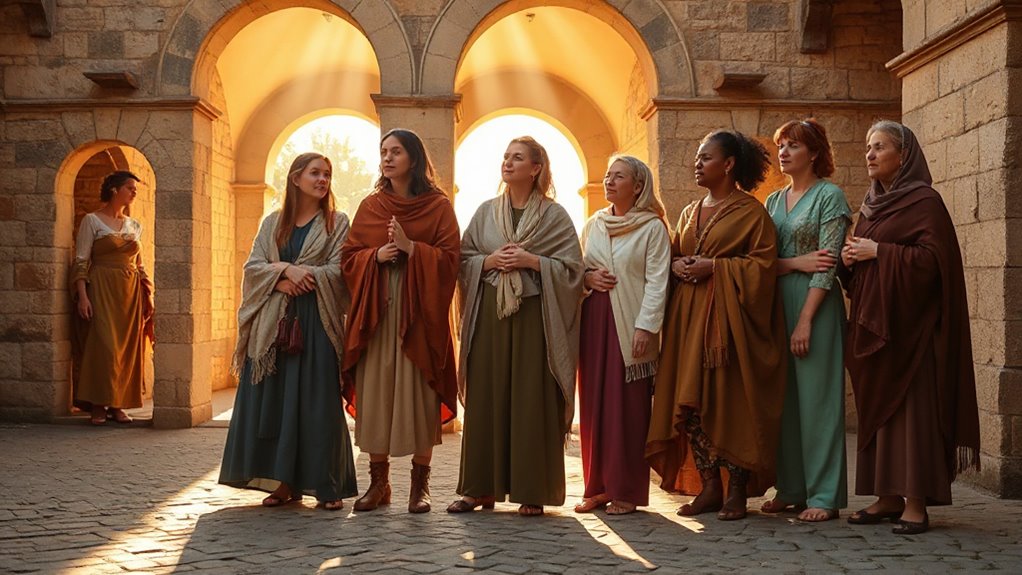
Across both the Old and New covenants, the Bible presents a more varied picture of female leadership than many contemporary debates suggest.
Deborah served as both prophetess and judge in Judges 4–5, delivering God’s messages to Israel. Huldah was consulted by royal officials seeking God’s word in 2 Kings 22.
Deborah judged and prophesied; Huldah spoke divine counsel to kings. Women shaped Israel’s spiritual history.
In the New Testament, Anna is identified as a prophet in Luke 2:36, and Philip’s four daughters held the same designation in Acts 21:8–9. Romans 16:7 describes Junia as outstanding among the apostles.
Priscilla, listed before her husband Aquila, helped explain Scripture more accurately to Apollos in Acts 18:24–26.
Meanwhile, 1 Timothy 2:11–12 and 1 Corinthians 14:34–35 restrict women from certain roles, though scholars debate whether those instructions were universal or situationally specific. Esther exercised royal authority and leadership by writing decrees sent across 127 provinces to establish Purim as law and ensure the safety of the Jewish people.
Phoebe is named in Romans 16:1 as a deacon of the church, commended by Paul to the congregation in Rome as one who had been a great help to many.
Old Testament Women Who Led Nations, Armies, and Tribes

The Old covenant record includes a notable number of women who held real authority over people, armies, and territories. Deborah served as both judge and prophet during the 12th century BC, leading Israel through 60 years that included military conflict against Canaanite forces under General Sisera. She accompanied Barak’s army of 10,000 troops to Mount Tabor and prophesied the battle’s outcome accurately. Rabbinic tradition holds that she judged under a palm tree, signifying fairness and a refusal to show partiality.
Miriam is explicitly named a prophet in Exodus 15:20 and held recognized leadership during the Exodus period. Queen Athaliah ruled Judah in her own right, as recorded in 2 Kings 11. Huldah functioned as a prophet whose counsel was sought by both the high priest and the king. Scripture offers no direct criticism of these women for holding positions of authority.
The Queen of Sheba stands as a further example, traveling to Solomon’s court as a wealthy and powerful monarch whose visit is described in 1 Kings 10:1–13. Jesus himself referenced her favorably in Matthew 12:42, noting that she was more attuned to recognizing God’s work than many of his contemporaries.
Women Leaders Jesus and the Early Church Recognized by Name
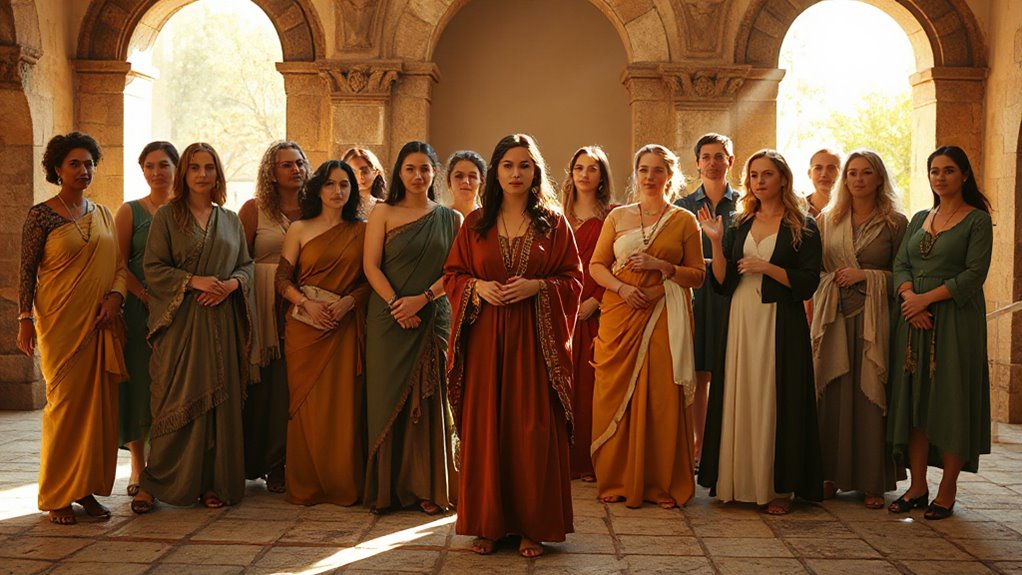
Phoebe served as a deacon at Cenchreae and delivered Paul’s letter to Rome, likely reading it aloud to the congregation.
Priscilla, alongside her husband Aquila, helped establish churches in Corinth and Ephesus and personally instructed the teacher Apollos.
Junia was called an apostle by Paul himself, one of the earliest followers after Jesus’ death.
Mary Magdalene witnessed the resurrection and was sent to announce it to the disciples.
Euodia and Syntyche worked beside Paul in gospel efforts at Philippi. Philip’s four daughters, each possessing the gift of prophecy, represented recognized female prophetic activity within the early Christian community at Caesarea.
Monica traveled persistently and prayed for years until her son Augustine converted to Christianity, and her maternal spiritual influence is credited by Augustine himself as a driving force in his faith.
Each woman is identified by name, suggesting the early church recorded their contributions as historically significant.
What Complementarians and Egalitarians Actually Disagree On

Despite sharing significant common ground, complementarians and egalitarians part ways most sharply on one central question: whether women can serve as senior pastor or ruling elder in a local church. Egalitarians say yes; complementarians say no.
Beyond that central dispute, some complementarians extend their restrictions further, questioning whether women should lead worship, plant churches, or celebrate sacraments. Others hold more moderate positions, drawing narrower boundaries.
Meanwhile, egalitarians argue that identical gifts should open identical roles, regardless of gender. They emphasize mutual submission between spouses rather than fixed hierarchies.
Notably, both sides still agree that women belong in active ministry. The disagreement is not about women’s participation but about the specific scope of their authority within church governance and leadership structures. Both camps trace their positions back to the same scriptures, and a follow-up examination of key Bible passages cited by each side reveals just how differently the same texts can be read.
In practice, churches are encouraged to intentionally cultivate women’s giftedness rather than simply affirming equality in theory while limiting women’s roles in reality.