

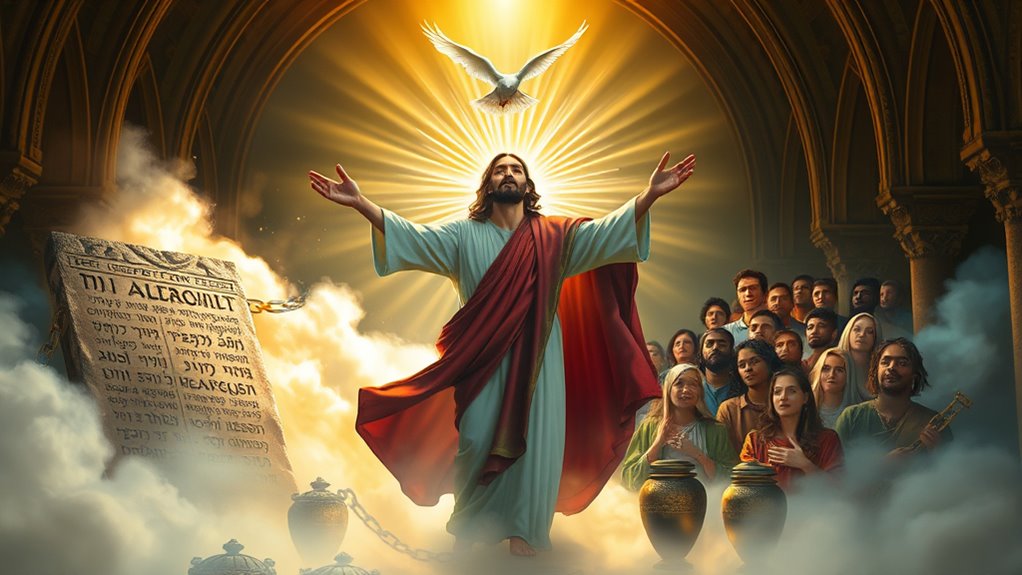


The Bible contains no single verse directly linking suicide to a person’s eternal destiny. Several suicides appear in Scripture, including Saul’s (1 Samuel 31:4–6) and Judas’s (Matthew 27:5), without immediate moral verdict. Most mainstream Protestant and Catholic theologians argue that salvation depends on faith in Christ rather than the circumstances of death, placing final judgment in God’s hands. The sections ahead offer a closer look at what Scripture actually teaches.
Key Takeaways
- The Bible contains no single verse explicitly labeling suicide as a sin or directly linking it to exclusion from heaven.
- Biblical suicides are described without clear moral verdicts, appearing in accounts of Saul, Judas, Ahithophel, and Abimelech.
- Christians draw from broader principles, such as Exodus 20:13 and 1 Corinthians 6:19–20, to address suicide morally.
- Most Protestant and Catholic traditions agree suicide alone does not automatically determine a person’s eternal destiny.
- Evangelical and Catholic theologians place final judgment in God’s hands, emphasizing faith and mercy over circumstances of death.
What the Bible Actually Says About Suicide

When people turn to the Bible looking for a clear rule about suicide, they do not find one. No single verse states directly that suicide is a sin. Instead, the Bible records several suicides without immediate moral commentary.
Abimelech asked his armor-bearer to kill him in Judges 9:54. Saul fell on his sword in 1 Samuel 31:4-6. Ahithophel hanged himself in 2 Samuel 17:23. Judas Iscariot hanged himself in Matthew 27:5. These accounts are descriptive rather than prescriptive. None of these biblical figures who took their own lives are described as righteous.
The moral framework Christians typically apply comes from broader passages, particularly Exodus 20:13, which commands against murder, and 1 Corinthians 6:19-20, which describes the body as a temple belonging to God. Theology surrounding suicide is therefrom built from principles rather than a standalone prohibition. Importantly, Scripture does indicate that the only unforgivable sin is the refusal to believe in Jesus Christ, not suicide itself. Different Christian traditions, such as Catholicism, bring additional doctrinal views that shape pastoral responses to suicide.
Does Suicide Determine Where You Go After Death?

Among the most pressing questions Christians ask after losing someone to suicide is whether that person can still be in heaven. Most mainstream Protestant and Catholic sources say suicide alone does not automatically determine eternal destiny. The doctrine of the Trinity, which teaches God is one being in three Persons, frames how many Christians understand God’s judgments and mercy, including questions about salvation and death; see doctrine of the Trinity for more. Evangelical theologians commonly argue that salvation depends on faith in Christ, not on the final circumstances of death. A believer who struggled and died by suicide is not automatically excluded from heaven under this framework. Catholic teaching similarly rejects automatic damnation, noting that psychological distress can reduce moral responsibility. The Catechism of the Catholic Church states that God’s mercy and judgment account for such factors. Across traditions, most Christian sources place final judgment in God’s hands rather than in any human declaration of certainty. Eastern Orthodoxy generally treats suicide as rejection of God’s gift, though compassion criteria such as verified mental illness can influence how the church responds to individual cases. Early Christian thinkers such as St. Augustine argued that suicide is gravely serious in part because it precludes the possibility of repentance, leaving no opportunity for the soul to turn back to God before death.
Why the Bible Says Faith Matters More Than How You Die

Scripture’s central message, as summarized across evangelical and mainline Christian sources, is that eternal life depends on faith in Christ rather than on the circumstances or manner of death.
Ephesians 2:8–9 states that salvation comes “by grace through faith” and “not by works,” meaning no final act determines a believer’s standing before God.
Romans 8:35–39 reinforces this, arguing that nothing, including death itself, separates a believer from Christ’s love.
John 10:28 adds that Christ holds believers securely, not the other way around.
Theologians cited across these sources consistently place the decisive question at faith, not final moments.
Suicide is treated as sin, but not as one powerful enough to override Christ’s atonement for those who have trusted Him.
Colossians 2:13 states that all believers’ sins are forgiven, meaning the sin of suicide does not fall outside the scope of Christ’s redemptive work for those who have placed faith in Him.
For those without faith in Christ, the determining factor for hell is not suicide itself but rejection of salvation through Christ, as stated in John 3:18.
Catholics and many other Christians often consult approved translations like the NABRE when reading Scripture for clarity and liturgical use.
What the Bible Offers to Those Grieving a Suicide Loss
Grief after a suicide loss is often described by counselors and pastoral care specialists as “complicated grief,” meaning it tends to carry layers of shock, confusion, guilt, and unanswered questions that other losses do not always bring. Regular church attendance and trusted community can provide stability and care during this time, reflecting how community processes support believers through hardship.
Scripture addresses this kind of pain directly. Psalm 34:18 describes God as near to the brokenhearted, while Matthew 5:4 frames mourning as a place where comfort is promised. Isaiah 53:4 reinforces that suffering is seen and acknowledged.
Pastoral care sources consistently emphasize lament and honesty before God rather than forced positivity.
Romans 12:15 supports weeping alongside those who grieve, and Job 2:13 models silent presence as meaningful support.
Practical guidance also recommends counseling, trusted community, and stable routines. Survivors of this loss often find themselves replaying conversations and searching for signs they may have missed, a pattern widely recognized among those mourning a suicide. Jeremiah 31:13 offers an additional layer of hope, affirming that God can turn mourning into joy and provide comfort after sorrow.
Those in crisis can contact the 988 Suicide and Crisis Lifeline.