








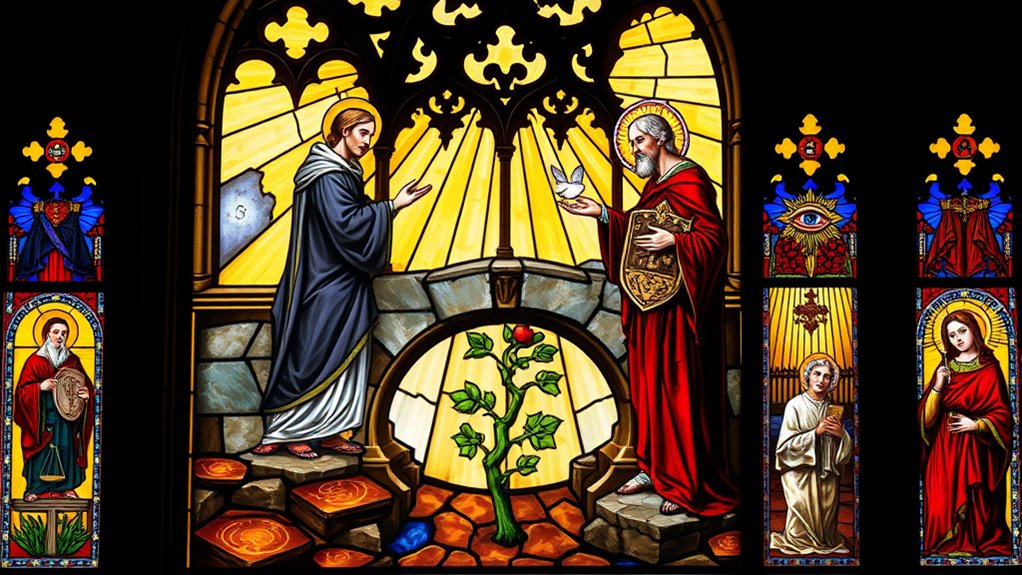
The Bible presents trust as something to extend carefully rather than give automatically. Passages like 1 John 4:1 and 1 Thessalonians 5:21 call for testing claims before accepting them. Jeremiah 17:5–8 places confidence in God above reliance on people, describing human-centered trust as fragile and exposed. John 2:24 notes that even Jesus withheld full trust based on his understanding of human nature. Matthew 7:16 connects trustworthiness to observable patterns of behavior over time, not words alone. Each section below examines what that looks like in practice.
Key Takeaways
- Scripture calls believers to test claims carefully rather than extend blind trust, reflecting wisdom about human nature and deception.
- Ultimate confidence belongs in God alone, with reliance on human strength compared to a withering shrub in dry desert.
- Jesus himself withheld full trust from certain people, showing discernment about human nature is wise, not faithless.
- Trustworthiness is recognized through observable patterns of behavior over time, not through words or first impressions alone.
- Broken trust can be restored gradually through repentance, accountability, and consistent conduct, with boundaries protecting all parties involved.
Why the Bible Doesn’t Say Trust Everyone

Many people assume the Bible teaches unconditional trust toward others, but the text itself tells a more careful story. First John 4:1 directly instructs readers not to believe every spirit and to test claims carefully.
Matthew 10:16 describes followers as sheep among wolves, calling for both shrewdness and innocence.
First Thessalonians 5:21 reinforces this by urging believers to test all things before accepting them.
Jeremiah 9:4 even warns against trusting neighbors, acknowledging that deceit can spread through familiar relationships.
These passages share a common thread: trust is not something the Bible hands out automatically. Instead, Scripture frames it as something earned through observation, consistency, and character. Proverbs 4:23 instructs believers to guard the heart, recognizing that what flows from it shapes every relationship and decision.
The Bible’s position is not suspicious, but it is deliberate. First John 4 goes further by distinguishing between the spirit of truth and the spirit of error, offering a framework for discerning which voices align with God and which do not.
Hebrew and Greek translations influenced how these instructions were transmitted, so understanding the original languages can aid careful interpretation.
Why God Comes Before People in Your Trust

The Bible’s caution about trusting others does not end at human relationships. Jeremiah 17:5–8 places God above every other source of confidence.
The passage calls those who rely on human strength “cursed,” describing their condition as a shrub in a dry desert, cut off from water and unable to thrive. Some readers connect this warning to broader biblical themes about reliance on human wisdom rather than divine guidance.
By contrast, those whose trust rests in the Lord are called “blessed,” pictured as trees planted beside water, bearing fruit even through drought and heat.
Those rooted in God remain fruitful even when drought and heat threaten everything around them.
The text frames this difference as a matter of the heart, not simply a practical choice.
Human support, according to the passage, is real but limited.
Only God remains steady when human strength fails, making divine trust the foundation rather than a secondary option. The Lord is described as the fountain of living waters, the source from which all true sustenance and hope flow. Those who turn away from Him are warned that they shall dwell in parched, uninhabited places, cut off from the goodness that only His presence provides.
Can You Trust People at All, According to the Bible?

While the Bible consistently places ultimate confidence in God rather than in people, it does not teach that human relationships should be approached with blanket suspicion.
Scripture presents a middle path: trust people carefully, not automatically.
Proverbs 22:3 supports guarded judgment, and John 2:24 notes that Jesus himself did not entrust himself to all people because he understood human nature.
That caution was not cynicism but wisdom.
The Bible does allow trust in relationships, though it frames that trust as something earned gradually through consistent character and honest conduct.
Jeremiah 17:9 reminds readers that human motives can mislead, making discernment necessary.
Matthew 7:16 teaches that a person’s reliability and character can be recognized by their fruit, meaning observable actions over time reveal whether someone is worthy of trust.
The biblical conclusion is measured rather than pessimistic: people can be trusted in a qualified sense, never as ultimate security. Trusting God alone remains the ultimate priority, as Proverbs 3:5-6 instructs believers to trust in the LORD with all their heart rather than leaning on their own understanding.
Regular engagement in foundational spiritual disciplines like daily Bible reading helps believers grow in discernment and wisdom, which informs whom they can wisely trust.
What Does the Bible Say Healthy Trust Actually Looks Like?

Scripture does not leave the concept of healthy trust undefined.
The Bible connects trustworthiness to observable behavior rather than surface-level impressions.
Proverbs 20:6 notes that many claim loyalty, but finding someone who actually lives it is rare.
Healthy trust, according to Scripture, grows through consistent faithfulness in small responsibilities, honest speech, and follow-through on commitments.
Discernment plays a central role.
Discernment means weighing patterns of behavior over time rather than simply accepting words at face value.
Believers are encouraged to test what is true and weigh patterns of behavior over time, not simply accept promises.
Boundaries also fit within this framework.
Caution after repeated untrustworthy behavior is presented as wisdom, not cynicism.
Accountability strengthens these relationships further, creating space for honest correction when needed.
Together, these elements form trust that is steady, realistic, and grounded in character. Proverbs 27:17 illustrates that two people sharpening each other requires a foundation of genuine trust to function well.
Scripture presents Joseph as a model of this kind of character, with Potiphar entrusting everything to Joseph’s care because his trustworthiness was demonstrated through consistent, faithful action. A practical way to develop this is to follow a simple reading plan that builds steady engagement with Scripture.
What Does the Bible Say to Do When Trust Is Broken?

When trust breaks down, the Bible does not leave believers without direction. Matthew 18:15 recommends private, direct conversation as a first step. Luke 17:3 connects rebuke with forgiveness when genuine repentance follows.
Importantly, forgiveness and reconciliation are not identical. Bible Society material clarifies that forgiveness addresses the offense, while reconciliation addresses the relationship itself and requires participation from both sides.
Restored trust, according to Christian counseling summaries, depends on evidence rather than words alone. Proverbs 20:6 cautions that faithful character is genuinely rare. Catholics recognize that ongoing sacramental participation can support moral formation and restored trust through communal accountability and grace sacramental life.
Changed conduct over time matters more than a single apology.
Galatians 6:1 frames restoration as gentle and gradual. Meanwhile, Proverbs 4:23 permits guarded boundaries during that process.
Truth, accountability, mercy, and prudence work together throughout. When reconciliation is refused or safety is absent, faithful boundaries that limit access can reduce further harm without becoming acts of revenge or bitterness.