









The Bible contains no direct command for or against wearing a cross as jewelry. Scripture focuses instead on broader principles: avoiding idolatry, practicing modesty (1 Timothy 2:9), and acting from sincere personal conviction (Romans 14). The cross itself points to Christ’s death, suffering, and reconciling work rather than to physical adornment. Orthodox Christians wear one from baptism until death as a lifelong commitment. The sections ahead explore what those principles mean in practice.
Key Takeaways
- The Bible contains no direct command for or against wearing a cross as jewelry.
- Scripture consistently connects the cross to Christ’s crucifixion, suffering, redemption, and reconciliation rather than physical adornment.
- Idolatry risk arises when any object receives reverence intended for God alone, per biblical principles.
- Romans 14 advises that personal decisions about such practices should stem from sincere conviction rather than habit.
- Orthodox Christians are expected to wear a cross necklace from baptism until death as a lifelong faith commitment.
Does the Bible Say Anything About Wearing a Cross?

Many Christians wonder whether the Bible directly addresses wearing a cross as jewelry. The short answer is that it does not. No verse carries a clear script intent for or against the practice.
Instead, the Bible approaches the subject through broader principles. Idolatry risk emerges when any object receives reverence meant for God alone. Modesty guidance appears in passages like 1 Timothy 2:9, which cautions against outward adornment worn for pride.
Conscience matters also surface, particularly in Romans 14, where Paul urges believers to act according to personal conviction. The doctrine that one God exists as three persons informs how Christians understand Jesus’ divine status and worship Trinity.
These principles form the framework most Christian writers use when discussing cross jewelry. The Bible remains silent on the specific act, leaving the question largely to individual discernment within those broader boundaries. For many believers, the cross carries deep meaning rooted in Christ’s sacrifice and resurrection. Because Scripture does not clearly outline the practice as lawful or edifying, individual conscience ultimately guides the decision.
What Scripture Actually Says: and Doesn’t Say: About the Cross

Since the Bible offers no direct rule about cross jewelry, understanding what Scripture actually does say about the cross becomes the natural next step. The Bible meaning emphasis centers on crucifixion context only, pointing to Christ’s death, suffering, and saving work rather than to any physical ornament. The Old Testament and New Testament together contain 31,102 verses that shape the Bible’s teachings and context for interpreting references to the cross.
Passages like 1 Corinthians 1:17–18 describe the “word of the cross” as divine power, while Matthew 16:24 uses the cross to illustrate costly discipleship.
The cross in Scripture points to divine power and the demanding cost of true discipleship.
Ephesians 2:16 connects it to reconciliation. Visitors to StudyLight.org may encounter a security check designed to distinguish normal users from automated traffic sources that consume server resources and disrupt site access.
Clearly, no verse commands Christians to wear a cross, describes it as a required symbol, or treats cross jewelry as a sacrament. Scripture consistently directs attention toward faith, obedience, and theological meaning, leaving questions about physical cross adornment outside its stated concerns. The Greek word σταυρός, properly meaning “stake”, refers to the instrument of crucifixion itself, grounding every biblical reference to the cross in execution and death rather than decorative symbolism.
Why Many Christians Choose to Wear a Cross

Though the Bible gives no command about cross jewelry, Christians across denominations have developed clear and personal reasons for wearing one. Religious symbolism plays a central role, as the cross represents sacrifice, redemption, and resurrection. For many believers, wearing it daily serves as a quiet personal testimony, connecting them to Christ’s death and victory over sin.
Faith motivations also vary by individual. Some receive cross pendants at baptism or confirmation, embedding the symbol within family tradition and rite-of-passage meaning. Others wear it as a visible marker of identity and spiritual commitment within a broader cultural context. The most historically associated site of Jesus’ death is Golgotha, a location traditionally identified outside Jerusalem’s ancient walls.
Across these reasons, the cross functions as an outward expression of inward belief, blending devotion, remembrance, and hope into a single, recognizable symbol worn close to the heart. Notably, the cross symbol predates Christianity, appearing on ancient Babylonian monuments long before Jesus’ crucifixion, a history some believers are unaware of when choosing to wear it. Early Christians, however, did not always wear the cross openly, as many feared public display due to the very real threat of persecution or mockery before Emperor Constantine’s conversion changed its status entirely.
Why Some Believers Avoid Wearing a Cross
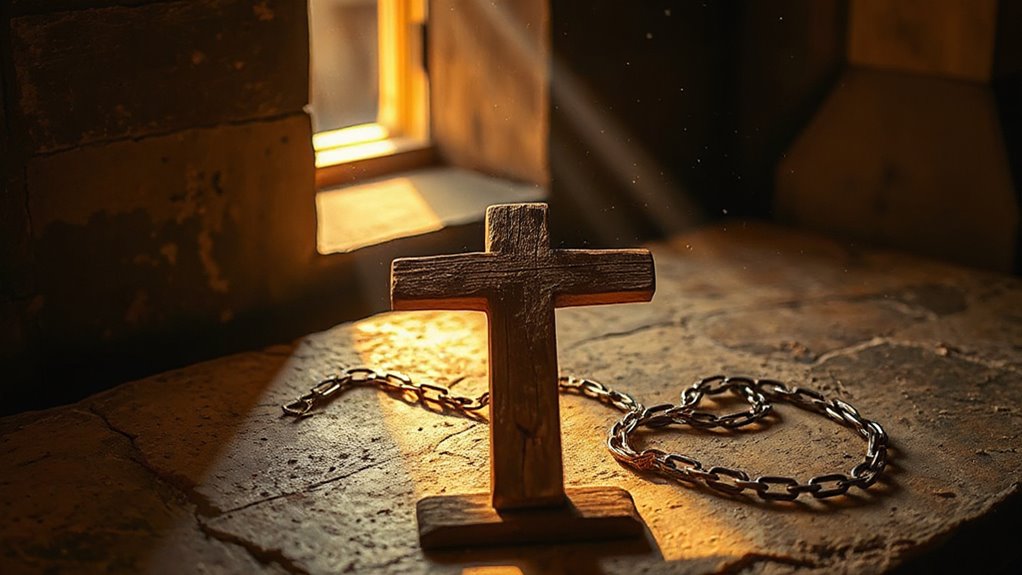
While many Christians wear a cross as a personal expression of faith, others have reached the opposite conclusion for reasons that are equally considered.
Scripture interpretation plays a significant role, as passages like 1 Corinthians 8 and Romans 14 caution believers against practices that may trouble others or become a stumbling block. Some Catholics, informed by teachings about Sacred Tradition, emphasize communal conscience in such matters.
Some act on personal conscience, choosing simplicity in adornment over visible religious symbols.
Cultural misunderstanding also influences the decision, since the cross is frequently worn as fashion, which can dilute its theological meaning. Cross necklaces are most commonly worn as religious pendants, yet their widespread use in mainstream fashion has blurred that distinction for many believers.
Jehovah’s Witnesses, for example, avoid it entirely, citing idolatry concerns.
Others redirect their spiritual priorities toward inward devotion, discipleship, and character rather than outward expression. For those who do choose to wear one, options range from occupational designs to scripture-engraved pendants, with verses like Philippians 4:13 and John 19:30 serving as daily reminders of faith.
Each of these positions reflects a sincere, if varied, attempt to honor faith responsibly.
How to Decide Whether Wearing a Cross Is Right for You

Deciding whether to wear a cross begins with an honest look at Scripture, motive, and personal conviction.
The Bible does not command the practice, so the decision rests largely on conscience alignment with genuine faith.
Motive examination matters first.
Romans 14 encourages believers to act from sincere conviction rather than habit or appearance.
If wearing a cross strengthens daily witness and points attention toward Christ rather than self, the practice carries real spiritual value.
Others impact also deserves consideration, since the same symbol can encourage one person while confusing another depending on setting and context.
When motive, conscience, conduct, and love for others align together, the decision becomes clearer.
The cross worn faithfully reflects the life lived faithfully.
Orthodox Christians are expected to wear a cross necklace from the moment of baptism until the moment of death, illustrating how deeply the practice can be woven into a life of committed faith.
Consistent spiritual practices like daily Bible reading often accompany visible expressions of faith and help ensure that outward symbols reflect inward growth.