
The Bible describes heaven as a real spiritual domain where God dwells, not simply a future destination. It appears as both present and accessible, centered on relationship with God rather than physical distance. Scripture portrays it as structured and vivid—Revelation 21 describes a city with jasper walls, golden streets, and pearl gates. Genesis 1:1 places its creation firmly in God’s hands. Those who explore further will find the biblical picture grows richer still.
Key Takeaways
- Heaven is described as God’s actual dwelling place—a real spiritual domain, not merely a metaphor or future reward for good behavior.
- The Bible portrays heaven as having structure, including distinct levels, with Paul referencing a “third heaven” in 2 Corinthians 12:2.
- Revelation 21 describes the New Jerusalem with precise architecture: jasper walls, golden streets, pearl gates, and a city spanning 12,000 stadia.
- Heaven is depicted as actively accessible now through prayer and divine revelation, centered on relationship with God rather than physical distance.
- Revelation 21–22 promises a renewed heaven where death, mourning, and pain are permanently gone, with a river and tree of life flowing from God’s throne.
What Does the Bible Say Heaven Actually Is?
When people ask what the Bible says heaven actually is, the answer depends partly on which sense of the word is being used. Scripture uses the same Hebrew and Greek terms to describe the physical sky, the starry cosmos, and a distinct spiritual domain beyond the created universe.
That third meaning points specifically to heaven as God’s dwelling, the place where God lives, rules, and exercises sovereign authority. Both Old and New Writings treat this not as metaphor but as a genuine location. Jesus and his contemporaries would have understood these distinctions within a largely Aramaic-speaking culture.
Heaven is also described as a present spiritual domain, not simply a future destination. Biblical writers portray it as active and accessible through prayer and revelation, centered on God’s presence rather than on abstract geography or philosophical speculation. Notably, UK and EU users seeking to explore these themes on Bible Gateway are currently affected by regional access unavailability.
Scripture also affirms that God created heaven, as stated plainly in Genesis 1:1, establishing it as part of the original creation rather than something that emerged independently of divine action.
How the Bible Describes Heaven’s Structure and Imagery
Across its many books and centuries of writing, the Bible uses a range of images to describe heaven’s structure, drawing on skies, architecture, thrones, and cities to convey something far beyond ordinary experience.
Genesis 1:6–7 introduces layered “firmament imagery,” presenting a dome separating waters above from waters below.
The opening of Genesis introduces a layered cosmos, a dome holding back celestial waters above.
Isaiah 40:22 and Psalm 104:2 extend this by describing God stretching the heavens like a tent or curtain.
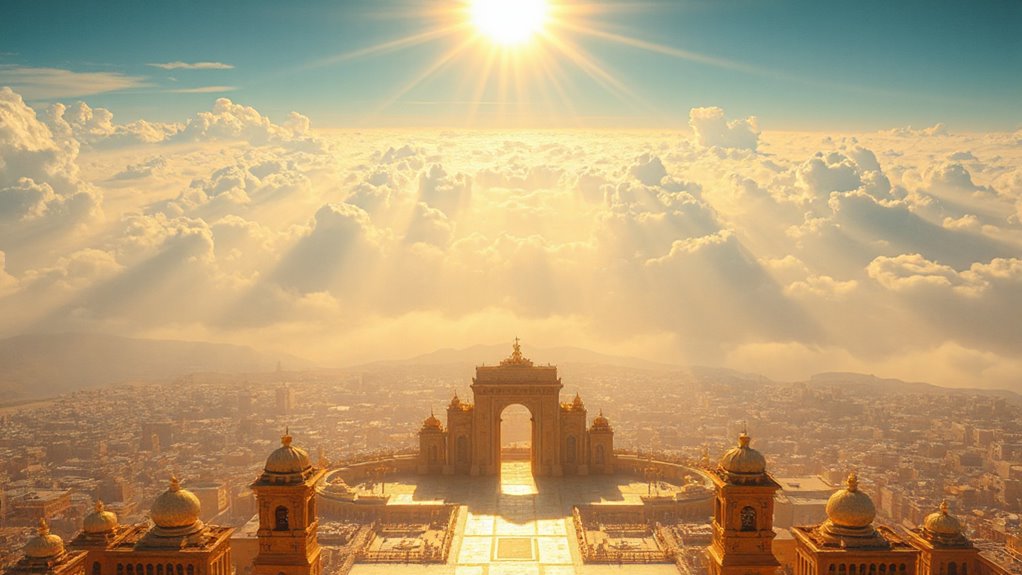
Biblical “heavenly architecture” reaches its most detailed form in Revelation 21, where a city measured at 12,000 stadia features jasper walls, golden streets, and pearl gates.
Paul’s reference to a “third heaven” in 2 Corinthians 12:2 suggests distinct levels.
Together, these images emphasize order, divine craftsmanship, and a realm carefully prepared rather than vaguely imagined. Ancient Hebrews understood the heavenly dome to be so substantial that pillars held it up, as reflected in the imagery of Job 26:11.
Heaven also contains an actual sanctuary that served as the pattern for the earthly tabernacle, where Jesus currently serves as high priest and mediator in the true tabernacle set up by the Lord rather than by human hands.
The Catholic canon’s inclusion of the deuterocanonical books reflects part of the broader scriptural tradition in which these heavenly images were preserved.
What Revelation Says About the New Heaven and Eternal Life
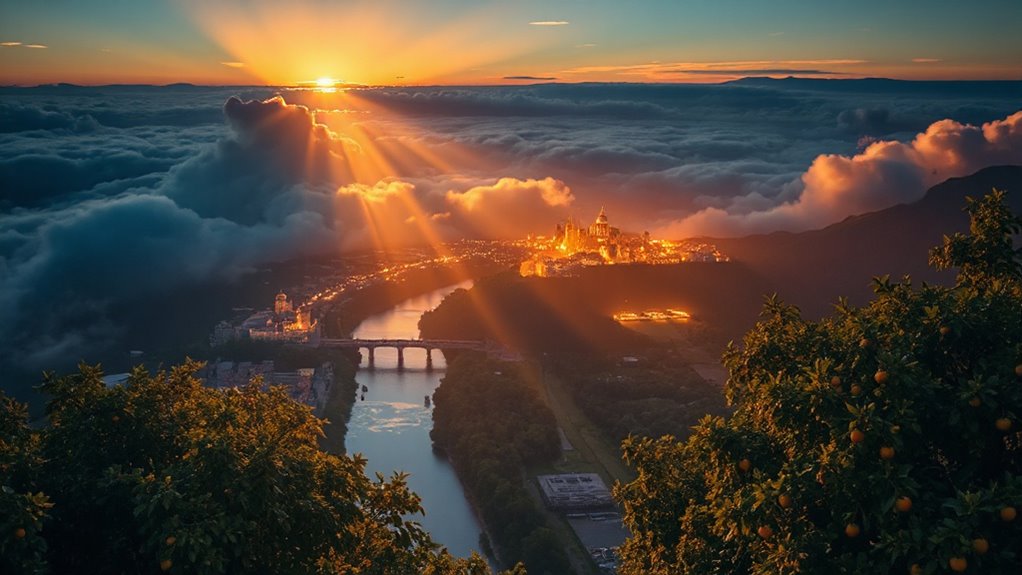
At the close of the biblical canon, Revelation 21 and 22 offer the most sustained description of what eternal life looks like in a renewed creation.
Revelation 21:1 describes a new heaven and new earth replacing the first, with the New Jerusalem descending from God rather than humanity ascending away.
Revelation 21:3 centers on eternal communion between God and his people, framing heaven as covenant relationship rather than distant reward.
Revelation 21:4 promises joy without mourning, pain, or death, as former conditions of brokenness permanently end. This renewal echoes biblical themes that often require careful linguistic interpretation to understand ancient imagery.
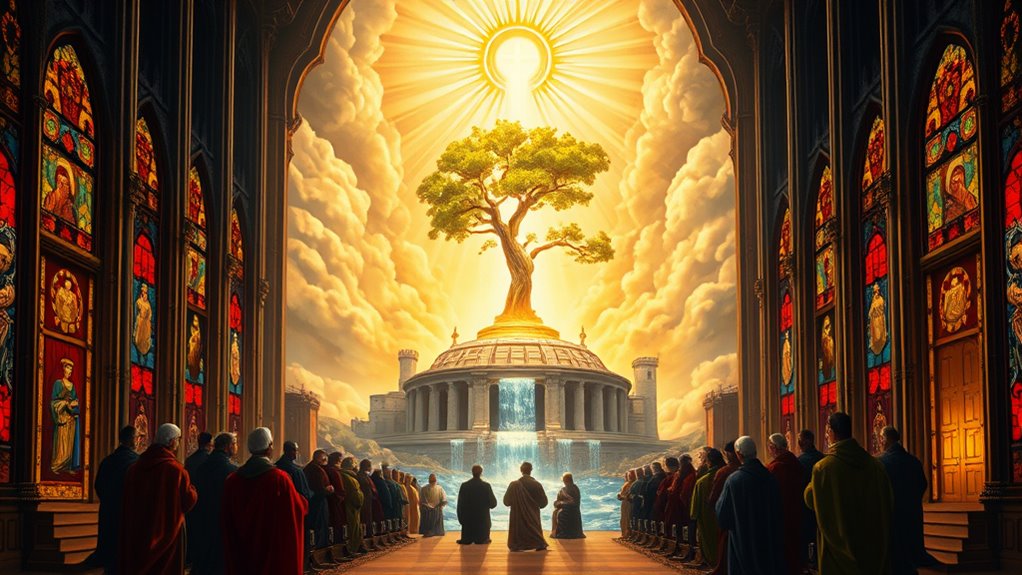
Revelation 22:1–2 adds the river of life and the tree of life, both flowing from God’s throne, providing continuous nourishment and healing. The tree of life bears twelve crops of fruit monthly, and its leaves are said to be for the healing of the nations.
Revelation 21:6 and 22:17 extend the invitation freely to anyone who thirsts. Revelation 21:23 affirms that the city requires no sun or moon because the glory of God illuminates it, with the Lamb himself serving as its lamp.